Content options
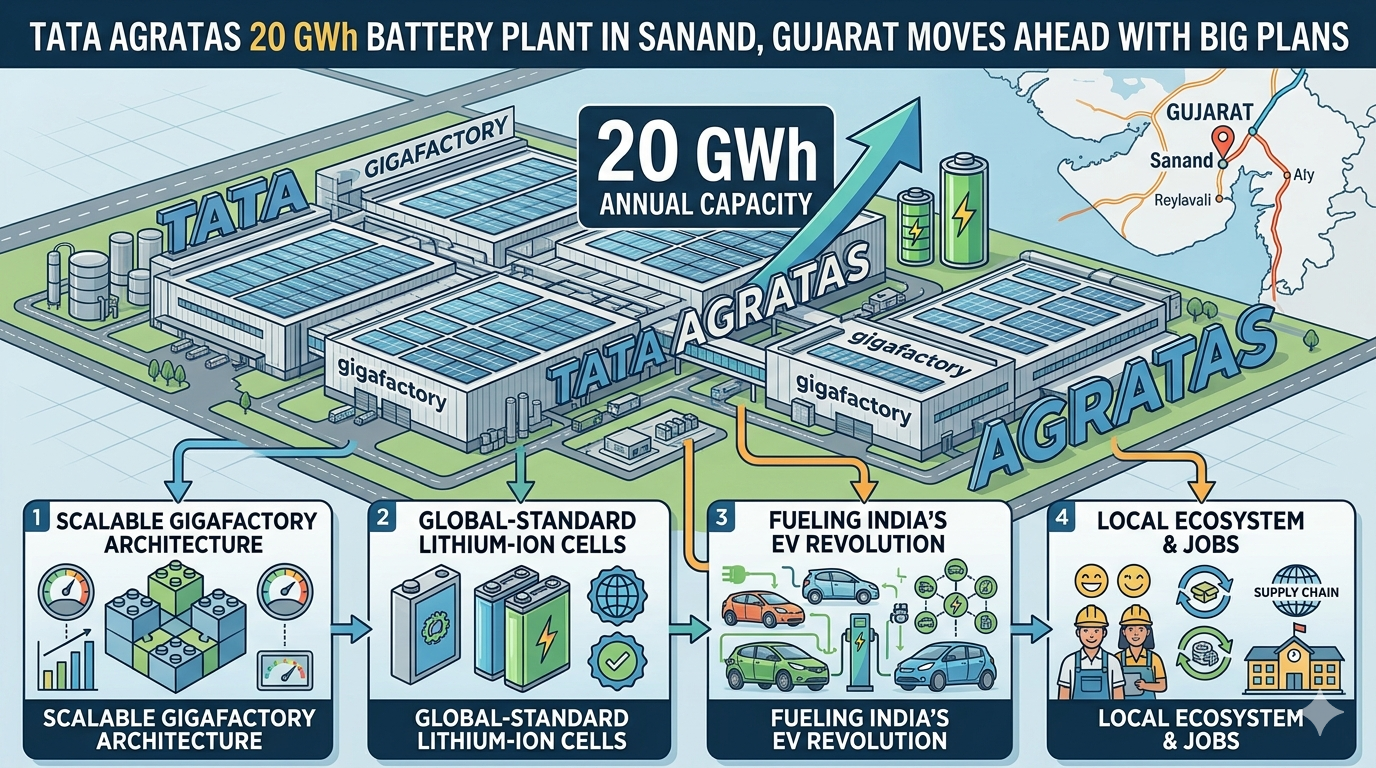
India's EV ambitions just got a major structural milestone. Tata Agrata's 20 GWh battery gigafactory in Sanand has reached a pivotal point in its construction — the steel frame is now complete. This is not a small building going up. The frame spans 700 metres in length, 150 metres in width, and stands 34 metres tall at its highest point. It covers 105,000 square metres of built-up area, making it one of the largest industrial construction projects currently underway in India.
Scale of the Project
To build this frame, over 24,000 tonnes of steel were deployed — all of it sourced from within India. At peak construction, more than 2,500 skilled workers were on site simultaneously. Tata Projects Limited leads the execution, working in collaboration with Tata Consulting Engineers and multiple steel contractors. The decision to source materials domestically is a deliberate statement: this plant supports Indian supply chains from the ground up, reducing dependence on imports at every stage.
Why This Matters for India's EV Future
India's EV sector currently depends heavily on battery cells imported from China. A domestic gigafactory of this scale changes that equation significantly. A 20 GWh plant can produce enough battery packs annually for hundreds of thousands of EVs, reducing costs and improving supply chain security for Tata Motors and potentially other Indian EV manufacturers who source from Agrata. According to the NITI Aayog's EV roadmap, India targets 30 percent EV penetration across segments by 2030, and domestic battery production is central to achieving that target affordably. You can also read more about India's EV charging ecosystem in our coverage of sustainability developments shaping Indian cities.