Content options
Food has always been culture. But in 2026, food is also science, technology, climate policy, and personal health strategy all at once. The way the world eats is shifting in ways that are both exciting and occasionally uncomfortable — and whether you are a home cook, a restaurant owner, a foodie, or just someone who wants to eat better, these trends will find you whether or not you are looking for them.
Trend 1: The Ultra-Processed Food Backlash
The single most significant food trend of 2026 is not a new ingredient or cuisine. It is a cultural rejection. Ultra-processed foods — products made primarily from industrial ingredients with minimal whole food content — are facing unprecedented consumer backlash following a decade of research demonstrating their links to obesity, cardiovascular disease, cancer, cognitive decline, and depression. The NOVA classification system, which ranks foods by processing level, has become common knowledge among health-conscious consumers. Sales of ultra-processed foods in developed markets are declining for the first time in decades.
Trend 2: Precision Fermentation Changes Protein
Precision fermentation uses microorganisms to produce proteins, fats, and dairy compounds that are molecularly identical to animal products but made without animals. Companies like Perfect Day, Remilk, and Change Foods produce whey protein, casein, and animal fats through this process. In 2026, precision fermentation products appear in ice cream, cheese, protein supplements, and bakery items at mainstream grocery chains. The taste is indistinguishable from animal-derived equivalents because the molecules are genuinely identical — just produced in a bioreactor rather than a cow.
Trend 3: Functional Mushrooms Are Everywhere
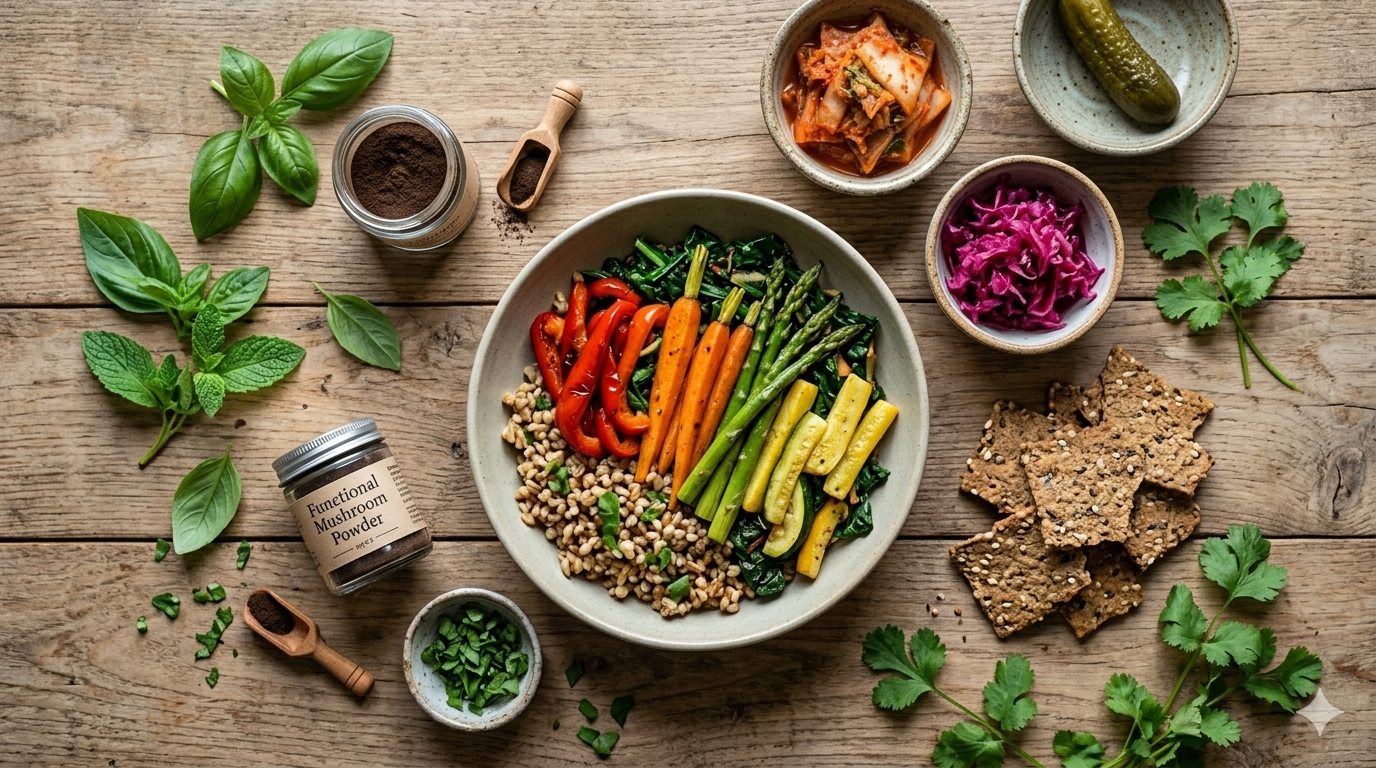
Lion's mane, reishi, chaga, and cordyceps mushrooms have moved from health food store supplements to mainstream coffee, chocolate, snack bars, and beverages. Functional mushroom products in 2026 are sold in every major supermarket chain globally. The science behind these fungi shows genuine benefits for cognitive function (lion's mane), stress adaptation (reishi), immune function (chaga), and athletic endurance (cordyceps). The global functional mushroom market has grown from $8 billion in 2020 to over $26 billion in 2026.
| Food Trend | Why It's Growing | Where You'll Find It |
|---|---|---|
| Fermented Foods Mainstream Rise | Gut microbiome research showing mental and immune health links | Kimchi, kefir, miso, kombucha in every supermarket |
| Climate-Adapted Ingredients | Water stress forcing crop substitutions | Millet, fonio, cassava replacing wheat in new products |
| AI-Generated Personalized Nutrition | Apps analyzing your biomarkers to design meals for your biology | Health apps, CGM-integrated food services |
| Hyperlocal Restaurant Menus | Sourcing all ingredients within 50 miles of the restaurant | Premium restaurants in major cities globally |
| Seed-to-Plate Transparency | QR codes on food showing its entire supply chain | Premium packaged goods, farm-direct delivery services |