Content options
The entertainment industry spent decades treating creativity as its final untouchable competitive moat. Writers wrote. Musicians composed. Directors directed. Human judgment, emotion, and lived experience could not be automated. Then 2026 arrived, and AI did not just knock on the door of the entertainment industry. It walked through the wall.
This is not a story about AI replacing artists. It is more complicated and more interesting than that. It is a story about what happens when the cost of creating professional-quality film and music drops from millions of dollars to hundreds, and how the industry is scrambling to adapt, resist, and reinvent itself simultaneously.
AI in Film — From Script to Screen
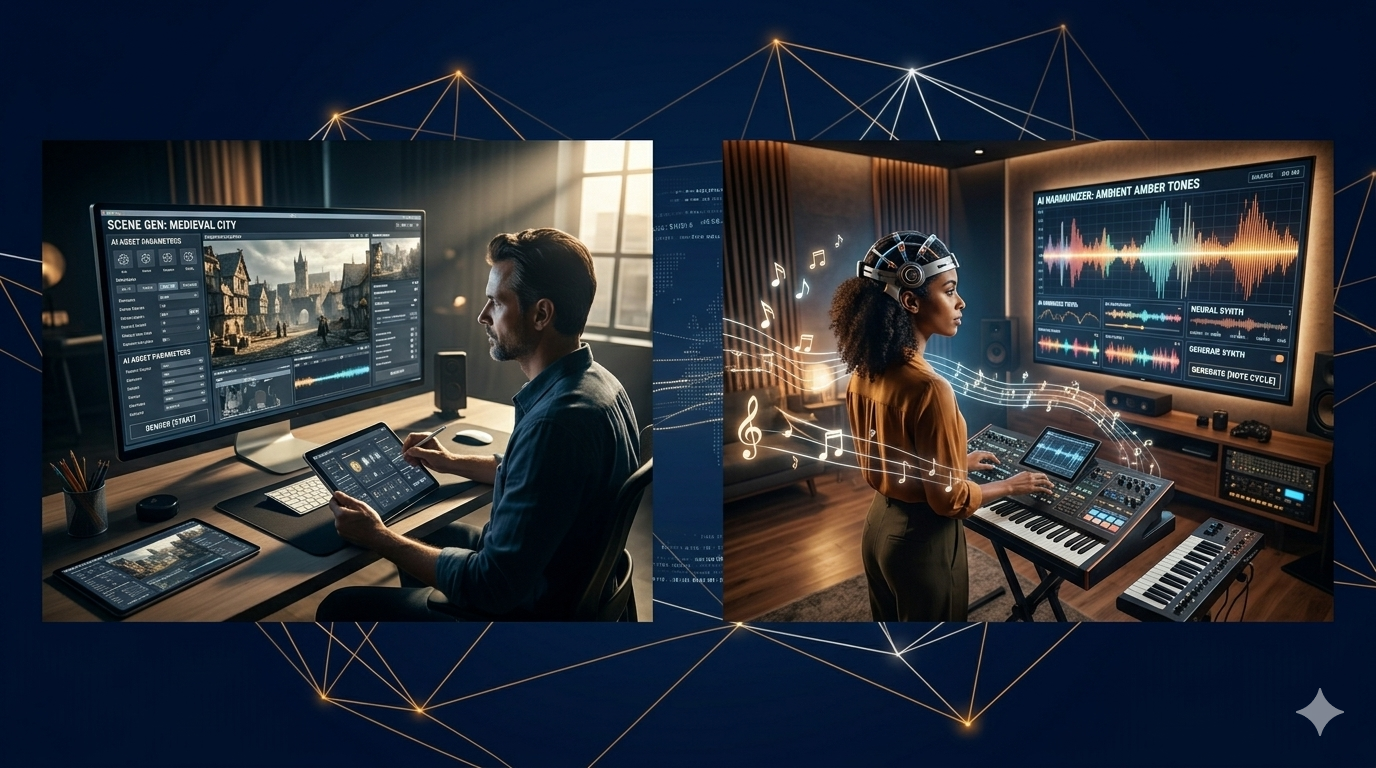
AI film tools in 2026 touch every stage of the production pipeline. At the script stage, large language models generate story treatments, dialogue drafts, and character arc analyses. At the visual development stage, text-to-video tools from OpenAI (Sora), Runway, and Kling generate reference footage and early visual concepts in minutes. During production, AI-powered cameras track actors automatically, AI systems monitor continuity, and real-time rendering creates backgrounds that previously required expensive set builds or location shoots.
In post-production, AI handles color grading, sound design, visual effects compositing, scene transitions, and even generates entire sequences through diffusion video models. De-aging technology using AI has become so sophisticated that studios regularly use deceased actors' digital likeness for new productions — a practice sparking significant ethical and legal debate.
AI Music — Millions of Tracks Generated Every Month
Suno AI, Udio, and MusicLM by Google generate complete songs with vocals, lyrics, instrumentation, and production from a text prompt in 30 seconds. Over 12 million AI-generated tracks were uploaded to music streaming platforms in 2025 alone. Some AI-generated songs have reached top 100 charts under human artist aliases, prompting Spotify, Apple Music, and YouTube Music to develop AI disclosure labeling systems.
The response from human musicians has been fierce. In 2026, the music industry's legal battles over AI training data, digital likeness rights, and voice cloning are among the most active areas of intellectual property litigation globally. According to the Recording Industry Association of America, AI music tools cost the industry an estimated $4.7 billion in displaced revenue in 2025. Read more at BlogofTime.com.
| AI Entertainment Tool | What It Does | Current Status 2026 |
|---|---|---|
| OpenAI Sora | Generates photorealistic video from text descriptions | Used by studios for pre-visualization and concept work |
| Runway Gen-3 | Video generation and editing AI with director-level control | Industry standard for independent short film production |
| Suno / Udio | Complete song generation with vocals from text prompt | Millions of monthly active users, legal disputes ongoing |
| ElevenLabs Voice AI | Generates voices in any style, language, or emotional tone | Used widely in animation dubbing and podcast production |
| Stability AI for Visual Effects | Automates green screen removal, background generation, VFX | Deployed in major studio post-production pipelines |