Content options
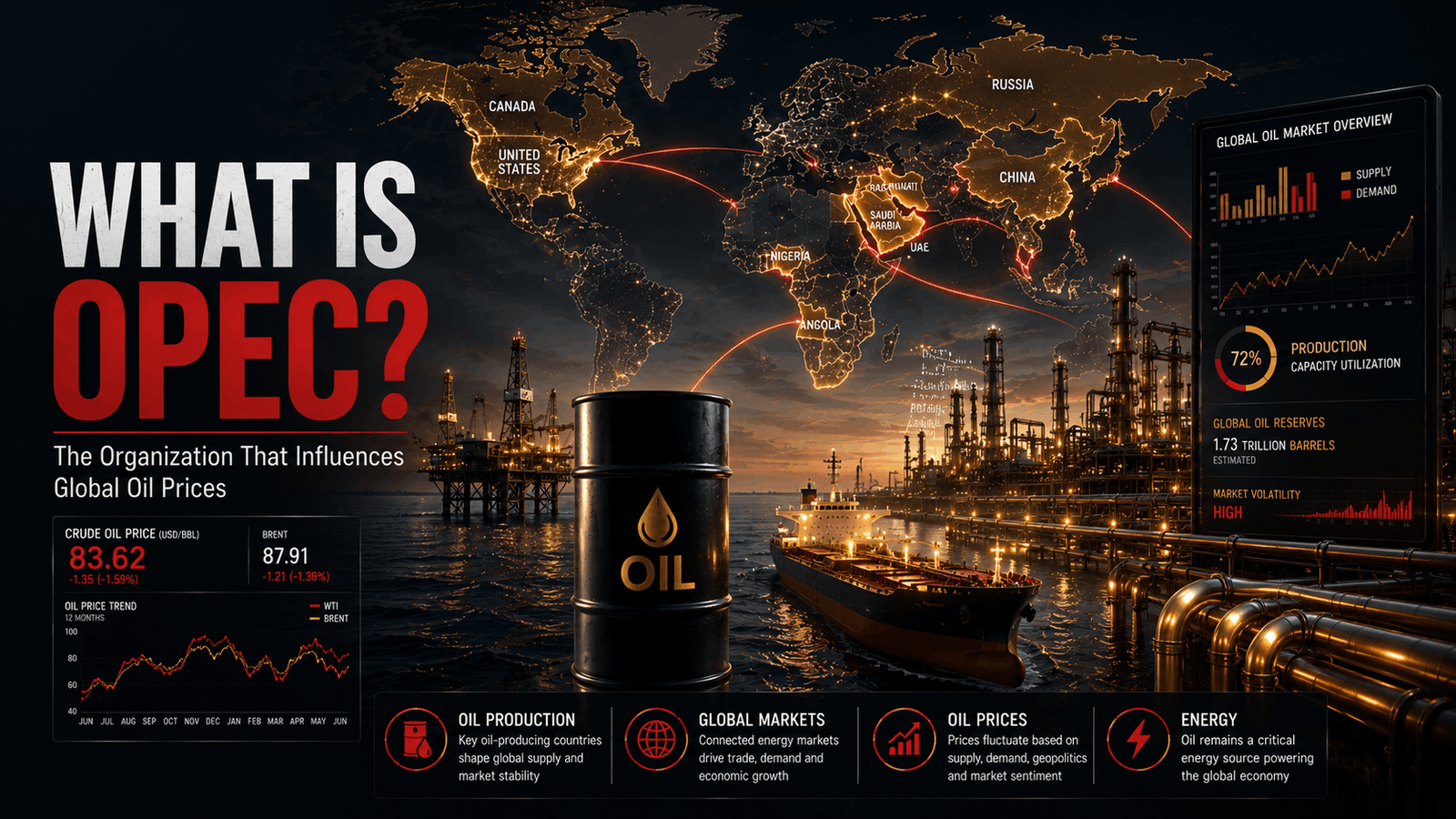
OPEC is a group of oil-producing countries that work together to manage how much crude oil they sell to the world. It does not fix the price of oil or petrol. But its production decisions change global supply, and supply helps decide price. That is why India and almost every other country watch its meetings.
What is OPEC and why was it formed?
OPEC stands for the Organization of the Petroleum Exporting Countries. It is a group of countries that earn a large part of their income by selling crude oil. The group was formed decades ago so that these countries could coordinate their oil policies instead of competing blindly against each other.
The idea is simple. If every producer pumps as much oil as it can, supply rises and prices can fall. Falling prices hurt countries that depend on oil money. By agreeing on how much to produce, members try to keep the market steadier and protect their income.
Think of it like farmers in one region who agree on how much produce to send to the mandi. If everyone floods the market on the same day, prices crash. If they coordinate, prices hold up better. OPEC works on the same logic, but with crude oil and at a global scale.
Which countries are OPEC members?
OPEC members are mostly oil exporters from the Middle East, Africa and South America. Well-known members include Saudi Arabia, Iraq, Iran, Kuwait and the United Arab Emirates. Others include Nigeria, Libya, Algeria and Venezuela.
Membership can change over time. Countries have joined and left in the past. If you need the exact current list, check OPEC's official website instead of relying on an old article, including this one.
Not all members matter equally. The largest producers have the most say in the market, because their decisions move the most barrels. Saudi Arabia is usually seen as the most influential voice in the group.
How does OPEC work?
OPEC works through three main tools: production quotas, regular meetings and joint decision-making.
Production quotas
A quota is a target for how much oil a member should produce. When OPEC wants to support prices, it can ask members to cut output. When it wants to calm a price spike, it can allow more production. Members do not always follow the targets perfectly, so quotas are a goal, not a guarantee.
Meetings
Oil ministers and officials from member countries meet regularly to review the market. They look at demand, supply, stock levels and the state of the global economy. Traders and governments follow these meetings closely, because a single announcement can move oil prices within hours.
Decision-making
Members take decisions together. Big decisions, such as a production cut, need broad agreement. This is not always easy. A country that needs more oil income may want to pump more, while another may want to cut output to push prices up.
What is OPEC+?
OPEC+ is OPEC plus a set of other oil-producing countries that are not OPEC members. These countries coordinate with OPEC on production decisions. The group is larger than OPEC alone, so it covers more of the world's oil supply.
The most important non-OPEC member is Russia. Russia is a major oil producer, so its cooperation makes OPEC+ decisions more powerful. When OPEC and Russia agree on a cut, the effect on supply is bigger than if OPEC acted alone.
| Point | OPEC | OPEC+ |
|---|---|---|
| Who is in it | Core oil-exporting member countries | OPEC members plus other producers such as Russia |
| Size of influence | Large | Larger, because it covers more supply |
| Main aim | Coordinate production and support market stability | Coordinate production across a wider group |
How does OPEC influence oil prices?
OPEC does not set a price tag on oil. Oil is traded on international markets, and prices move with buying and selling. OPEC's influence comes from what it does to supply.
- Supply and demand: If supply falls while demand stays the same, prices tend to rise. If supply rises and demand stays flat, prices tend to fall.
- Production cuts: When OPEC or OPEC+ agrees to cut output, less oil reaches the market. That can push prices up.
- Market confidence: Even the expectation of a cut or increase can move prices. Traders react to signals, not only to barrels that have already been produced.
Other things also move prices. These include the health of the global economy, wars and political tension, and production from countries outside OPEC+. So OPEC is a big force, but it is never the only one. Even a small change in production can affect fuel prices, inflation and economic activity around the world, but how big the effect is depends on everything else happening at the time.
Why does OPEC matter to India?
India imports a large part of the crude oil it uses. That makes the country sensitive to global oil prices, and so to OPEC and OPEC+ decisions.
The chain works like this:
- OPEC+ changes production, or the market expects it to.
- Global crude prices move.
- India's import bill changes. Crude is bought in dollars, so a weaker rupee makes the same oil costlier in rupee terms.
- Petrol and diesel costs shift, though Indian taxes and company pricing decisions also play a part.
- Transport and goods costs follow, which can affect inflation.
Higher fuel costs reach you in more than one way. You pay more at the pump. Trucks cost more to run, so vegetables, grains and packaged goods can get more expensive. Over time this can touch household budgets and the wider economy.
Common mistakes when reading oil news
- Thinking OPEC fixes petrol prices. It does not. Your local petrol price also includes taxes, the exchange rate and the costs of oil companies.
- Expecting an instant change at the pump. Global crude can move quickly, but retail prices in India often react more slowly or in smaller steps.
- Ignoring the rupee. A cheaper barrel in dollars may not help much if the rupee weakens at the same time.
- Treating one headline as the full story. A production cut announcement matters, but demand and global growth can cancel out its effect.
Benefits, criticism and the future of OPEC
What supporters say
Supporters argue that OPEC brings market stability and more predictable production. Wild swings in oil prices are bad for producers and buyers alike, and coordinated supply can reduce them.
What critics say
Critics say that when a group of producers manages supply, it can keep prices higher than they would otherwise be. They see this as price manipulation. Another criticism is that OPEC reflects the world's heavy dependence on oil. As long as economies rely on oil, a small group of producers holds a lot of power.
What to watch next
The long-term question is how much oil the world will need. Renewable energy and electric vehicles are growing, and the wider energy transition could slowly reduce demand for oil. How fast that happens is not known, and it varies by country. India still depends heavily on petrol and diesel today, so the shift will take time.
The future of OPEC depends on that pace. If demand stays strong, the group keeps its power. If demand weakens, members may find it harder to agree on cuts, since each country will want to sell as much oil as it can while demand lasts. This article does not cover the most recent OPEC+ meetings, so check the latest news for current decisions.
Frequently asked questions
What does OPEC stand for?
OPEC stands for the Organization of the Petroleum Exporting Countries. It is a group of oil-producing nations that coordinate their oil production policies.
How many countries are in OPEC?
The number has changed over time as countries have joined and left. For the exact current count and list, check OPEC's official website. Remember that OPEC+ is a wider group that also includes non-members such as Russia.
Does OPEC decide petrol prices?
No. OPEC does not directly set the price of oil, and it does not set petrol prices in India. Its production decisions affect global supply, which influences crude prices. Your petrol price also depends on taxes, the rupee-dollar rate and the pricing decisions of oil companies.
What is OPEC+?
OPEC+ is OPEC together with other oil producers that are not members, with Russia the most important. They coordinate on how much oil to produce. Because the group covers more of the world's supply, its decisions carry more weight than OPEC's alone.
The takeaway: OPEC is a group of oil exporters that tries to manage supply, and OPEC+ extends that reach by adding producers like Russia. It does not set the price of oil directly, but its production choices can move global prices, and those moves reach India through the import bill, fuel costs and inflation. When you see an OPEC headline, ask three questions: is supply going up or down, how does that compare with demand, and what is the rupee doing? Those answers tell you far more than the headline alone.