Content options
Climate change used to be a debate. Now it is a daily experience. The flooding that submerged parts of Dubai in April 2024. The Canadian wildfires that covered New York in smoke for weeks. The coral bleaching across the Great Barrier Reef that scientists are calling near-terminal. The Indian heatwave in May 2026 that killed over 2,000 people. These are not projections. They are events that have already happened, recorded in real time by hundreds of millions of people with cameras in their pockets.
In 2026, the climate conversation has moved past the question of whether the crisis is real. The urgent questions now are how fast things will change, who will be affected most severely, and whether the responses currently underway are moving fast enough to prevent the worst outcomes.
The Temperature Numbers That Tell the Real Story
The World Meteorological Organization confirmed that 2025 was the warmest year in recorded history — the tenth consecutive year of record-breaking temperatures. Global average temperatures in 2025 were 1.3 degrees Celsius above the pre-industrial baseline. The Paris Agreement targeted limiting warming to 1.5 degrees. According to the IPCC's most recent assessment, at current emission trajectories, the world reaches 1.5 degrees as a sustained average sometime between 2030 and 2035, not 2100 as earlier models projected. Every fraction of a degree matters enormously because climate systems are non-linear — small temperature increases produce disproportionately large effects on weather patterns, ice sheet stability, and ocean circulation.
What Climate Change Is Doing to India Right Now
India is one of the countries most acutely affected by climate change in 2026. The western Himalayas are losing glacial mass at accelerating rates — the Gangotri glacier, a primary source of the Ganges River, has retreated significantly over the past two decades. Monsoon patterns are shifting, making some regions more flood-prone while others face intensified drought cycles. Heatwave frequency and severity in northern India has increased sharply, with wet-bulb temperatures occasionally reaching the dangerous threshold of 35 degrees in parts of Rajasthan and Uttar Pradesh where sustained outdoor work becomes impossible. Coastal flooding risk for cities including Mumbai, Kolkata, and Chennai has grown measurably.
Where There Is Real Progress
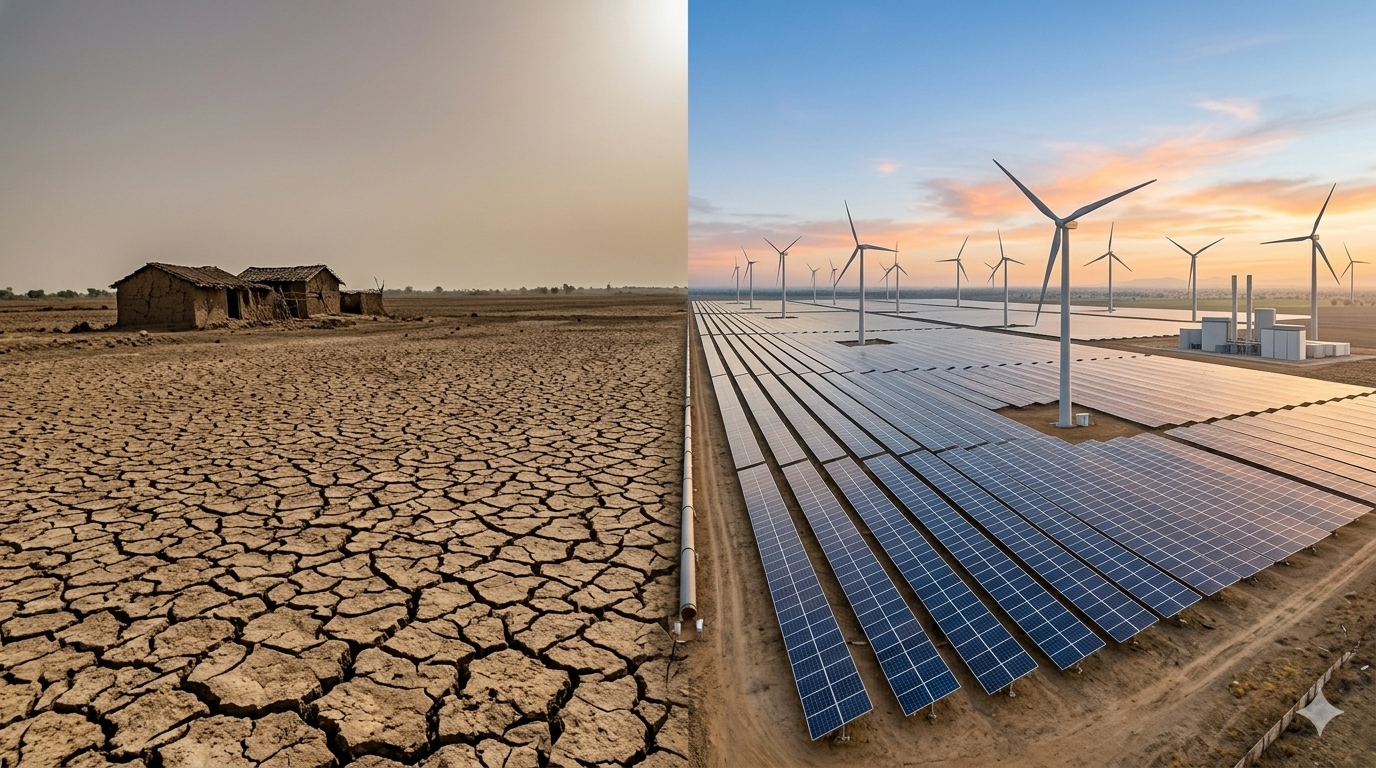
The climate story in 2026 is not only about worsening conditions. It is also about an extraordinary scale of clean energy deployment. Global solar capacity additions in 2025 exceeded all previous years combined. Wind energy is expanding at record pace. Electric vehicle adoption is following an S-curve that is compressing timelines previously predicted for 2035 into 2028. Green hydrogen is reaching cost competitiveness in industrial applications. The climate crisis is being met with genuine technological and economic responses. The honest question is whether those responses are fast enough, given how much carbon is already in the atmosphere. Stay updated on climate developments at BlogofTime.com.
| Climate Indicator | Status in 2026 | Trend |
|---|---|---|
| Global Average Temperature | +1.3°C above pre-industrial baseline | Worsening, approaching 1.5°C threshold |
| Arctic Sea Ice | Near-record low summer extent for fourth consecutive year | Accelerating loss |
| Renewable Energy Share | 40% of global electricity from renewables | Growing faster than projections |
| Extreme Weather Events | 5x increase in frequency vs 1980s baseline | Increasing with each degree of warming |
| EV Adoption Global | 1 in 5 new cars sold is electric | On track to reach 50% by 2030 |