Content options
Sport has always been a human story. Effort, sacrifice, talent, heart. But in 2026, the science underneath those stories has become almost incomprehensibly sophisticated. The difference between an Olympic medal and a fourth-place finish can be measured in hundredths of a second — and technology is now the battleground where those hundredths are won and lost, long before an athlete ever reaches the starting line.
Biometric Wearables Track Everything Now
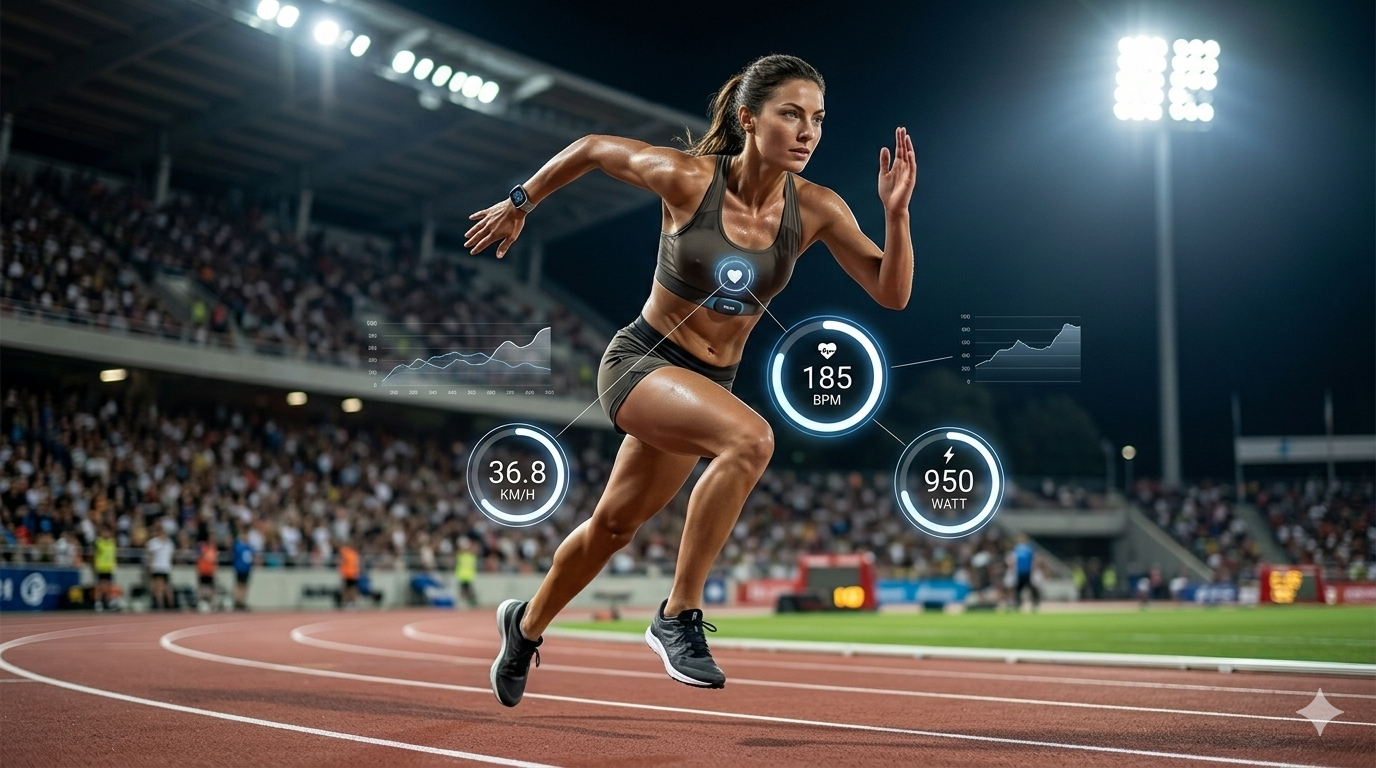
Athletes in 2026 wear devices that track heart rate, heart rate variability, blood oxygen, body temperature, sleep quality, hydration levels, muscle fatigue markers, movement patterns, load distribution, jump height, sprint mechanics, and stress hormones — all simultaneously, in real time. Catapult Sports wearables used by elite football, rugby, and basketball teams generate over 10,000 data points per athlete per training session. Performance scientists analyze this data using AI to identify fatigue patterns, injury risk signals, and optimal training loads before problems become injuries.
AI Coaching Systems Analyze What Human Eyes Miss
Computer vision systems in 2026 track every movement of every athlete on a field simultaneously, generating biomechanical analysis that would take a human coach weeks to review, delivered in minutes. Tennis players receive stroke analysis after each point showing racket angle, contact point, spin rate, and foot positioning. NBA teams use AI to analyze defensive coverage gaps in real time during games. Cricket teams receive ball tracking data showing each bowler's optimal release points and each batsman's statistically identified weaknesses against specific delivery types.
Genetic Performance Profiling Personalizes Training
Genetic testing services specifically designed for athletes now analyze dozens of performance-relevant genetic markers covering injury susceptibility, recovery speed, power versus endurance potential, nutrition response, and psychological stress tolerance. Elite sports academies use this data to personalize training programmes from junior levels. Athletes discover that their genetics make them naturally suited to specific roles, disciplines, and training approaches that their coaches would not have identified through observation alone. According to the World Anti-Doping Agency, genetic performance profiling is an active area of regulatory attention as the science advances. Stay updated at BlogofTime.com.
| Sports Technology | Sport Impacted Most | Performance Benefit |
|---|---|---|
| Real-Time Biometric Monitoring | Team sports, cycling, athletics | 40% reduction in soft tissue injuries through load management |
| AI Video Biomechanics | Tennis, cricket, golf, swimming | Technical improvement 3x faster than traditional coaching |
| Computer Vision Team Tracking | Football, basketball, rugby | Tactical intelligence previously only available to top clubs |
| Cryotherapy and Recovery Tech | All professional sports | Recovery time reduced by 25-30%, allowing higher training frequency |
| Predictive Injury AI | All team sports | Identifies injury risk 2-3 weeks before physical symptoms appear |