Content options
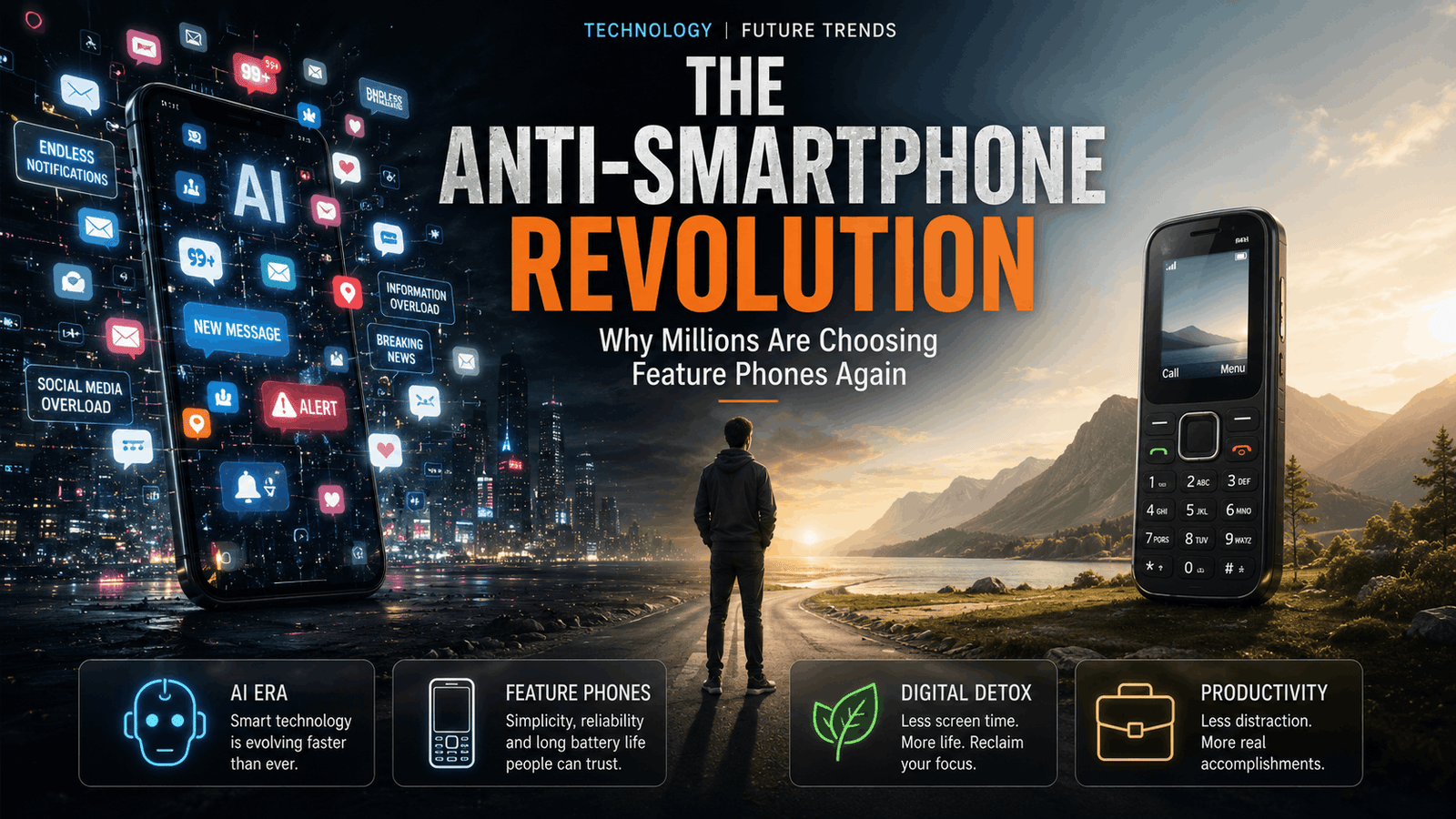
The Anti-Smartphone Revolution: Why Millions Are Switching Back to Feature Phones in the AI Era
Introduction
For more than a decade, smartphones have become the center of modern life. From messaging and banking to shopping, entertainment, navigation, and work, nearly everything happens on a smartphone.
But in 2026, an unexpected trend is gaining momentum.
Instead of buying more powerful smartphones, many people are choosing simple feature phones with basic calling and texting capabilities.
At first glance, this may seem like a step backward. In reality, it's part of a broader movement driven by digital wellbeing, mental health, and the growing influence of artificial intelligence.
As AI-powered apps become increasingly capable of capturing our attention, more people are deliberately choosing devices that help them disconnect.
Why Are People Leaving Smartphones?
Modern smartphones are designed to keep users engaged.
Every day, users receive:
- Social media notifications
- AI-generated recommendations
- Short-form videos
- Endless news feeds
- Promotional alerts
- Messages across multiple platforms
This constant stream of information has led many people to experience digital fatigue.
Rather than adding more apps, many are removing distractions altogether.
The Rise of Digital Detox
"Digital detox" is no longer just a wellness trend—it is becoming a lifestyle choice.
People are increasingly setting boundaries around technology by:
- Limiting screen time
- Turning off non-essential notifications
- Taking breaks from social media
- Using feature phones on weekends
- Creating phone-free work sessions
The goal isn't to reject technology but to use it more intentionally.
Why AI Is Accelerating This Shift
Artificial intelligence has made smartphones smarter than ever.
AI now powers:
- Personalized content recommendations
- Voice assistants
- Smart notifications
- AI-generated feeds
- Automated messaging
- Content suggestions
While these features improve convenience, they can also increase the amount of time users spend on their devices.
For some people, switching to a simpler phone has become a practical way to reduce digital distractions and regain focus.
Feature Phones Are Making a Comeback
Manufacturers have noticed growing demand for minimalist devices.
Modern feature phones now offer:
- Long battery life
- Physical keyboards
- Essential calling and texting
- Basic internet access
- 4G connectivity
- Simple user interfaces
Brands such as HMD, Nokia, Light Phone, and Mudita have introduced devices aimed at users who want fewer distractions while staying connected.
Who Is Driving This Trend?
The movement is growing across different age groups.
👨💼 Professionals
Many professionals use feature phones during work hours to reduce interruptions and improve productivity.
🎓 Students
Some students are replacing smartphones during exam periods to stay focused.
👨👩👧 Parents
Parents are choosing simpler phones for children as a way to delay excessive screen exposure.
🌱 Minimalists
People embracing minimalist lifestyles see feature phones as a tool for living with fewer digital distractions.
The Science Behind Digital Distraction
Research in psychology and neuroscience suggests that constant notifications, multitasking, and endless scrolling can make it harder for people to maintain attention on a single task.
Many experts recommend reducing unnecessary digital interruptions, creating periods of focused work, and taking regular breaks from screens to improve productivity and wellbeing.
Choosing a feature phone is one approach some people use to support these habits, although it is not the only solution.
Are Smartphones Becoming Too Smart?
Artificial intelligence is rapidly transforming smartphones.
Today's devices can:
- Summarize emails
- Edit photos automatically
- Translate conversations in real time
- Schedule meetings
- Generate text and images
- Predict user behavior
While these features improve convenience, they also raise an important question:
Do we always need more technology, or do we need better control over how we use it?
For many people, the answer is balance—not complete disconnection.
What Will the Future Look Like?
Rather than replacing smartphones entirely, experts believe the future may include more intentional technology choices.
Possible trends include:
- AI assistants that reduce digital overload instead of increasing it.
- Phones with built-in digital wellbeing features.
- Minimalist devices for work or travel.
- Hybrid lifestyles where people switch between smartphones and feature phones depending on their needs.
The goal is not to abandon technology but to use it in a healthier and more productive way.
Why Businesses Are Paying Attention
The trend isn't just about personal wellbeing.
Companies are increasingly encouraging employees to reduce unnecessary digital distractions by:
- Limiting non-essential notifications.
- Promoting focused work sessions.
- Using AI to automate repetitive tasks instead of adding more apps.
- Encouraging healthier digital habits to improve productivity and reduce burnout.
This shift reflects a growing awareness that technology should support people—not constantly compete for their attention.
Blog of Time Insight
The return of feature phones doesn't mean smartphones are disappearing. Instead, it signals a broader shift in how people think about technology.
As AI becomes more deeply integrated into daily life, many users are asking a different question—not "What can my phone do?", but "How can my phone help me live and work better?"
The future is unlikely to be defined by more screen time. Instead, it may be shaped by smarter technology that respects users' time, attention, and wellbeing.
Key Takeaways
✔ Growing numbers of people are choosing feature phones as part of a digital detox and minimalist lifestyle.
✔ AI-powered smartphones offer incredible convenience but can also contribute to information overload and constant distractions.
✔ Professionals, students, parents, and minimalists are driving demand for simpler devices.
✔ Feature phones are evolving with modern connectivity while maintaining a distraction-free experience.
✔ The future of technology may focus less on adding features and more on helping people use technology intentionally.
Conclusion
The rise of feature phones is not a rejection of innovation—it is a reflection of changing priorities.
As artificial intelligence continues to reshape our digital lives, users are becoming more conscious of how technology affects productivity, mental wellbeing, and everyday habits.
Whether someone chooses a flagship smartphone or a simple feature phone, the real goal is the same: using technology in a way that adds value instead of unnecessary distraction.
The anti-smartphone movement reminds us that sometimes, less technology can lead to a better digital life.
Frequently Asked Questions (FAQs)
1. Why are people switching back to feature phones?
Many people want to reduce screen time, improve focus, minimize distractions, and practice digital wellbeing.
2. Are feature phones replacing smartphones?
No. Smartphones remain essential for many tasks. Feature phones are becoming popular as a complementary device or for users seeking a simpler digital experience.
3. Is AI causing digital overload?
AI can make technology more useful, but it can also increase the volume of personalized content and notifications. The impact depends on how the technology is designed and used.
4. Which companies make modern feature phones?
Brands including HMD, Nokia, Light Phone, and Mudita offer modern feature phones designed around simplicity and digital wellbeing.
5. Is digital detox supported by research?
Research suggests that reducing excessive screen time and limiting interruptions can improve focus, sleep quality, and overall wellbeing for many people. Individual experiences vary.