Content options
Introduction
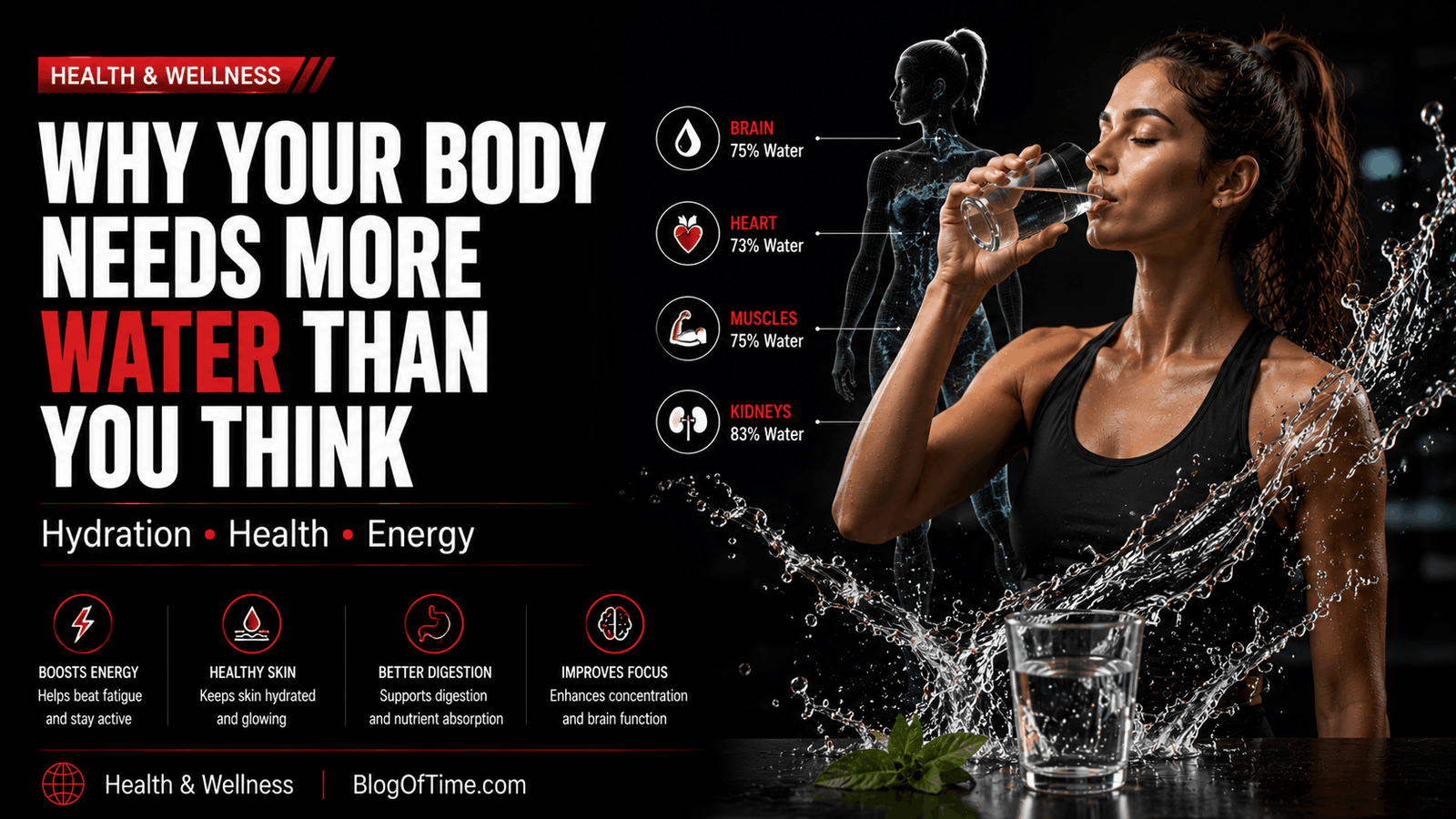
Water is often called the foundation of life—and for good reason. Around 60% of the human body is made up of water, and nearly every organ depends on it to function properly. Despite its importance, many people don't drink enough water each day, leading to fatigue, headaches, poor concentration, and other health issues.
In today's busy world, it's easy to forget something as simple as drinking water. Yet proper hydration plays a critical role in maintaining energy, regulating body temperature, supporting digestion, protecting joints, and keeping your brain functioning at its best.
This article explores why your body needs more water than you might think, the benefits of staying hydrated, common signs of dehydration, and practical tips to make drinking enough water part of your daily routine.
Why Hydration Matters
Water is involved in almost every major function in the body, including:
- Regulating body temperature
- Transporting nutrients and oxygen
- Supporting digestion
- Lubricating joints
- Removing waste through urine and sweat
- Keeping skin healthy
- Supporting brain function
Even mild dehydration can affect how you feel and perform throughout the day.
1. Boosts Energy Levels
Feeling tired or sluggish? Dehydration is a common but often overlooked cause of low energy.
When your body doesn't have enough fluids, your heart works harder to pump blood, and your muscles may not function as efficiently. Drinking enough water helps maintain energy levels and reduce fatigue.
2. Improves Brain Function and Focus
Your brain is highly sensitive to changes in hydration.
Research suggests that even mild dehydration may affect:
- Concentration
- Memory
- Mood
- Alertness
Staying hydrated supports better mental performance, especially during work or study.
3. Supports Healthy Digestion
Water helps break down food, absorb nutrients, and prevent constipation.
Drinking enough water throughout the day supports a healthy digestive system and keeps things moving smoothly.
4. Helps Regulate Body Temperature
When you exercise or spend time in hot weather, your body cools itself by sweating.
Without enough water, this natural cooling system becomes less effective, increasing the risk of overheating.
5. Keeps Joints and Muscles Healthy
Water helps lubricate joints and supports muscle function.
Proper hydration can reduce the risk of muscle cramps and improve physical performance.
6. Promotes Healthier Skin
Well-hydrated skin often appears healthier and more elastic.
While water isn't a cure for skin conditions, adequate hydration supports overall skin health.
7. Helps Remove Waste
Your kidneys rely on water to filter waste products from the blood.
Drinking enough fluids supports healthy kidney function and helps the body eliminate toxins through urine.
Signs of Dehydration
Watch for these common signs:
- Dry mouth
- Dark yellow urine
- Headaches
- Fatigue
- Dizziness
- Muscle cramps
- Increased thirst
- Difficulty concentrating
If symptoms become severe, seek medical attention.
How Much Water Do You Need?
There is no one-size-fits-all answer. Your needs depend on:
- Age
- Body size
- Activity level
- Climate
- Overall health
Rather than focusing only on a specific number of glasses, pay attention to thirst, urine color, and hydration needs during exercise or hot weather.
Practical Tips to Stay Hydrated
- Carry a reusable water bottle.
- Drink water before you feel thirsty.
- Include water-rich foods such as fruits and vegetables.
- Limit sugary drinks.
- Increase water intake during exercise and hot weather.
- Set reminders if you often forget to drink water.
Common Myths About Drinking Water
Myth 1: Everyone must drink exactly 8 glasses a day.
Hydration needs vary from person to person.
Myth 2: Coffee always causes dehydration.
Moderate coffee consumption can still contribute to your daily fluid intake.
Myth 3: Only water keeps you hydrated.
Foods like watermelon, cucumber, oranges, and soups also provide fluids.
Future Outlook
As health awareness grows, hydration is becoming a key focus in fitness, workplace wellness, and preventive healthcare. Smart water bottles, hydration tracking apps, and wearable devices are making it easier for people to monitor their fluid intake and build healthier habits.
Conclusion
Staying hydrated is one of the simplest yet most effective ways to support your overall health. From boosting energy and improving concentration to promoting healthy digestion and regulating body temperature, water plays a vital role in nearly every function of the body.
The good news is that improving your hydration doesn't require major lifestyle changes. Carrying a water bottle, choosing water over sugary drinks, and paying attention to your body's signals can make a lasting difference.
Small daily habits can lead to better health—and drinking enough water is one of the easiest places to start.
Frequently Asked Questions (FAQs)
1. Why is drinking water important every day?
Water supports essential body functions such as digestion, circulation, temperature regulation, and nutrient transport.
2. How can I tell if I'm dehydrated?
Common signs include thirst, dark urine, fatigue, headaches, dizziness, and dry mouth.
3. Can drinking more water improve my skin?
Good hydration supports overall skin health, although it is not a cure for skin conditions.
4. Do coffee and tea count toward daily fluid intake?
Yes, moderate amounts of coffee and tea contribute to overall fluid intake, though plain water remains the best choice for hydration.
5. Is it possible to drink too much water?
Yes. Excessive water intake in a short period can be harmful. Drink according to your body's needs and consult a healthcare professional if you have concerns.