Content options
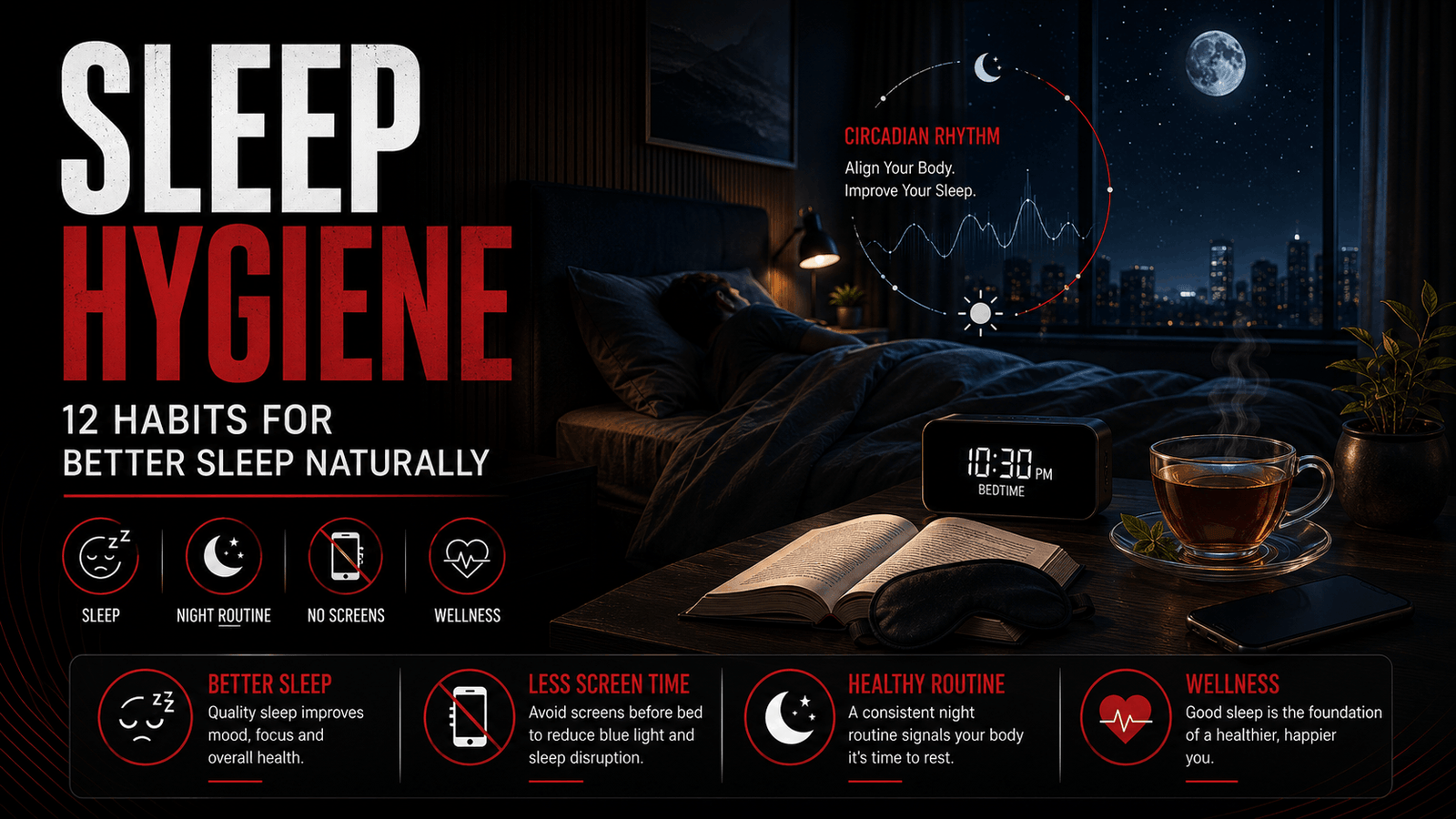
Sleep Hygiene Explained: 12 Habits That Can Help You Sleep Better Naturally
Introduction
Getting enough sleep isn't just about spending eight hours in bed—it's about getting quality sleep.
Poor sleep can affect concentration, mood, productivity, immunity, and overall well-being. While occasional sleepless nights are common, long-term sleep problems can have a significant impact on health.
This is where sleep hygiene comes in. Sleep hygiene refers to healthy habits, routines, and environmental factors that help create better conditions for restful sleep.
In this guide, we'll explore 12 practical habits that can help improve sleep quality naturally.
What Is Sleep Hygiene?
Sleep hygiene is a collection of daily habits and bedtime practices designed to promote consistent, restorative sleep.
It includes:
- Your sleep schedule
- Bedroom environment
- Evening routine
- Diet
- Physical activity
- Screen usage
- Stress management
Good sleep hygiene doesn't guarantee perfect sleep every night, but it can improve your chances of sleeping well over time.
Why Quality Sleep Matters
Good sleep supports:
- Brain function
- Memory
- Immune system
- Heart health
- Mood
- Productivity
- Physical recovery
- Hormonal balance
12 Habits That Can Help You Sleep Better Naturally
1. Keep a Consistent Sleep Schedule
Try to go to bed and wake up at the same time every day—even on weekends.
A consistent schedule helps regulate your body's internal clock.
2. Reduce Screen Time Before Bed
Phones, tablets, and laptops emit blue light that can interfere with your body's natural sleep-wake cycle.
Consider avoiding screens for 30–60 minutes before bedtime.
3. Create a Comfortable Sleep Environment
Your bedroom should be:
- Quiet
- Dark
- Comfortable
- Cool
Comfortable bedding and reduced noise can contribute to better sleep quality.
4. Avoid Caffeine Late in the Day
Coffee, tea, energy drinks, and some soft drinks contain caffeine, which may stay in the body for several hours.
If you're sensitive to caffeine, consider limiting it later in the day.
5. Exercise Regularly
Regular physical activity is associated with better sleep for many people.
However, intense exercise immediately before bedtime may not suit everyone.
6. Limit Heavy Meals Before Sleeping
Eating a very large meal shortly before bed may cause discomfort and make it harder to fall asleep.
A lighter evening meal may be more comfortable for some people.
7. Build a Relaxing Bedtime Routine
Calming activities before bed may help signal to your body that it's time to sleep.
Examples include:
- Reading
- Gentle stretching
- Meditation
- Listening to relaxing music
8. Keep Your Bedroom Cool
Many people sleep more comfortably in a slightly cool room.
Adjust the temperature according to your personal comfort.
9. Avoid Long Daytime Naps
Short naps can be refreshing, but long or late-afternoon naps may make it harder to fall asleep at night.
10. Manage Stress
Stress and anxiety can make it difficult to relax before bed.
Simple techniques include:
- Deep breathing
- Journaling
- Mindfulness
- Yoga
11. Get Natural Daylight
Exposure to sunlight during the day helps regulate the body's circadian rhythm.
Even a short walk outdoors can be beneficial.
12. Use Your Bed Only for Sleep
Avoid working or scrolling on your phone in bed whenever possible.
This helps your brain associate the bed with sleep rather than activity.
Common Sleep Mistakes
❌ Using your phone in bed
❌ Drinking too much caffeine
❌ Sleeping at different times every day
❌ Heavy meals before bedtime
❌ Watching stressful content late at night
❌ Ignoring ongoing sleep problems
When Should You See a Doctor?
If sleep problems continue for several weeks or interfere with daily life, it's a good idea to consult a healthcare professional.
Persistent symptoms such as loud snoring, breathing pauses during sleep, or excessive daytime sleepiness may require medical evaluation.
Blog of Time Insight
Better sleep rarely comes from one dramatic change. More often, it results from consistent daily habits. Creating a calming bedtime routine, maintaining a regular sleep schedule, and making your bedroom comfortable are small adjustments that can add up to meaningful improvements over time.
Key Takeaways
✅ Sleep hygiene is about building healthy sleep habits.
✅ Consistency often matters more than sleeping longer.
✅ Reducing screen time before bed may support better sleep.
✅ Lifestyle choices throughout the day can influence nighttime sleep.
✅ Persistent sleep problems should be discussed with a healthcare professional.
Conclusion
Quality sleep is one of the foundations of good health. While there's no single solution that works for everyone, practicing good sleep hygiene can create an environment that supports better rest. By making small, sustainable changes to your daily routine, you may improve your sleep quality and overall well-being over time.