Content options
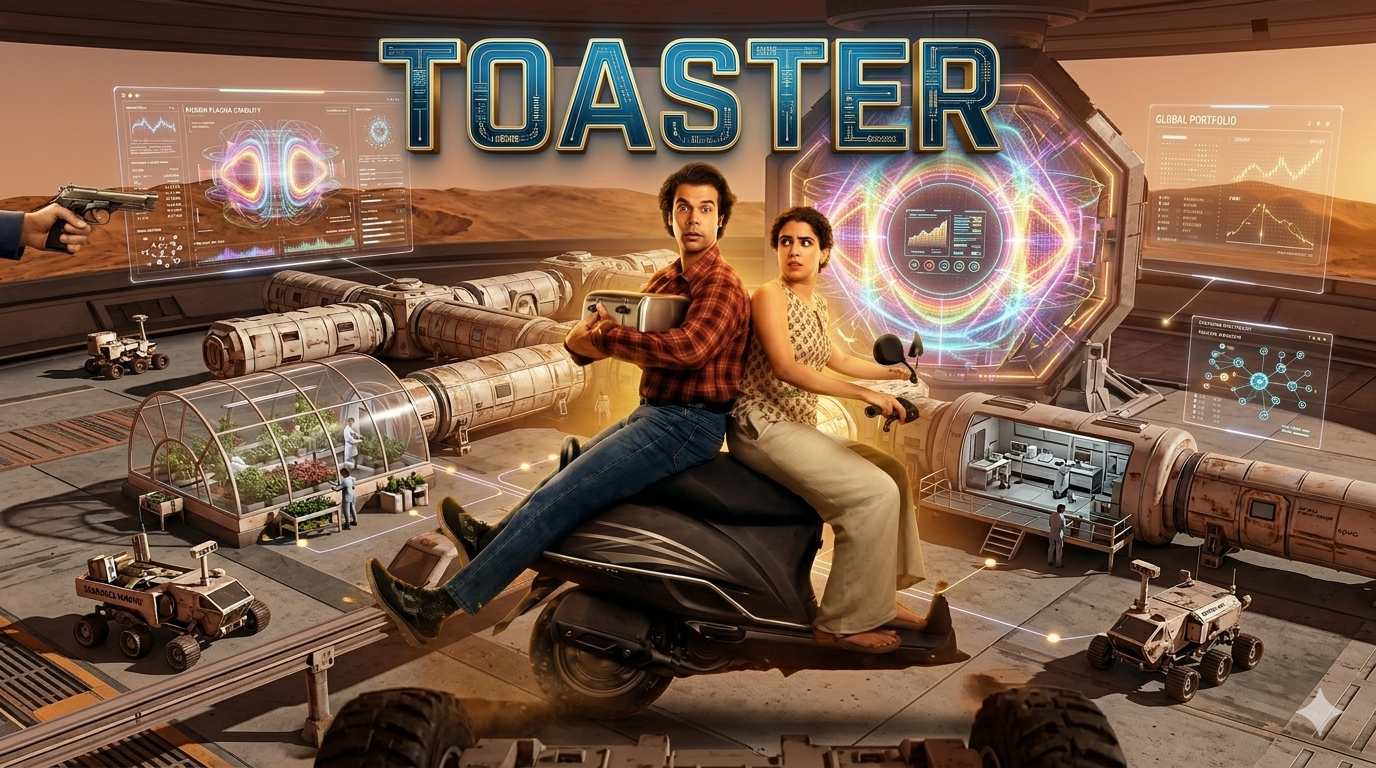
Yes, Toaster is worth watching, mostly for its first half. Rajkummar Rao and Sanya Malhotra make a very funny pair, and the film's overall rating is 3.5 out of 5. The second half turns conventional and loses much of the energy that made the opening so good.
This review first ran on 20 April 2026. We have reworked it here so you can decide quickly, with more context on what works, what doesn't and who will enjoy it most.
What is Toaster about?
Rajkummar Rao plays a bumbling but endearing small-town electrician. A cheap toaster nearly burns down his rented flat. What starts as a personal grudge turns into a viral consumer rights movement, and he never planned any of it.
Sanya Malhotra plays his wisecracking, perpetually exasperated wife. She is the voice of sense in a house that keeps getting more chaotic. Their scenes together are the heart of the film.
The setup will feel familiar to Indian viewers. Most of us have bought a gadget that died too soon, or argued with a seller who would not honour a warranty. The film turns that small frustration into absurd comedy. It also pokes fun at how quickly online outrage can take over a personal complaint.
What works: the first half
The first half moves fast. Jokes land quickly, the pacing is tight and the silly situations grow in inventive ways. The film earns its laughs instead of begging for them.
The courtroom scene
The best moment is a courtroom sequence in which Rao tries to cross-examine a broken appliance. Our review called it possibly the funniest single sequence in a Hindi film this year, and the comedic high point of 2026 Bollywood so far. That judgement was made in April, so later releases may have challenged it. It is still the scene people will remember.
Rajkummar Rao
Rao plays comedy the way he plays drama. He is fully committed, physically expressive and believable. His reaction shots carry several scenes without a single line of dialogue. We gave his comic work 5 out of 5 and called it career-best.
Sanya Malhotra
Malhotra matches him beat for beat. Their domestic banter feels lived-in rather than scripted, and that is why the lead chemistry scores 4.5 out of 5. We rated her performance 4.5 out of 5 as well. She is arguably more consistent than Rao across the whole film.
The supporting cast
The supporting players add real texture. The landlord is written as a petty bureaucratic villain and gets some of the sharpest lines. A recurring subplot follows a social media influencer who documents the toaster saga. It mocks consumer outrage culture with a light but accurate touch.
Where the heat doesn't last: the second half
After the interval, Toaster loses its charge. The film moves toward a safe, familiar ending:
- The consumer wins.
- The corporate villain is exposed.
- Domestic harmony is restored.
That ending drops the anarchic energy that made the first half special. The satire gets blunter. The jokes grow broader and easier to see coming.
A subplot about a TV news anchor feels grafted on from a different, more earnest film. The climax is emotionally satisfying, but it arrives too neatly for a film that spent 90 minutes enjoying chaos.
This is a common problem in comedies. Starting with a wild idea is easier than finishing it. Here the writers set up a strong premise, then fall back on a formula to close it. That is why we rate the first half 4 out of 5 and the second half only 2.5 out of 5.
Toaster scorecard
Here is how we scored each part of the film:
| Element | Verdict | Score |
|---|---|---|
| Direction | Sharp, inventive first half; conventional second | 3.5/5 |
| Rajkummar Rao | Career-best comedic work | 5/5 |
| Sanya Malhotra | Perfectly pitched, consistently funny | 4.5/5 |
| Screenplay | Strong setup, weak payoff | 3/5 |
| Music | Catchy, era-appropriate, never intrusive | 4/5 |
| Rewatch value | First half: yes. Second half: optional | 3/5 |
The pattern is clear. The performances and the music score high. The screenplay and the rewatch value pull the overall number down to 3.5 out of 5.
How does Toaster compare with Bareilly Ki Barfi and Stree?
If you liked Rao in Bareilly Ki Barfi or Stree, Toaster is a good bet. It does not reach those heights. It sits comfortably in the middle of his comedy filmography. It is better than some of his comedies but not as cohesive as those two.
The difference is consistency. Those films kept their tone from start to finish. Toaster starts sharper than it ends. Still, Rao's performance alone makes it essential viewing for fans.
The director is a first-time feature filmmaker with a background in short-form digital comedy. You can see it in the rapid-fire joke structure and the social media-savvy humour. It also may explain the uneven shape. Short comedy sketches thrive on speed, and keeping that speed across a full-length film is much harder. This is our reading of the evidence on screen, not something the filmmakers have said.
Should you watch Toaster in a cinema or wait?
The film runs about 130 minutes. Our advice is to watch it with a crowd if you still can. The first half practically demands an audience, because collective laughter amplifies the comedy. The film's pacing and sound design also reward a proper theatrical experience.
We reviewed Toaster in April. We do not know where it is streaming now, or whether it is still in cinemas near you. Check the listings on your preferred OTT app or ticket booking app before you plan your evening.
If you watch at home, a few tips will help:
- Watch with friends or family so the jokes land better.
- Do not scroll your phone during the first half. The wordplay moves fast and you will miss lines.
- Set your expectations for the second half. If you know it slows down, it will annoy you less.
- If you lose interest late, stopping after the courtroom sequence and the main comic set pieces is not a crime.
Who will enjoy it most
Toaster suits viewers who like character-driven comedy, domestic banter and light satire of online culture. It is less suited to anyone who wants a tightly plotted story or a sharp takedown of corporate India. The film aims for laughs first and satire second.
Frequently asked questions
Is Toaster worth watching in theatres?
Yes, especially for the first half. The comedy plays better with a live audience, and the film's pacing and sound design reward a proper theatrical experience.
Does Sanya Malhotra get enough screen time in Toaster?
She gets substantial screen time and is arguably more consistent than Rao. Her comedic instincts are impeccable throughout. This is one of her best performances to date.
Is Toaster family-friendly?
Largely yes. The humour is broad and accessible, with no explicit content. Some rapid-fire wordplay may go over younger children's heads, but the slapstick works for all ages.
Who directed Toaster?
Toaster is directed by a first-time feature director. Their background in short-form digital comedy shows in the film's sharp, rapid-fire joke structure and social media-savvy humour.
Toaster is a very good first half in search of a second half that matches it. Rao and Malhotra are a joy together, the courtroom scene is a real highlight, and the music stays pleasant without getting in the way. The film runs out of nerve near the end, which keeps it at 3.5 out of 5 instead of higher. Go for the laughs, bring friends, and forgive the tidy ending.