Content options
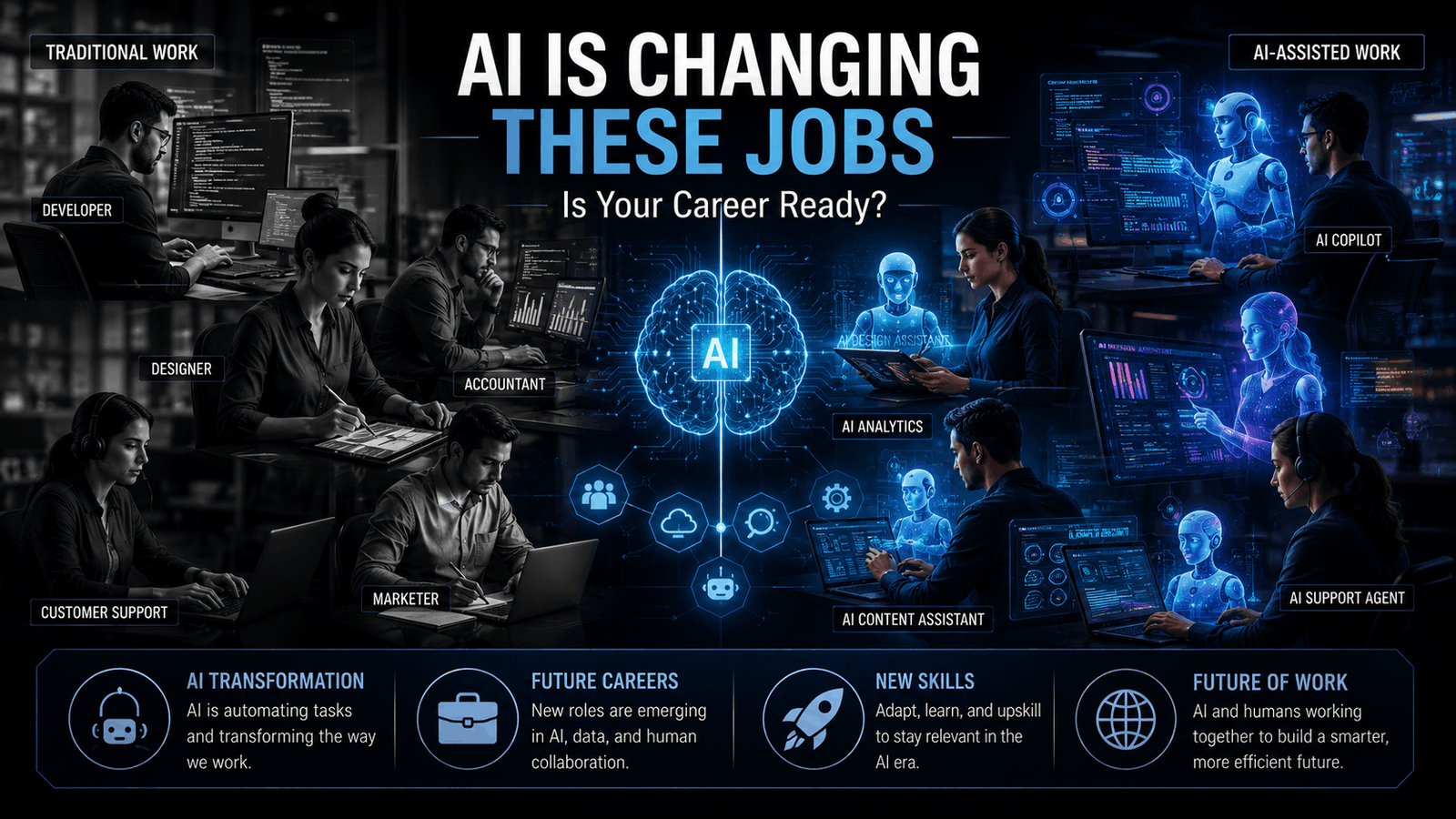
AI Is Quietly Changing These Jobs First: Is Your Career Ready for the Future?
Introduction
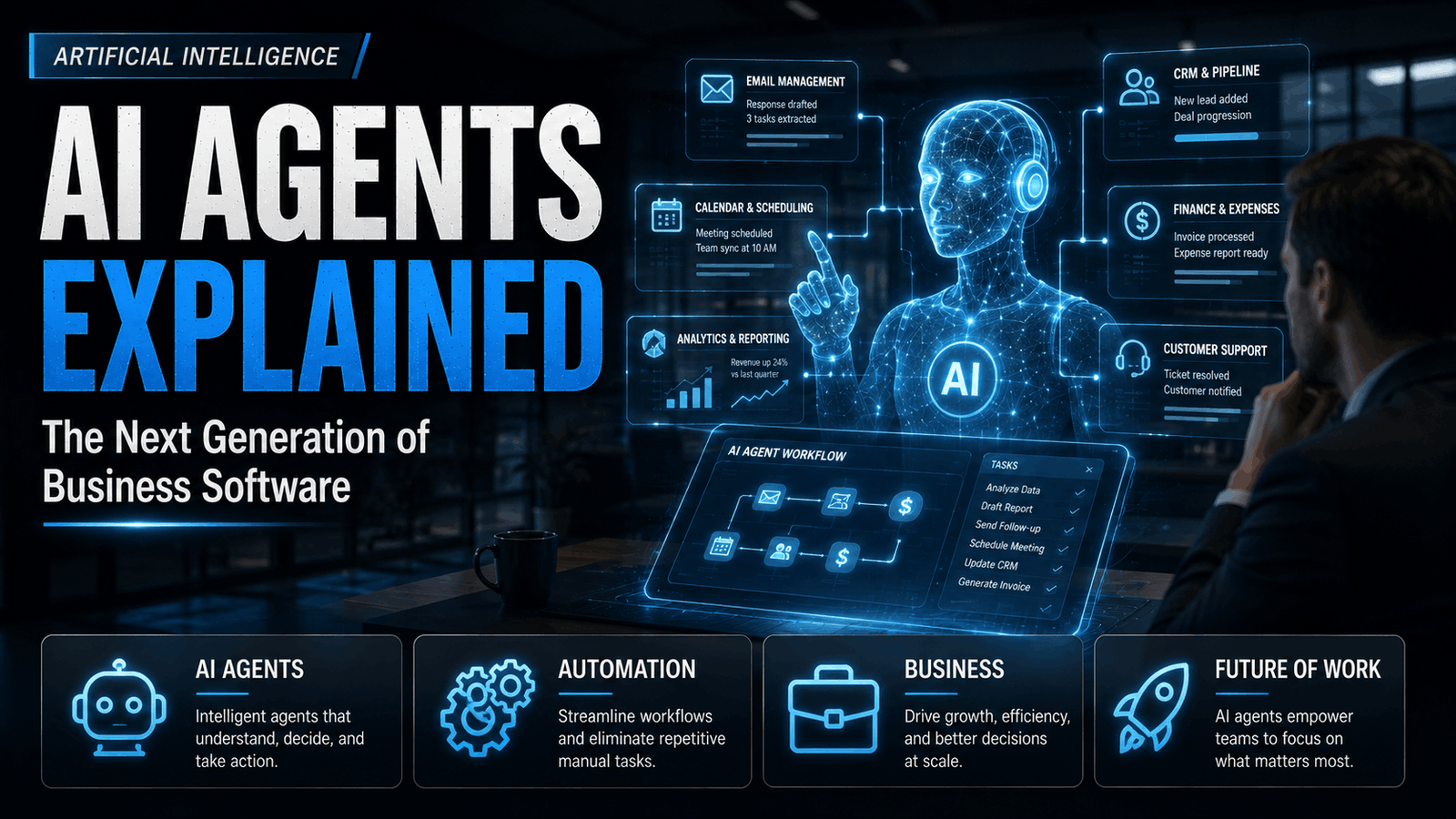
Artificial Intelligence (AI) is no longer a futuristic concept—it has become a part of everyday work. From writing emails and analyzing data to creating images and assisting customer service teams, AI-powered tools are changing how businesses operate across the world.
This has sparked an important question:
Is AI replacing jobs?
The answer is more nuanced than a simple "yes" or "no." In many industries, AI is not eliminating entire professions but transforming how work gets done. Routine and repetitive tasks are increasingly being automated, while professionals who learn to work alongside AI are discovering new opportunities and becoming more productive.
Let's explore ten professions that are changing rapidly because of AI and the skills that can help professionals stay competitive in the years ahead.
1. Customer Support
AI-powered chatbots and virtual assistants can now answer common customer questions, process refunds, and provide basic troubleshooting 24/7.
What's changing?
Routine queries are increasingly handled by AI, allowing human support agents to focus on complex issues, relationship building, and problem-solving.
Future Skill:
Customer relationship management, empathy, and AI-assisted support tools.
2. Content Writing
Generative AI can quickly create drafts for blogs, product descriptions, emails, and marketing copy.
However, businesses still need experienced writers to:
- Verify facts
- Conduct research
- Develop brand voice
- Create original insights
- Optimize content for SEO
The role of writers is evolving from writing everything manually to editing, refining, and adding expertise.
3. Graphic Design
AI design platforms can generate social media graphics, logos, presentations, and marketing visuals within minutes.
Rather than replacing designers, AI is automating repetitive tasks such as background removal, image resizing, and layout generation.
Creative direction, branding, UX design, and visual storytelling remain valuable human skills.
4. Software Development
AI coding assistants help developers generate code snippets, identify bugs, and improve productivity.
Developers are increasingly spending less time writing repetitive code and more time solving business problems, designing systems, and reviewing AI-generated output.
Learning AI-assisted development tools is becoming an important career advantage.
5. Data Entry
Data entry is among the most automation-friendly roles.
Modern AI systems can:
- Extract information from documents
- Process invoices
- Organize spreadsheets
- Validate records
As a result, professionals are shifting toward data analysis and quality assurance rather than manual data entry.
6. Digital Marketing
AI tools now assist with:
- Content generation
- Email campaigns
- Audience analysis
- Ad optimization
- Keyword research
Successful marketers are focusing more on strategy, creativity, and customer psychology while using AI to automate repetitive tasks.
7. Translation Services
Machine translation has improved significantly for everyday communication.
However, legal, medical, literary, and technical translation still require experienced professionals who understand context, culture, and accuracy.
8. Accounting
AI-powered accounting software can automate:
- Invoice processing
- Expense tracking
- Bookkeeping
- Financial reporting
Accountants are increasingly moving toward financial planning, advisory services, auditing, and compliance.
9. Human Resources
Recruiters now use AI to:
- Screen resumes
- Match candidates
- Schedule interviews
- Generate job descriptions
Human judgment remains essential for interviewing, culture assessment, negotiation, and employee engagement.
10. Legal Research
AI can summarize legal documents, search case law, and review contracts faster than before.
Lawyers continue to play a critical role in legal strategy, negotiations, courtroom advocacy, and interpreting complex regulations.
Jobs AI Is Creating
While AI is changing existing roles, it is also creating new career opportunities, including:
- AI Prompt Engineer
- AI Product Manager
- Machine Learning Engineer
- AI Ethics Specialist
- AI Trainer
- Data Scientist
- AI Security Analyst
- Robotics Engineer
Skills That Matter Most
Professionals who combine technical knowledge with human skills are likely to remain in demand.
Key skills include:
- Critical thinking
- Problem solving
- Creativity
- Communication
- AI literacy
- Data analysis
- Adaptability
- Leadership
- Emotional intelligence
- Continuous learning
Blog of Time Insight
Artificial Intelligence is not simply replacing people—it is changing how work is performed. History has shown that technological revolutions often eliminate repetitive tasks while creating entirely new industries and career paths. Professionals who embrace lifelong learning and understand how to work effectively with AI are likely to benefit the most from this transformation.
Key Takeaways
✅ AI is automating repetitive tasks across many industries.
✅ Most careers are evolving rather than disappearing.
✅ Human creativity, strategy, and emotional intelligence remain difficult to automate.
✅ Learning AI tools can improve career opportunities.
✅ Adaptability is becoming one of the most valuable workplace skills.
Conclusion
Artificial Intelligence is reshaping the future of work, but it is not the end of human careers. Instead, it represents a shift toward more productive, technology-assisted workplaces. By developing new skills and embracing continuous learning, professionals can position themselves for success in an AI-driven economy rather than fear the changes ahead.
❓FAQs
1. Is AI replacing jobs completely?
In most cases, AI is automating specific tasks rather than replacing entire professions.
2. Which jobs are most affected by AI?
Customer support, data entry, content creation, digital marketing, software development, accounting, and administrative roles are among those seeing the biggest changes.
3. Which careers are expected to grow because of AI?
Machine learning, AI engineering, cybersecurity, cloud computing, data science, AI product management, and AI ethics are expected to see strong demand.
4. Should I learn AI tools?
Yes. Understanding AI tools can improve productivity and make professionals more competitive in many industries.
5. Will AI replace creative professionals?
AI can assist with creative work, but human creativity, storytelling, strategy, and original thinking remain highly valuable.