Content options
Introduction
Artificial Intelligence (AI) is no longer a futuristic concept. It has become a powerful force shaping industries, businesses, and careers around the world. From customer service chatbots and automated manufacturing systems to advanced data analytics and content generation tools, AI is transforming how work gets done.
As organizations seek greater efficiency and productivity, many are integrating AI into their daily operations. This shift is creating new opportunities, improving workflows, and changing the skills employers value most. At the same time, it is raising important questions about job roles, workforce adaptation, and the future of employment.
Understanding these changes is essential for professionals, business owners, students, and anyone preparing for the future of work.
Why AI Is Changing the Job Market
Businesses constantly look for ways to:
- Improve efficiency
- Reduce repetitive work
- Increase productivity
- Make better decisions
- Enhance customer experiences
AI helps achieve these goals by automating routine tasks and providing valuable insights from large amounts of data.
As a result, many traditional job responsibilities are evolving.
Industries Experiencing the Biggest Changes
Customer Service
AI-powered chatbots can now handle many routine customer inquiries.
Benefits include:
- Faster response times
- 24/7 availability
- Reduced operational costs
Human representatives remain important for complex situations that require empathy and problem-solving.
Manufacturing
Automation and robotics have transformed manufacturing facilities.
AI systems can:
- Monitor equipment
- Predict maintenance needs
- Improve production efficiency
Workers increasingly focus on supervision, quality control, and technical operations.
Marketing
AI tools are helping marketers:
- Create content
- Analyze campaigns
- Understand customer behavior
- Personalize experiences
Marketing professionals who learn to use AI effectively often gain a competitive advantage.
Healthcare
AI is assisting healthcare providers with:
- Diagnostics
- Data analysis
- Medical imaging
- Administrative tasks
Technology supports healthcare professionals rather than replacing them entirely.
Jobs Most Likely to Change
Roles involving repetitive and predictable tasks are more likely to be affected by automation.
Examples include:
- Data entry
- Basic administrative work
- Routine customer support
- Repetitive manufacturing tasks
However, many jobs are being transformed rather than eliminated.
New Opportunities Created by AI
While some tasks become automated, new career opportunities continue to emerge.
Growing fields include:
AI Development
- Machine Learning Engineers
- AI Researchers
- Data Scientists
Cybersecurity
As digital systems expand, security professionals remain in high demand.
Digital Marketing
Businesses need experts who can combine creativity with AI-powered tools.
UX and Product Design
Human-centered design continues to play a critical role in technology development.
AI Operations and Governance
Organizations increasingly need professionals who understand both technology and business strategy.
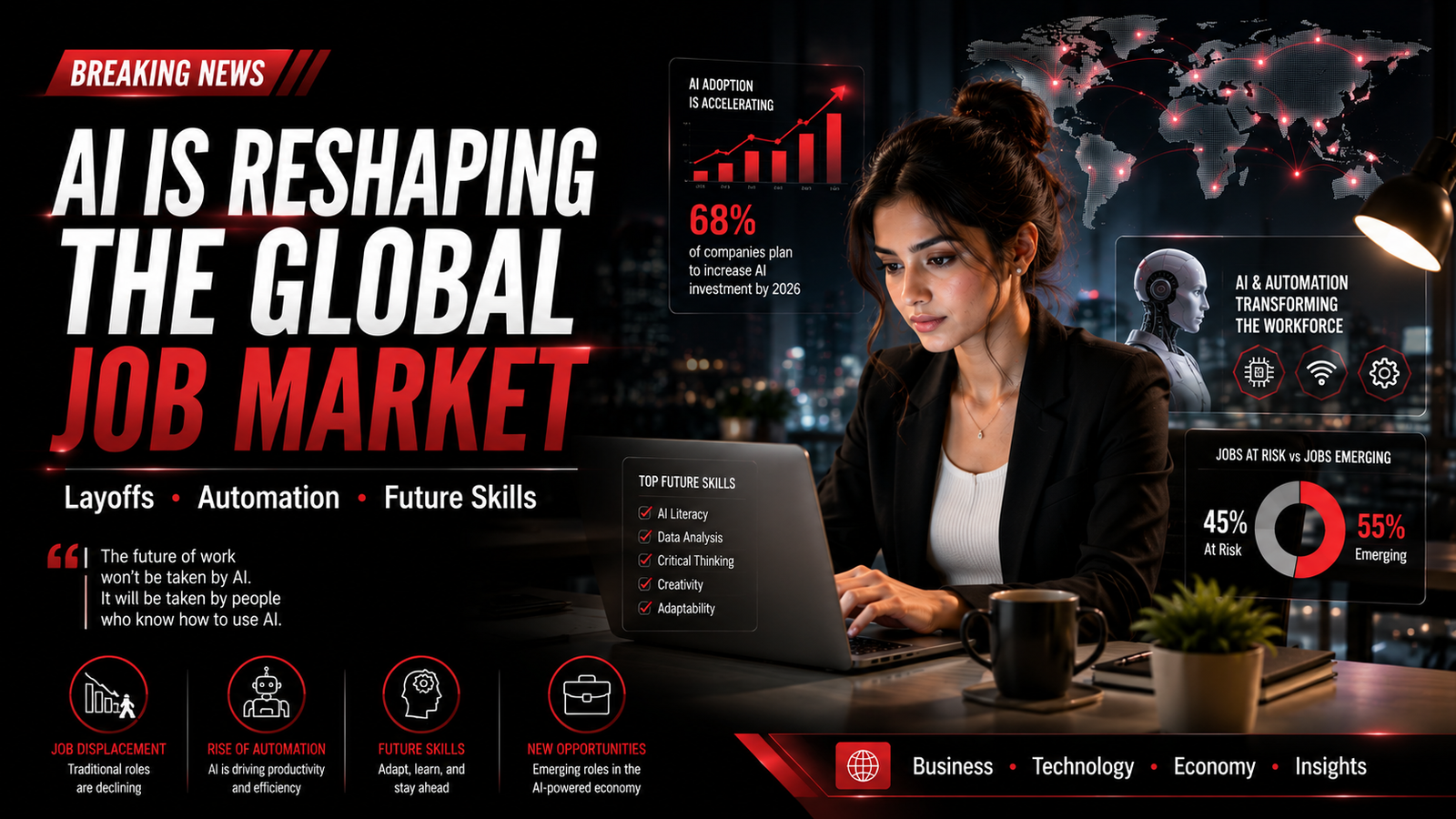
The Skills That Matter Most
The future workforce will require a combination of technical and human skills.
Technical Skills
- Data analysis
- AI literacy
- Digital tools
- Automation platforms
Human Skills
- Creativity
- Critical thinking
- Communication
- Leadership
- Emotional intelligence
These uniquely human abilities remain difficult to automate.
How Professionals Can Stay Relevant
Embrace Lifelong Learning
Continuous learning is becoming essential.
Learn AI Tools
Understanding AI can increase productivity and career opportunities.
Focus on Problem Solving
Employers value individuals who can think strategically and solve complex challenges.
Build Adaptability
Technology evolves rapidly, making adaptability one of the most valuable professional traits.
Challenges and Concerns
The transition toward AI-powered workplaces presents challenges.
Some concerns include:
- Workforce displacement
- Skills gaps
- Economic inequality
- Ethical considerations
- Privacy and security issues
Governments, businesses, and educational institutions must work together to address these challenges.
The Future of Work
The future is unlikely to be a world where humans are completely replaced by machines.
Instead, experts expect increased collaboration between humans and AI.
In many industries:
- AI will handle repetitive tasks.
- Humans will focus on creativity, strategy, and relationship building.
- Productivity will improve.
- New career paths will emerge.
Those who adapt and develop relevant skills will be better positioned to succeed.
Conclusion
Artificial Intelligence is reshaping the global job market in significant ways. While automation is changing how work is performed, it is also creating new opportunities, industries, and career paths.
Rather than viewing AI solely as a threat, professionals can benefit by learning how to work alongside technology and develop skills that remain valuable in an evolving economy.
The future of work will belong to those who combine technological understanding with creativity, adaptability, and continuous learning.
FAQs
Is AI replacing jobs?
AI is automating certain tasks, but many jobs are evolving rather than disappearing completely.
Which industries are most affected by AI?
Customer service, manufacturing, marketing, healthcare, and technology are among the sectors experiencing significant transformation.
What skills will be most valuable in the future?
Creativity, problem-solving, communication, leadership, and AI literacy are expected to remain highly valuable.
Should professionals learn AI tools?
Yes. Understanding AI can improve productivity and open new career opportunities.
Will AI create new jobs?
Historically, technological advancements have created new industries and job roles, and AI is expected to do the same.