Content options
Every few months, a specific AI image trend catches fire across Indian social media. In 2026, one of the most heartwarming examples involves Bollywood's original "Dhak Dhak girl" — Madhuri Dixit — reimagined in traditional cultural aesthetics from countries around the world. The series of AI-generated images has circulated widely on Instagram, X, and Reddit, earning genuine appreciation rather than the backlash that often accompanies AI-generated celebrity content.
What the AI Madhuri Dixit Series Shows
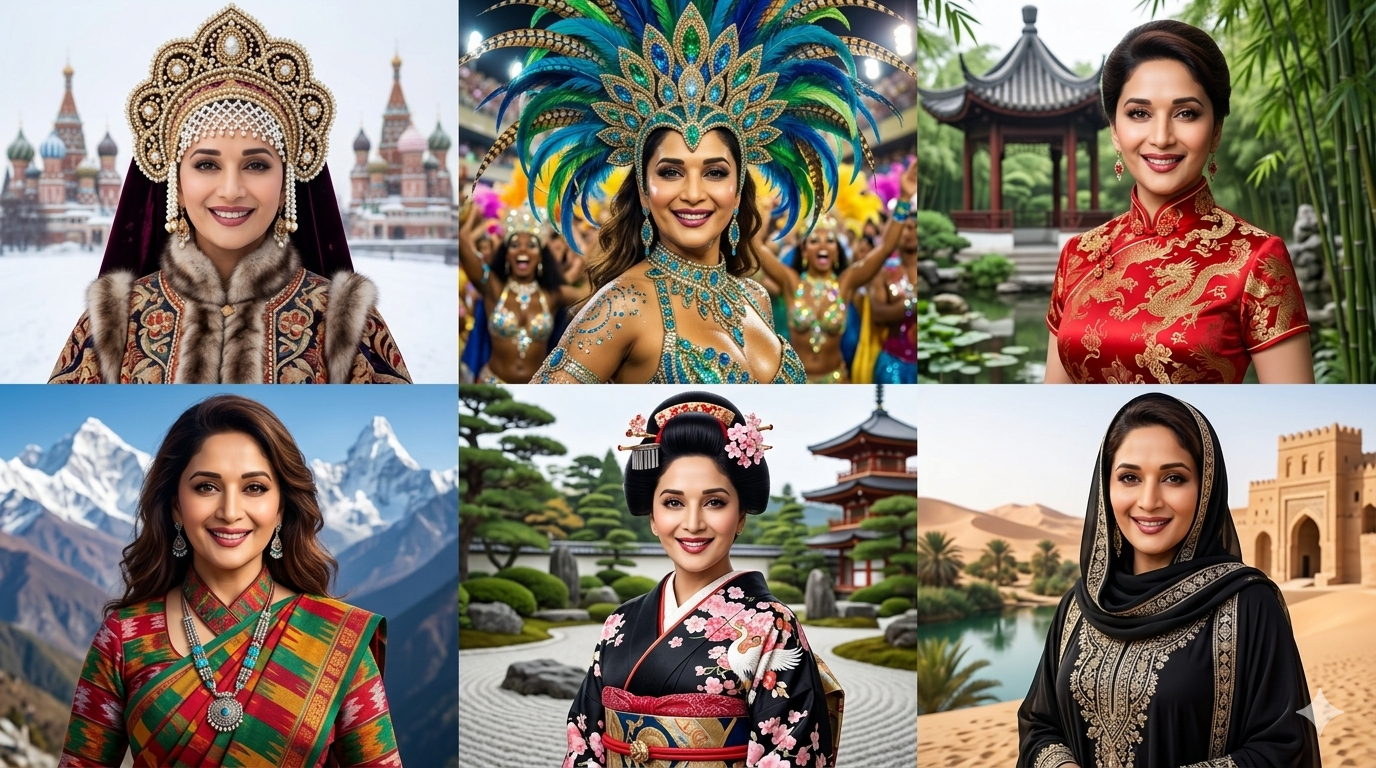
The images render a digital representation inspired by Madhuri Dixit's iconic features in culturally specific styling from different nations. Each image applies traditional clothing, jewelry, makeup, and photographic aesthetic typical of a specific culture:
- Russian version: Features traditional kokoshnik headdress, embroidered sarafan dress in deep jewel tones, and Slavic palace-style architectural backdrop
- Brazilian version: Carnival aesthetic with vibrant feathered headwear, bold makeup, and tropical color palette suggesting Rio de Janeiro
- Chinese version: Traditional qipao in silk red fabric with Suzhou garden backdrop and classic Chinese hairpiece styling
- Nepali version: Traditional Dhaka fabric clothing in ochre and red, Janaki temple-inspired gold jewelry, mountain landscape setting — the clear fan favorite
- Other versions: Japanese kimono styling, Middle Eastern abaya with statement jewelry, and African tribal-inspired designs
Why the Nepali Style Resonated Most
The Nepali interpretation generated the strongest positive response for specific reasons that users articulated in comments. The Dhaka fabric's geometric patterns, the warm earth tones of traditional Nepali textiles, and the mountain backdrop create a visual harmony that commenters felt worked particularly beautifully. Several commenters from Nepal expressed genuine appreciation for seeing their cultural aesthetic rendered respectfully and beautifully in an AI image. The cultural bridge these images create — showing how an Indian Bollywood icon looks "at home" in neighboring cultural aesthetics — seems to generate more warmth than controversy, unlike some AI celebrity image trends that have faced criticism. Read more viral culture stories at BlogofTime.com.
The Ethics Question: Should AI Reimagine Real Celebrities?
This trend raises valid questions about AI and celebrity likeness. The key distinction legal and ethical analysts draw in 2026 is between AI images that could be mistaken for real photographs of a person versus clearly artistic reimaginings that are obviously AI-generated and creatively transformative. The Madhuri Dixit global looks series falls more clearly into the artistic reimagining category — it does not depict the actress in any defamatory, sexual, or misleading context, and the obvious AI aesthetic signals that these are creative explorations rather than real photographs. However, the evolving legal landscape around AI-generated celebrity likeness — including the Digital Personal Data Protection Act in India — means this area will see more specific regulations in the near future. According to India's Ministry of Electronics and Information Technology, guidelines for AI-generated content involving real persons are under development.