Content options
Delhi Approves New EV Policy: Major Push Towards an All-Electric Future
June 29, 2026
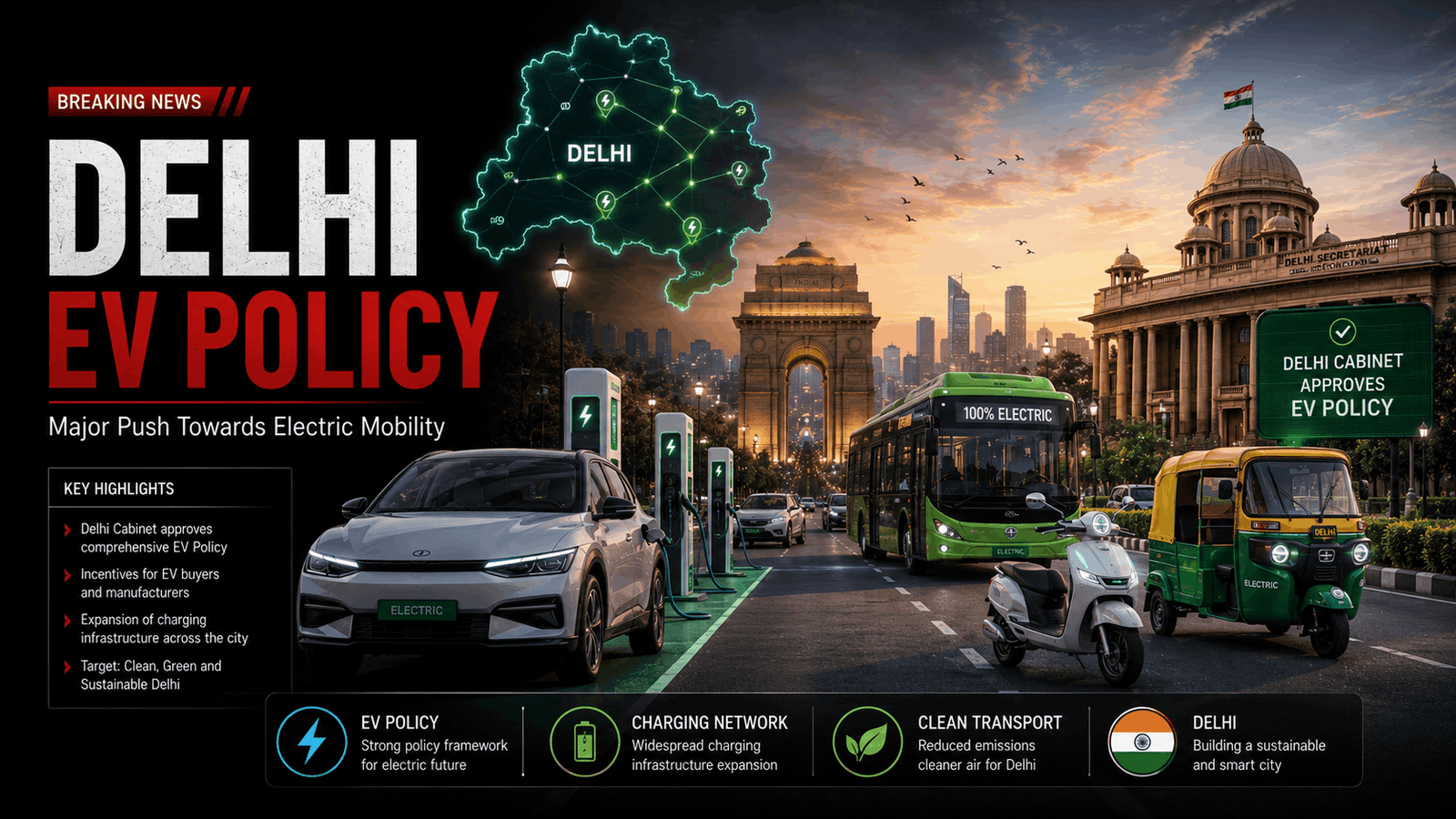
The Delhi Cabinet has approved a new Electric Vehicle (EV) Policy, marking another significant step toward cleaner transportation and reduced air pollution in India's capital. The policy is designed to encourage faster adoption of electric vehicles by introducing new incentives, expanding charging infrastructure, and gradually reducing dependence on conventional fuel-powered vehicles.
The move aligns with Delhi's long-term sustainability goals and India's broader efforts to promote electric mobility.
What Is the New EV Policy?
The updated policy focuses on increasing the number of electric vehicles on Delhi's roads while supporting consumers, businesses, and public transport operators during the transition.
The government aims to create a stronger EV ecosystem by improving charging infrastructure and encouraging both private and commercial EV adoption.
Key Highlights
According to the policy, major initiatives include:
- Expansion of public EV charging stations.
- Continued incentives for eligible electric vehicles.
- Promotion of electric two-wheelers, three-wheelers, and commercial vehicles.
- Gradual transition of selected commercial transport categories toward electric mobility.
- Measures to reduce vehicle emissions and improve air quality.
Why This Policy Matters
Delhi has long faced challenges related to air pollution and traffic emissions. Transportation contributes significantly to urban pollution, making electric mobility an important part of the city's clean-air strategy.
Officials believe the new policy can help:
- Reduce pollution.
- Lower dependence on fossil fuels.
- Encourage sustainable transportation.
- Support India's clean energy goals.
Impact on Consumers
For buyers considering an electric vehicle, the policy could bring:
- Improved charging availability.
- Greater confidence in EV ownership.
- Continued government support for electric mobility.
- Better long-term operating costs compared to conventional vehicles.
Impact on Businesses
Businesses involved in:
- EV manufacturing
- Battery technology
- Charging infrastructure
- Fleet operations
- Logistics
could benefit from increasing demand as electric mobility expands.
Challenges Ahead
Despite strong progress, several challenges remain:
- Expanding charging infrastructure.
- Battery recycling.
- Initial purchase costs.
- Consumer awareness.
- Grid capacity for increased electricity demand.
Addressing these areas will be important for long-term success.
What Happens Next?
The government is expected to roll out the policy in phases, with detailed implementation guidelines and timelines announced through official notifications.
Industry experts will closely monitor how the policy affects EV sales, infrastructure growth, and public adoption over the coming months.
Key Takeaways
✅ Delhi approves a new Electric Vehicle Policy.
✅ Focus on cleaner transportation.
✅ Expansion of EV charging infrastructure.
✅ Stronger support for electric mobility.
✅ Long-term environmental benefits.