Content options
US Indicts Lawrence Bishnoi: What the Charges Mean and Could India Extradite Him?
Introduction
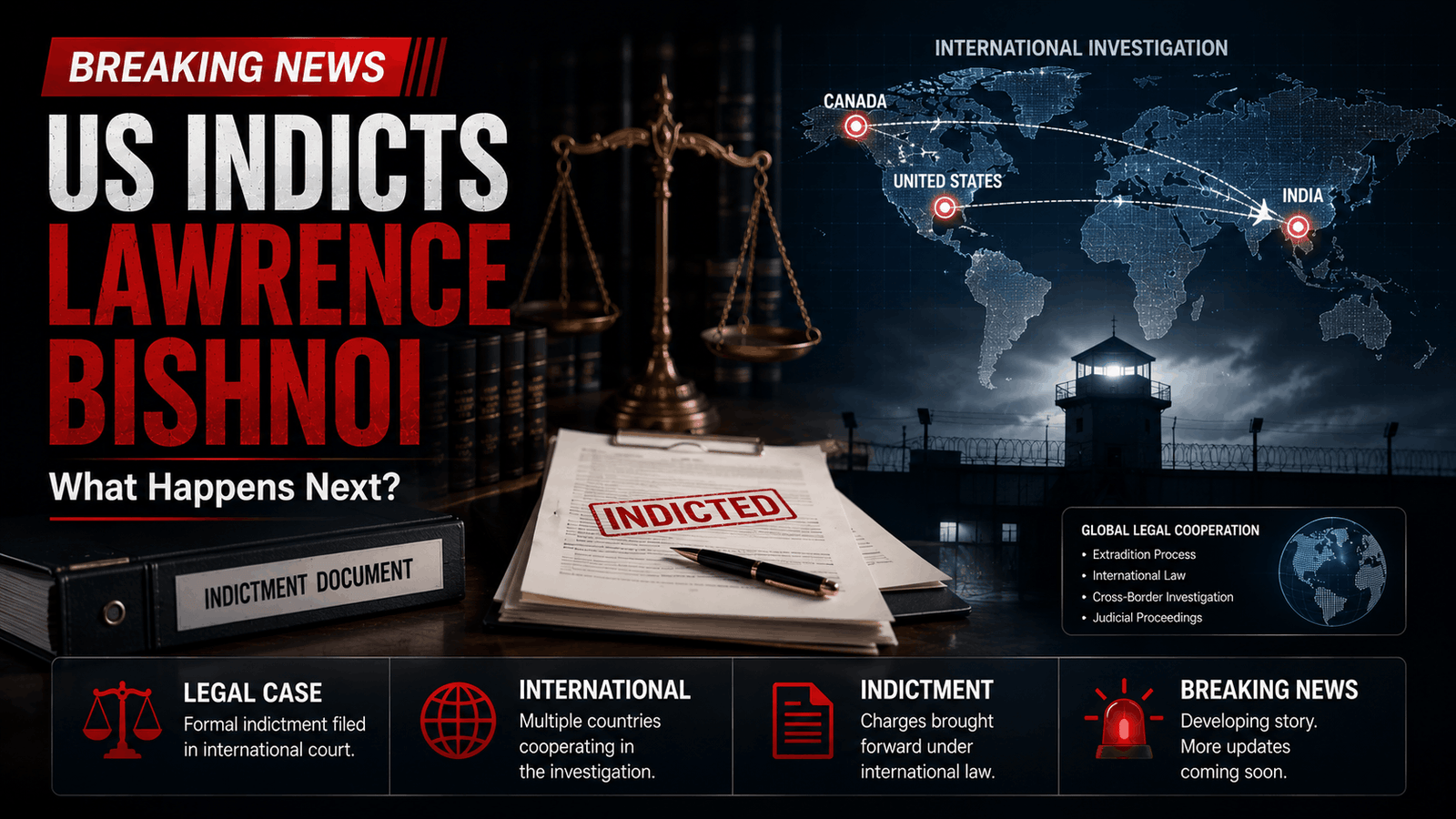
The United States Department of Justice (DOJ) has unsealed a federal indictment against jailed Indian gangster Lawrence Bishnoi and his close associate Satinderjeet Singh, also known as Goldy Brar. Prosecutors allege that they directed a transnational organized crime network involved in the 2023 killing of Canadian Sikh leader Hardeep Singh Nijjar in British Columbia. The indictment forms part of a broader international law enforcement operation targeting organized crime networks.
What Are the Charges?
According to the indictment, U.S. prosecutors allege that:
- Lawrence Bishnoi directed criminal activities from prison in India.
- Goldy Brar coordinated overseas operations.
- The organization was allegedly involved in murder-for-hire, extortion, intimidation, drug trafficking, and other organized crime activities.
- The indictment includes allegations related to the 2023 killing of Hardeep Singh Nijjar in Canada.
At this stage, these are criminal allegations made by U.S. prosecutors, and the accused are presumed innocent unless proven guilty in court.
Why Is This Case Significant?
The indictment is significant because it extends beyond India and Canada, with U.S. authorities alleging that the criminal network operated across multiple countries.
Importantly, the U.S. indictment does not accuse the Government of India of involvement in the alleged killing, focusing instead on the alleged actions of members of the Bishnoi crime syndicate.
Could Lawrence Bishnoi Be Extradited to the United States?
Potentially—but not automatically.
If the United States submits a formal extradition request, India would evaluate it under:
- The India–U.S. Extradition Treaty.
- Indian extradition laws.
- Judicial review by Indian courts.
Legal experts note that any extradition would involve both executive and judicial processes, and there is no automatic transfer simply because an indictment has been filed.
What Happens Next?
Several developments could follow:
- The U.S. may formally pursue extradition.
- Indian authorities will examine any request through the legal process.
- Courts in India would play a central role in deciding whether extradition requirements are met.
- The criminal proceedings in the United States will continue according to U.S. law.
Why This Matters Internationally
The case has attracted global attention because it touches on:
- International organized crime
- Cross-border criminal investigations
- India–U.S.–Canada legal cooperation
- Extradition law
- International law enforcement coordination
Officials from multiple countries have described the investigation as part of a broader effort against transnational criminal organizations.
Blog of Time Insight
The U.S. indictment of Lawrence Bishnoi highlights how organized crime investigations increasingly involve cooperation between multiple countries. However, it's important to distinguish an indictment from a conviction. The charges represent allegations made by prosecutors, and any extradition request or criminal trial will proceed through established legal processes in the relevant jurisdictions.
Key Takeaways
✔ The U.S. Department of Justice has unsealed an indictment against Lawrence Bishnoi and Goldy Brar. The indictment alleges their involvement in transnational organized crime and the 2023 killing of Hardeep Singh Nijjar.
✔ Lawrence Bishnoi is currently in judicial custody in India, meaning any transfer to another country would require legal procedures under the India–U.S. Extradition Treaty.
✔ An indictment is a formal criminal accusation—not a finding of guilt. The allegations must be examined through the judicial process.
✔ If the United States submits a formal extradition request, Indian authorities and courts will decide the matter under applicable laws and treaty provisions.
✔ The case has implications for international law enforcement cooperation between India, the United States, and Canada.
Conclusion
The indictment marks a significant development in an international investigation involving multiple countries. While it has renewed discussion around extradition and cross-border organized crime, no immediate extradition is guaranteed.
The next steps will depend on whether the United States formally seeks extradition and how Indian authorities and courts respond under the applicable legal framework.
As the case progresses, official court proceedings and government statements will provide greater clarity.
Frequently Asked Questions (FAQs)
1. Has Lawrence Bishnoi been convicted in the United States?
No. The U.S. Department of Justice has filed an indictment, which is a formal criminal accusation. The allegations have not been proven in court.
2. Can the United States automatically extradite Lawrence Bishnoi?
No. Any extradition would require a formal request and must go through India's legal and judicial process under the India–U.S. Extradition Treaty.
3. Why is this case attracting international attention?
The indictment relates to alleged transnational organized crime activities and the 2023 killing of Hardeep Singh Nijjar in Canada, making it an international law enforcement matter.
4. Is India required to approve extradition?
No. India will evaluate any formal request under its domestic laws, treaty obligations, and judicial procedures.
5. What happens next?
If a formal extradition request is submitted, Indian authorities and courts will examine the request. Separately, criminal proceedings in the United States will continue according to U.S. law.