Content options
PM Modi's New Zealand Visit: 18 Key Agreements That Could Strengthen India–New Zealand Ties
Introduction
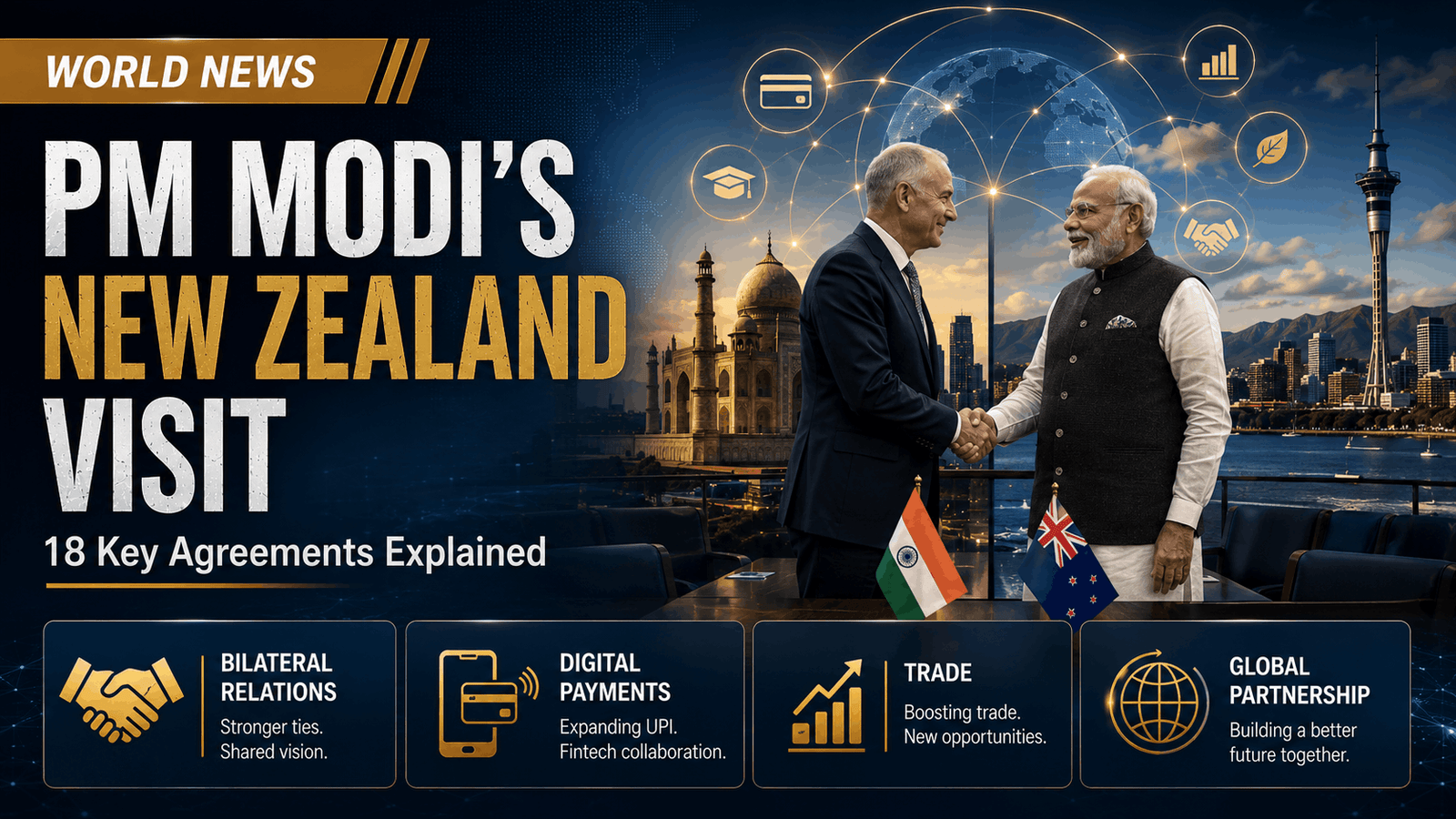
Prime Minister Narendra Modi's official visit to New Zealand marks one of the most important diplomatic engagements between the two nations in recent years. During the visit, India and New Zealand announced 18 agreements and areas of cooperation aimed at strengthening partnerships across trade, digital payments, education, agriculture, renewable energy, innovation, tourism, and strategic collaboration.
The visit reflects the growing importance of the India–New Zealand relationship as both countries seek to expand economic opportunities and deepen cooperation in the Indo-Pacific region.
Why This Visit Matters
Although India and New Zealand have enjoyed friendly diplomatic relations for decades, recent years have seen increasing cooperation in:
- Trade and investment
- Education
- Agriculture
- Technology
- Renewable energy
- Digital economy
- Tourism
- People-to-people connections
The latest agreements are expected to further strengthen these areas while creating new opportunities for businesses and citizens in both countries.
Major Highlights of the Visit
💳 1. Digital Payments Cooperation
One of the biggest announcements was cooperation on digital payment systems, with both countries exploring ways to connect payment infrastructure and promote easier cross-border transactions.
This could eventually make digital payments more convenient for Indian tourists, students, businesses, and the Indian diaspora in New Zealand.
📈 2. Trade & Investment
Both countries agreed to expand bilateral trade by encouraging investment, improving market access, and supporting business collaboration across key industries.
The goal is to increase commercial partnerships and strengthen economic ties.
🌱 3. Agriculture Cooperation
Agriculture remains a major area of collaboration.
The agreements focus on:
- Modern farming practices
- Food processing
- Dairy cooperation
- Agricultural research
- Sustainable farming technologies
🎓 4. Education & Research
India and New Zealand also agreed to enhance cooperation in higher education by encouraging:
- Student exchange programs
- Joint academic research
- University partnerships
- Skill development initiatives
This is expected to create more opportunities for students from both countries.
⚡ 5. Clean Energy & Sustainability
The two nations pledged to work together on clean energy initiatives, renewable technologies, and climate-related projects to support sustainable economic growth.
💻 6. Technology & Innovation
Technology startups, artificial intelligence, digital innovation, and emerging technologies were identified as important areas for future collaboration.
Both governments aim to encourage innovation-driven partnerships between businesses and research institutions.
🚢 7. Maritime & Indo-Pacific Cooperation
India and New Zealand reaffirmed their commitment to maintaining a free, open, and secure Indo-Pacific region through increased regional cooperation and dialogue.
🌍 8. Tourism Promotion
Tourism was another important focus.
Both countries aim to strengthen travel links, promote cultural exchanges, and encourage greater tourism opportunities between India and New Zealand.
🤝 9. People-to-People Connections
The agreements also seek to strengthen ties between communities through cultural exchanges, academic collaboration, and diaspora engagement.
These initiatives are expected to deepen long-term relationships beyond government-level cooperation.
💼 10. Business Opportunities
The expanded partnership could create new opportunities in sectors including:
- Information Technology
- FinTech
- Agriculture
- Renewable Energy
- Education
- Healthcare
- Tourism
- Manufacturing
Businesses from both countries may benefit from stronger investment and collaboration frameworks.
Other Important Areas of Cooperation
Beyond trade and digital payments, both leaders also discussed expanding cooperation in several strategic sectors, including:
🏥 Healthcare
Both countries agreed to strengthen collaboration in medical research, healthcare innovation, public health, and pharmaceutical partnerships.
🔬 Science & Innovation
Research institutions and technology organizations from both nations are expected to work more closely on innovation, emerging technologies, and scientific collaboration.
🌱 Climate Change
India and New Zealand reaffirmed their commitment to sustainable development by promoting clean technologies, renewable energy, and environmental cooperation.
🛡️ Security & Regional Stability
The two leaders also exchanged views on regional and global security challenges, emphasizing the importance of a free, open, and inclusive Indo-Pacific region, maritime security, and adherence to international law.
Why These Agreements Matter for India
The visit is expected to strengthen India's global partnerships by creating new opportunities for:
✅ Increased exports
✅ Higher foreign investment
✅ Better market access
✅ Stronger technology collaboration
✅ More educational opportunities
✅ Improved digital payment connectivity
✅ Enhanced clean energy partnerships
For Indian businesses, startups, and students, these agreements could open new doors for international collaboration over the coming years.
Why These Agreements Matter for New Zealand
New Zealand also stands to benefit from closer ties with India through:
- Access to one of the world's fastest-growing economies.
- Increased tourism and student exchanges.
- Greater opportunities for agricultural exports.
- Collaboration in technology and innovation.
- Expanded trade and investment opportunities.
With India's rapidly growing digital economy and consumer market, New Zealand businesses may find new avenues for long-term growth.
What Happens Next?
While several announcements have been made, implementation will depend on continued discussions between government agencies, businesses, and industry stakeholders.
Some initiatives—such as digital payments and trade facilitation—may take time to become fully operational. However, the visit has laid the foundation for stronger long-term cooperation between the two countries.
Blog of Time Insight
Prime Minister Modi's visit reflects India's broader strategy of strengthening partnerships across the Indo-Pacific region through trade, technology, and innovation. Rather than focusing on a single agreement, the visit builds a framework for deeper cooperation in multiple sectors. If successfully implemented, these initiatives could benefit businesses, students, travellers, and investors in both countries.
Key Takeaways
✔ India and New Zealand announced 18 agreements and areas of cooperation during Prime Minister Modi's visit.
✔ Key focus areas include digital payments, trade, education, agriculture, technology, clean energy, tourism, healthcare, and research.
✔ Both countries aim to deepen economic cooperation and create new business opportunities.
✔ The discussions also emphasized regional security and a free, open Indo-Pacific.
✔ Several initiatives will require further technical work and implementation before they are fully operational.
Conclusion
Prime Minister Narendra Modi's New Zealand visit marks an important milestone in the evolving relationship between the two nations. The broad range of agreements demonstrates a shared commitment to expanding cooperation beyond traditional diplomacy into technology, education, trade, sustainability, and digital innovation.
As these initiatives move from announcements to implementation, they have the potential to strengthen economic ties and create meaningful opportunities for people and businesses in both countries.
Frequently Asked Questions (FAQs)
1. Why did PM Modi visit New Zealand?
The visit aimed to strengthen bilateral relations and expand cooperation across trade, technology, education, clean energy, agriculture, and digital payments.
2. How many agreements were announced?
The two countries announced 18 agreements and areas of cooperation covering multiple sectors.
3. Will Indian travellers benefit?
Potentially yes. Future digital payment cooperation and stronger travel links could make travel and payments more convenient, subject to implementation.
4. Does the visit include UPI expansion?
Yes. Both countries announced cooperation in digital payments, including work toward closer payment system connectivity.
5. Are these agreements effective immediately?
Some agreements begin immediately, while others will require further technical discussions, regulatory approvals, and implementation over time.