Content options
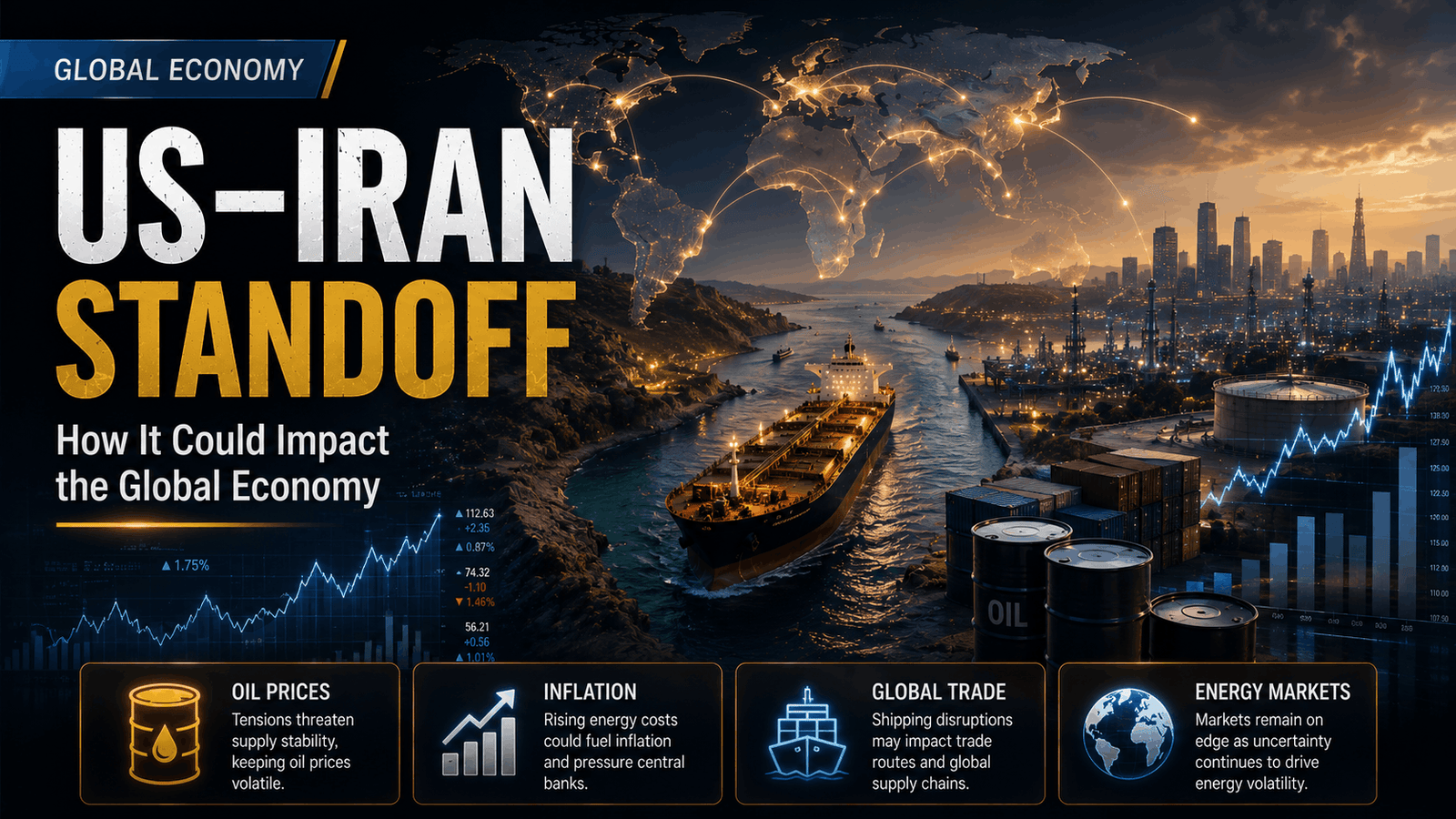
How the U.S.–Iran Standoff Could Affect Oil Prices, Inflation, and the Global Economy
Introduction
The relationship between the United States and Iran has remained one of the world's most closely watched geopolitical flashpoints. Whenever tensions rise, global financial markets respond quickly—not only because of military concerns but also because of the region's importance to the world's energy supply.
The Middle East produces a significant share of global crude oil, and any disruption in this region can influence fuel prices, inflation, international trade, and economic growth. While the full impact depends on how events develop, governments, businesses, and investors are closely monitoring the situation.
Why Is the Middle East So Important?
The Middle East holds some of the world's largest oil and natural gas reserves.
Countries in the region supply energy to:
- Asia
- Europe
- North America
- Africa
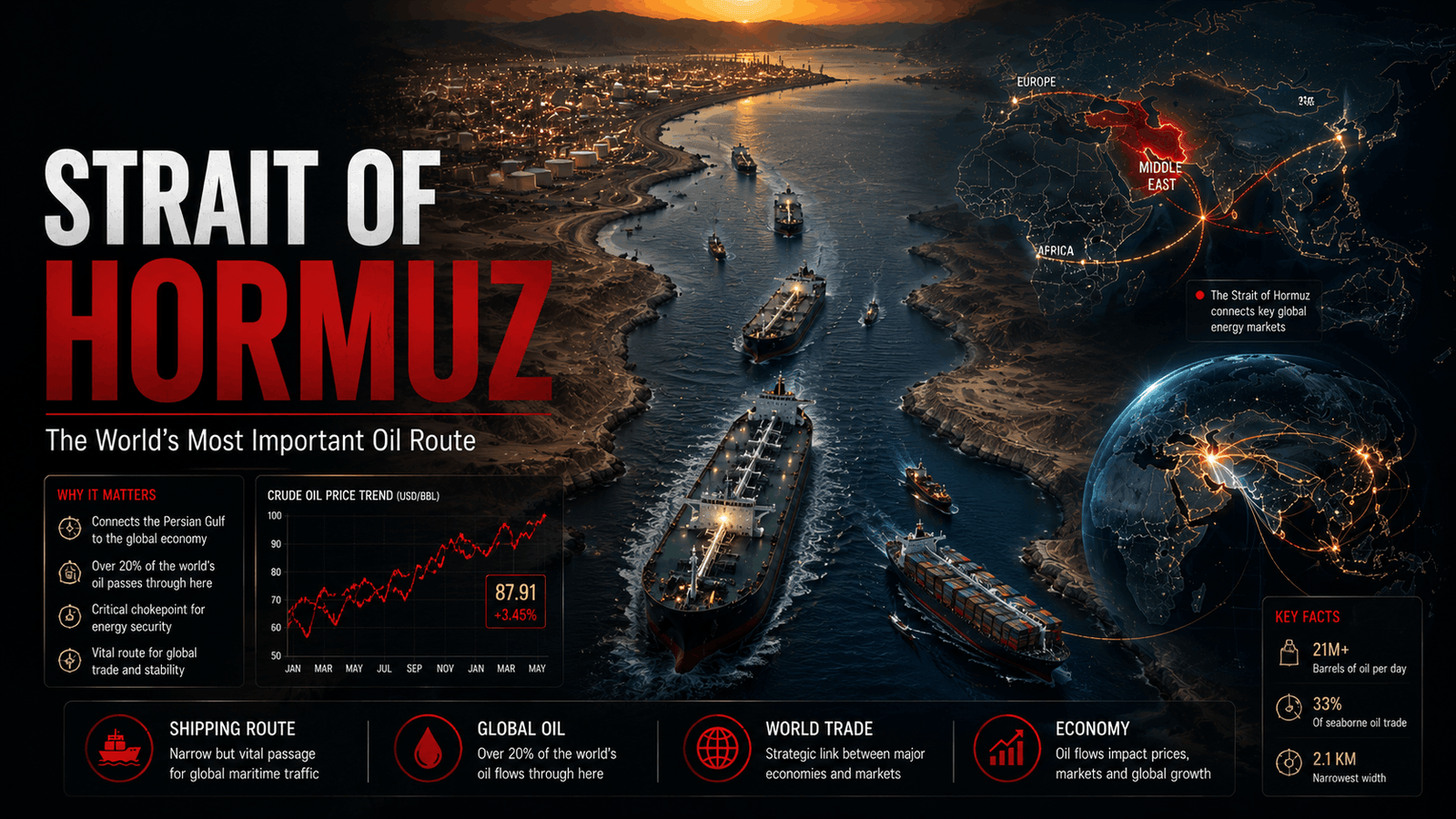
One of the most strategically important locations is the Strait of Hormuz, a narrow waterway through which a substantial portion of global oil exports passes every day.
Because so much energy moves through this route, any disruption can affect markets worldwide.
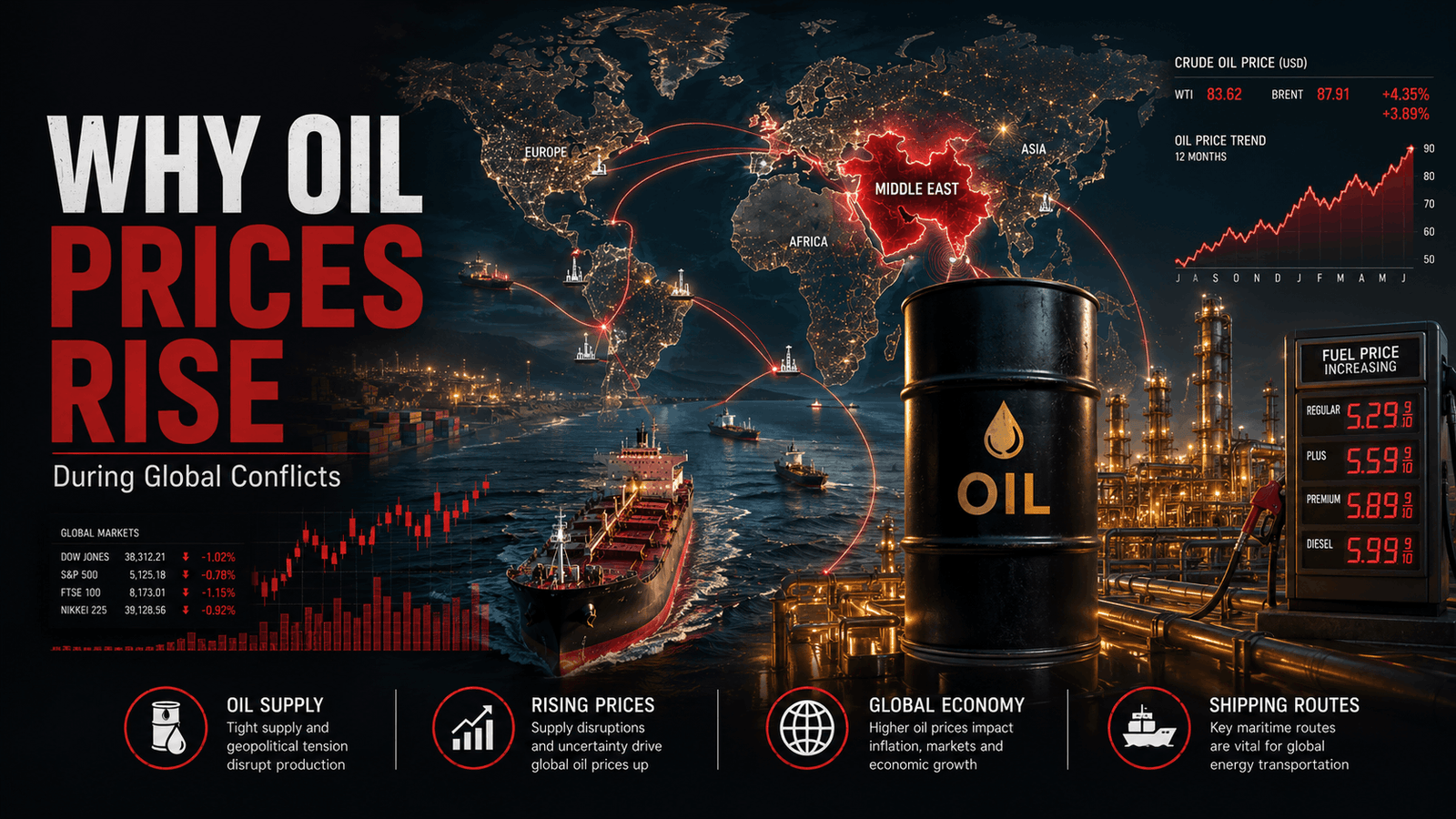
Why Oil Prices React So Quickly
Oil markets are highly sensitive to uncertainty.
Even before any physical disruption occurs, concerns about possible supply interruptions can influence prices.
Factors that investors monitor include:
- Military activity
- Shipping security
- Export restrictions
- Regional stability
- Diplomatic negotiations
When uncertainty increases, oil prices often become more volatile.
How Higher Oil Prices Affect Everyday Life
Many people assume that geopolitical conflicts only affect governments.
In reality, changes in energy prices can influence daily expenses.
Potential impacts include:
⛽ Higher petrol and diesel prices
🚚 Increased transportation costs
🛒 Rising prices of everyday goods
✈️ More expensive airline tickets
🏭 Higher manufacturing costs
📦 Increased logistics expenses
Could Inflation Rise?
Energy is used in nearly every sector of the economy.
When fuel becomes more expensive, businesses often face higher operating costs.
This can contribute to broader inflation as companies adjust prices to reflect increased expenses.
Central banks may then reassess interest rate policies depending on how inflation evolves.
What Does This Mean for India?
India imports a large share of its crude oil requirements.
If international oil prices remain elevated for an extended period, potential effects could include:
- Higher import costs
- Pressure on fuel prices
- Increased transportation expenses
- Impact on inflation
- Greater focus on renewable energy and energy security
India has also been expanding strategic petroleum reserves and diversifying energy partnerships to strengthen long-term resilience.
Global Shipping and Trade
Beyond oil prices, shipping routes are another major concern.
If maritime security is affected:
- Freight costs could increase.
- Delivery times may become longer.
- Supply chains may face disruptions.
- Insurance costs for shipping companies could rise.
Businesses involved in international trade closely monitor developments because logistics costs influence prices across many industries.
Financial Markets Are Watching
Stock markets typically react to geopolitical uncertainty.
Sectors that often receive attention include:
- Energy
- Airlines
- Shipping
- Defence
- Manufacturing
Investor sentiment can change rapidly as new information becomes available, leading to increased market volatility.
Which Industries Could Be Affected?
If geopolitical tensions continue, several industries could experience indirect effects.
⛽ Energy
Oil and gas companies closely monitor supply disruptions and price movements.
✈️ Aviation
Airlines may face higher operating costs if jet fuel prices increase.
🚢 Shipping & Logistics
Higher insurance premiums and longer shipping routes can increase transportation costs for global trade.
🏭 Manufacturing
Industries that rely on imported raw materials or energy may experience higher production costs.
📈 Financial Markets
Investors often shift toward safer assets such as gold during periods of geopolitical uncertainty, while stock markets may become more volatile.
Could This Accelerate the Clean Energy Transition?
Periods of uncertainty in global energy markets often encourage countries to diversify their energy sources.
Many governments are investing more heavily in:
- Solar energy
- Wind power
- Nuclear energy
- Green hydrogen
- Battery storage
- Electric mobility
Reducing dependence on imported fossil fuels is becoming an important long-term strategic goal for many nations.
How India Is Preparing
India has been taking several steps to strengthen its long-term energy security, including:
- Expanding strategic petroleum reserves.
- Increasing renewable energy capacity.
- Diversifying crude oil import sources.
- Investing in domestic energy infrastructure.
- Strengthening international energy partnerships.
These initiatives aim to reduce vulnerability to future global energy disruptions.
What Could Happen Next?
Several scenarios remain possible.
Scenario 1 — Diplomatic Resolution
If diplomatic negotiations succeed, energy markets could stabilize and oil price volatility may ease.
Scenario 2 — Prolonged Tensions
Extended geopolitical uncertainty could continue affecting energy markets, shipping costs, and investor confidence.
Scenario 3 — Wider Regional Escalation
A broader conflict could significantly disrupt global supply chains and increase pressure on inflation and economic growth.
At present, future developments remain uncertain, and governments continue diplomatic efforts to reduce tensions.
Blog of Time Insight
The U.S.–Iran standoff is more than a regional political issue—it highlights how interconnected today's global economy has become.
A single disruption in a critical energy corridor can influence fuel prices, inflation, transportation, manufacturing, and financial markets across continents.
For businesses, investors, and consumers alike, understanding these connections is becoming just as important as following the headlines.
Key Takeaways
✔ The Middle East remains one of the world's most important energy-producing regions.
✔ The Strait of Hormuz is a vital shipping route for global oil exports.
✔ Rising geopolitical tensions can increase oil price volatility even before physical supply is disrupted.
✔ Higher energy costs may influence inflation, transportation, manufacturing, and global trade.
✔ India continues to strengthen its long-term energy security through diversification and infrastructure investments.
Conclusion
The U.S.–Iran standoff serves as a reminder that geopolitical events can have far-reaching economic consequences beyond the countries directly involved.
While no one can predict exactly how the situation will evolve, businesses, governments, and consumers should remain aware of how developments in global energy markets can influence everyday life—from fuel prices and inflation to international trade and investment.
Understanding these broader economic connections helps explain why global events matter to everyone.
Frequently Asked Questions (FAQs)
1. Why does the U.S.–Iran conflict affect oil prices?
Because the Middle East supplies a significant share of the world's crude oil, uncertainty in the region can influence global energy markets and investor expectations.
2. What is the Strait of Hormuz?
It is one of the world's most strategically important waterways, through which a substantial portion of global oil exports passes each day.
3. Could fuel prices increase?
Fuel prices depend on many factors, including international crude oil prices, taxes, exchange rates, and domestic policies. Sustained increases in global oil prices can put upward pressure on fuel costs.
4. Why are stock markets affected?
Financial markets often react to geopolitical uncertainty because it can influence corporate earnings, inflation, trade, and investor confidence.
5. How can countries reduce energy-related risks?
Many governments invest in renewable energy, strategic petroleum reserves, diversified import sources, and domestic energy infrastructure to improve long-term energy security.