Content options
Introduction
- What is the Strait of Hormuz?
- Why does it appear in the news so often?
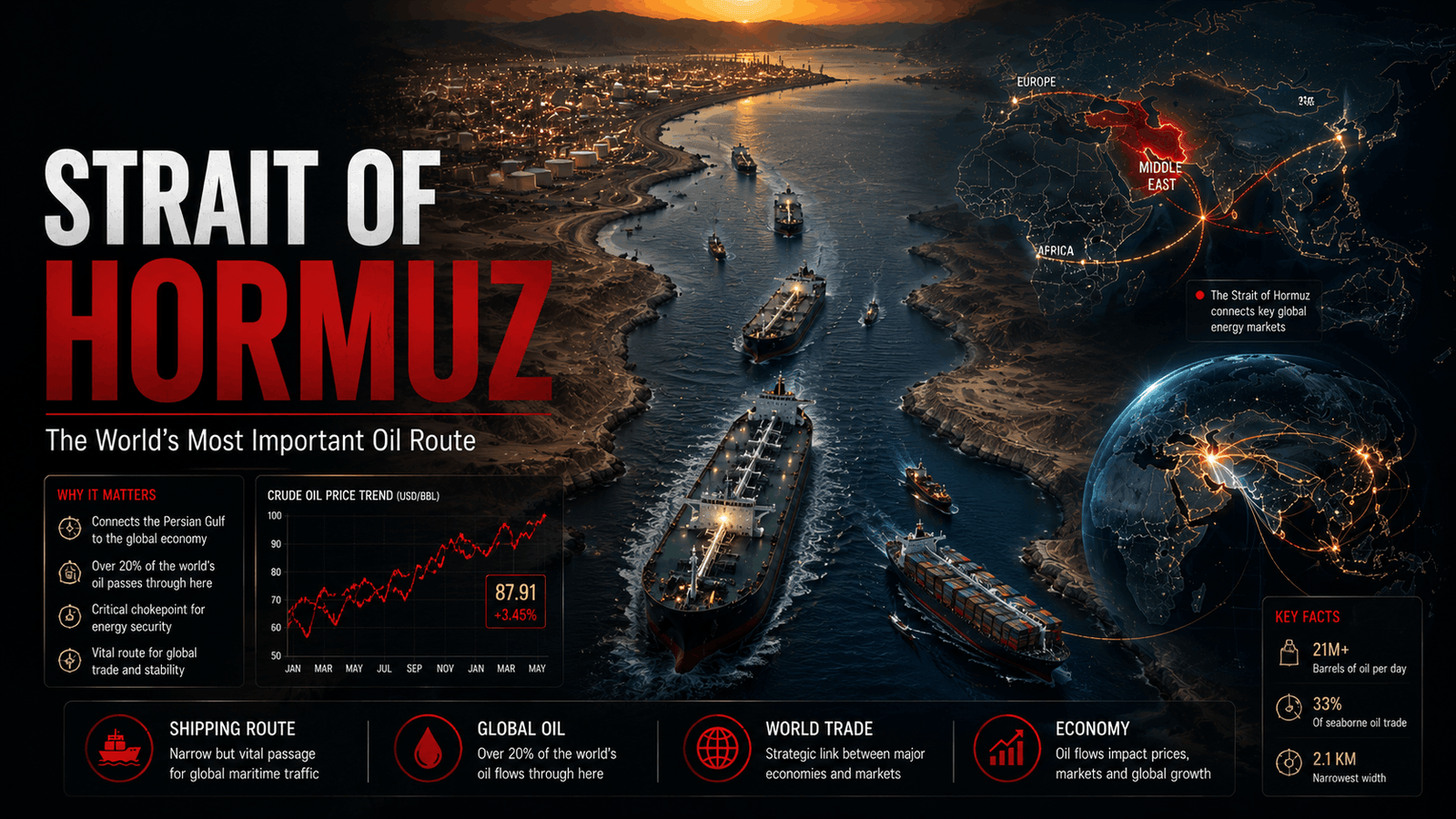
Where Is the Strait of Hormuz?
- Geographic location
- Connecting the Persian Gulf with the Gulf of Oman and Arabian Sea
- Simple map explanation
Why Is It So Important?
- Global oil transportation
- LNG shipments
- International trade
How Much Oil Passes Through It?
- Global energy importance
- Daily shipping traffic
- Why markets monitor it closely
Why Do Conflicts Affect This Region?
- Geopolitical tensions
- Shipping security
- Market uncertainty
How Does It Affect Oil Prices?
- Supply concerns
- Shipping costs
- Insurance costs
- Market speculation
Impact on India
- Oil imports
- Fuel prices
- Inflation
- Economy
Impact on the World
- Europe
- China
- Japan
- Global trade
Can There Be Alternative Routes?
- Pipelines
- Other shipping routes
- Renewable energy
Blog of Time Insight
The Strait of Hormuz may appear small on a map, but it plays an outsized role in the global economy. Any disruption to shipping through this narrow passage can influence energy markets, trade costs, and inflation far beyond the Middle East.
Key Takeaways
✅ One of the world's busiest energy corridors.
✅ Critical for global oil and LNG trade.
✅ Affects fuel prices worldwide.
✅ Important for India's energy security.
Future Outlook
- Renewable energy
- EV adoption
- Diversified energy routes
- Future of global shipping
Conclusion
FAQs
- Where is the Strait of Hormuz?
- Why is it important?
- How does it affect oil prices?
- Which countries depend on it?
- Can global trade continue without it?
Advertisement
122 views
0 favorites
0 shares