Content options
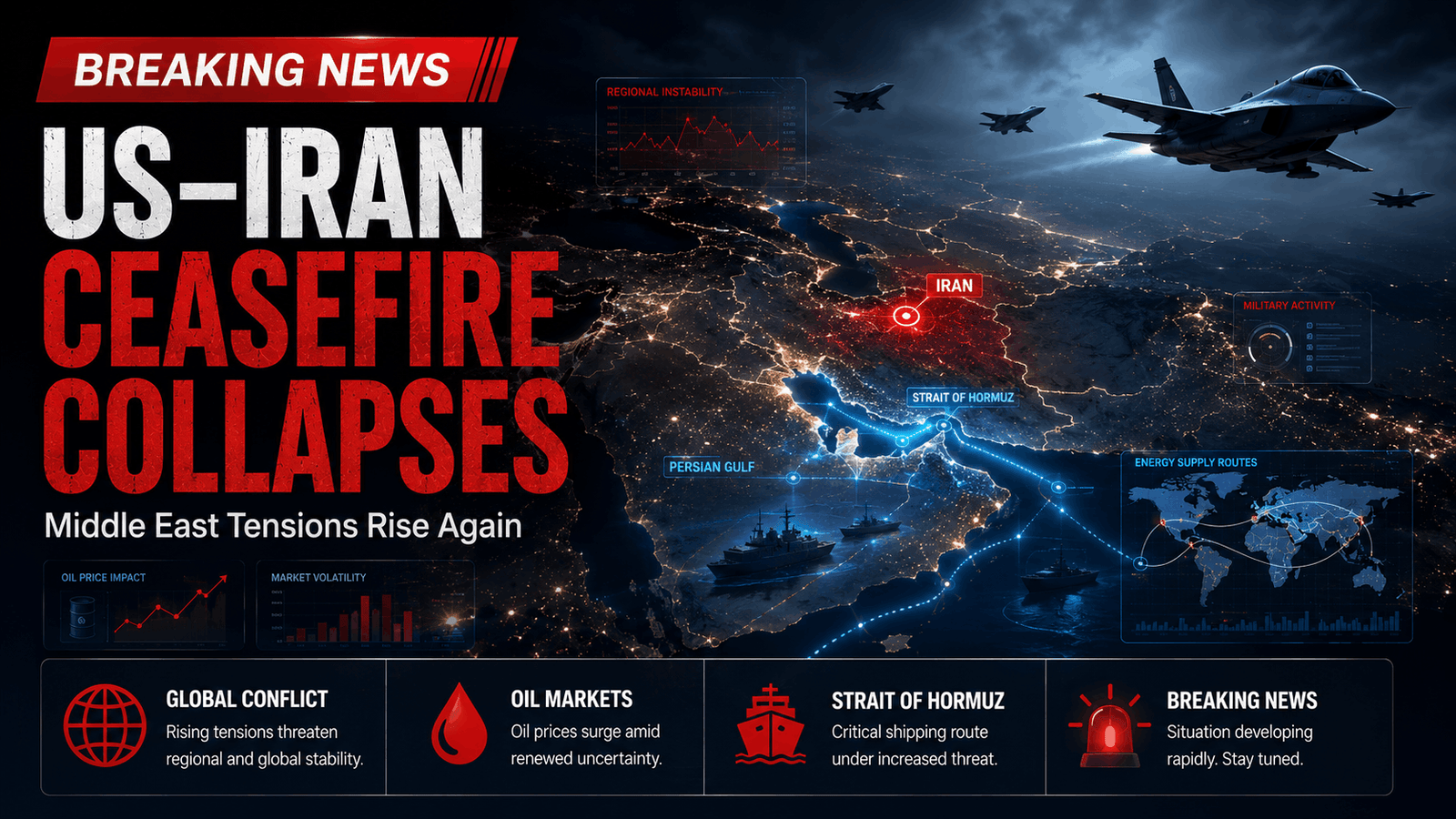
US-Iran Ceasefire Collapses: Fresh Airstrikes Raise Fears of a Wider Middle East War
Introduction
A fragile ceasefire between the United States and Iran has effectively collapsed after a new round of U.S. military strikes targeted Iranian military infrastructure. The renewed fighting has increased fears of a wider regional conflict, with Iran launching retaliatory attacks against U.S. military positions in the Gulf. The escalation has also renewed concerns over global oil supplies and security in one of the world's most strategically important regions.
What Happened?
According to the U.S. Central Command (CENTCOM), American forces carried out strikes on approximately 90 military targets across Iran. Officials said the operation targeted missile and drone facilities, air defence systems, coastal surveillance assets, and military logistics infrastructure to reduce threats to commercial shipping in the Strait of Hormuz.
Iran's Response
Iran responded by launching missiles and drones toward U.S. military installations in countries including Bahrain, Kuwait and Qatar, according to multiple reports. Iranian officials accused the United States of violating the ceasefire and warned that further military action would receive a stronger response.
Why the Strait of Hormuz Matters
The Strait of Hormuz is one of the world's most important energy corridors.
Every day, a significant share of the world's oil and liquefied natural gas (LNG) shipments pass through this narrow waterway.
Any disruption in the region can lead to:
- 📈 Higher crude oil prices
- 🚢 Shipping delays
- 🌍 Global supply chain disruptions
- ⛽ Higher fuel costs in many countries
Because of its strategic importance, tensions in the Strait of Hormuz are closely watched by governments and financial markets around the world.
Why Global Markets Are Watching
The renewed conflict is not only a military issue—it also has economic implications.
Analysts are monitoring:
- Global crude oil prices
- Shipping insurance costs
- Stock market volatility
- Energy supply chains
- Diplomatic efforts to prevent further escalation
Any prolonged conflict could affect businesses and consumers well beyond the Middle East.
International Reactions
Several countries and regional leaders have urged both sides to exercise restraint and return to diplomatic negotiations. International concern has grown over the possibility that continued military exchanges could destabilize the wider Middle East and disrupt global trade.
What Happens Next?
Diplomatic contacts between the United States and Iran have not completely stopped, but the latest exchange of strikes has significantly weakened hopes for a lasting ceasefire.
Security analysts believe the coming days will be critical in determining whether tensions escalate further or whether renewed diplomatic efforts can prevent a broader regional conflict.
Blog of Time Insight
The latest escalation between the United States and Iran is a reminder that geopolitical tensions can have consequences far beyond the battlefield. Military confrontations in the Middle East often influence global energy markets, international trade, and diplomatic relations. While the current situation remains fluid, verified information and official updates are essential, as developments can change rapidly.
Key Takeaways
✔ The reported ceasefire between the United States and Iran has effectively broken down following a new round of military strikes.
✔ U.S. forces reportedly carried out targeted operations against Iranian military infrastructure.
✔ Iran responded with retaliatory missile and drone attacks against U.S. military positions in the Gulf region.
✔ Rising tensions have renewed concerns about the security of the Strait of Hormuz, one of the world's most important oil shipping routes.
✔ Global markets are closely monitoring oil prices, shipping routes, and diplomatic efforts to prevent a wider regional conflict.
Conclusion
The renewed military confrontation between the United States and Iran marks another significant development in an already volatile region. While both military and diplomatic efforts continue, uncertainty remains high. Any further escalation could have implications for regional security, global trade, and energy markets.
As investigations and official briefings continue, readers should rely on verified information rather than unconfirmed reports circulating on social media.
Frequently Asked Questions (FAQs)
1. Why did the ceasefire collapse?
According to official statements and multiple media reports, fresh military operations and retaliatory attacks led to the breakdown of the ceasefire.
2. Why is the Strait of Hormuz so important?
It is one of the world's busiest energy corridors through which a significant share of global crude oil and LNG shipments passes every day.
3. Could this affect global oil prices?
Yes. Increased military tensions in the Gulf region often create uncertainty in energy markets, which can influence international crude oil prices.
4. Is a wider regional war expected?
At this stage, no official authority has confirmed that a wider war is inevitable. Governments continue diplomatic efforts while military activity is being closely monitored.
5. How could this affect India?
Any prolonged disruption to global oil supplies could influence crude oil prices, fuel costs, shipping expenses, and import bills for oil-importing countries, including India.