Content options
Article
Europe Heatwave Turns Deadly: Record Temperatures, Rising Death Toll and Wildfire Risk Across the Continent
June 29, 2026
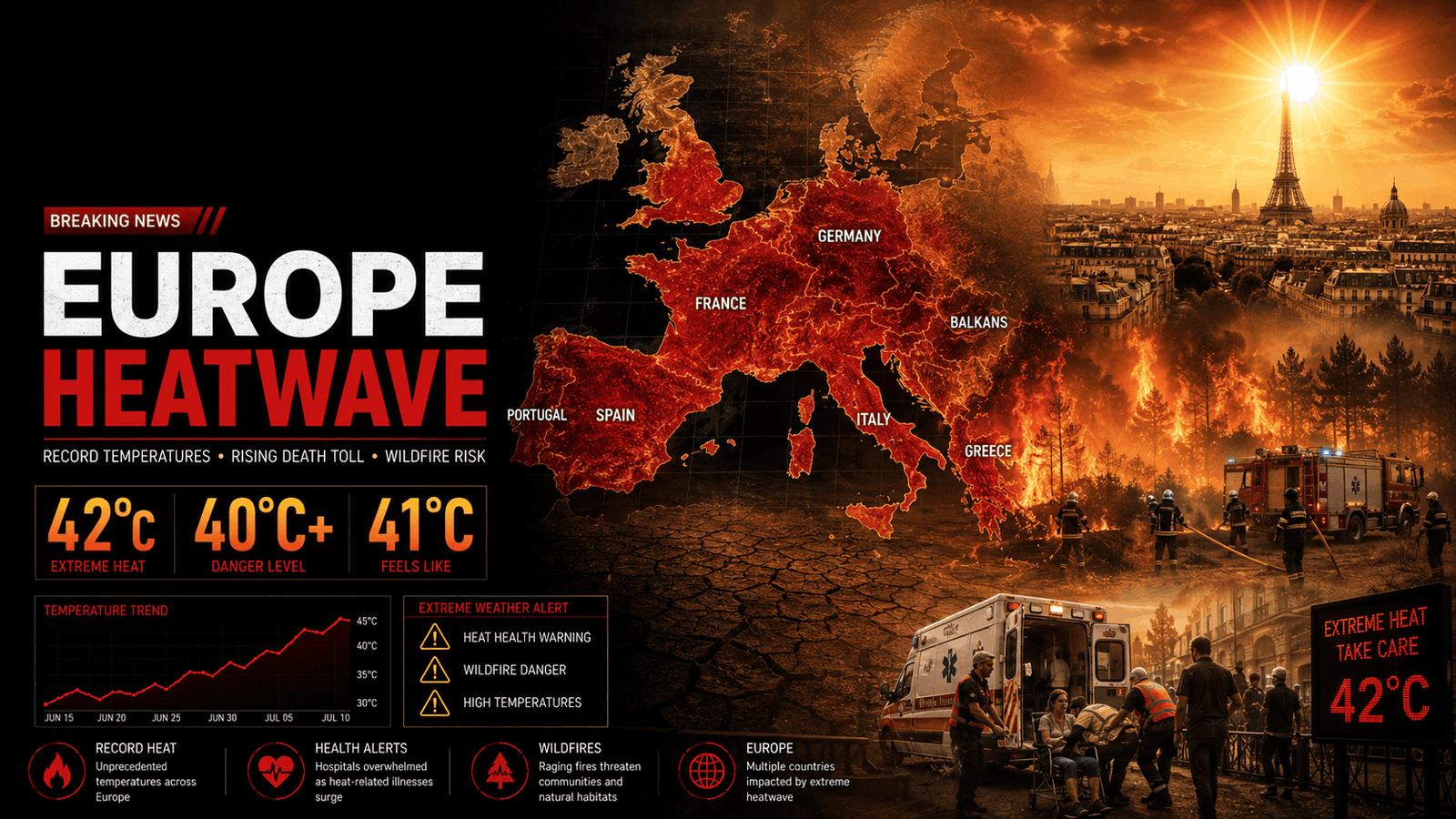
Europe is experiencing one of its most intense early-summer heatwaves in recent history, with temperatures exceeding 40°C (104°F) in several countries. Authorities across the continent have issued emergency warnings as the extreme heat continues to affect public health, transportation, energy systems, and agriculture.
Health agencies have reported a growing number of heat-related deaths, particularly among older adults and vulnerable populations. France alone has estimated around 1,000 excess deaths during the recent heatwave, while hospitals and emergency services continue to deal with a surge in heat-related illnesses.
Countries Facing Extreme Temperatures
The heatwave has affected multiple European nations, including:
- France
- Italy
- Germany
- Spain
- Croatia
- Serbia
- Albania
- Poland
- Hungary
Several cities have issued red alerts as daytime temperatures crossed 40°C, while nighttime temperatures have remained unusually high, making recovery from the heat even more difficult.
Rising Health Concerns
Public health officials have warned that prolonged exposure to extreme heat significantly increases the risk of:
- Heatstroke
- Dehydration
- Heart-related complications
- Respiratory problems
Older adults, children, and people with chronic medical conditions remain the most vulnerable groups. Hospitals in several regions have expanded emergency services to manage the increase in patients.
Wildfires and Infrastructure Disruptions
The intense heat has also increased wildfire risks across southern and southeastern Europe.
Authorities have reported:
- Wildfires in parts of Croatia and the Balkans.
- Rail service disruptions caused by overheated tracks.
- Pressure on electricity grids due to increased air-conditioning demand.
- Reduced power generation in some areas because high river temperatures affected cooling systems.
Scientists Point to Climate Change
Many climate scientists say that rising global temperatures are making heatwaves more frequent, more intense, and longer-lasting. While no single weather event can be attributed solely to climate change, researchers say global warming has increased the likelihood and severity of extreme heat events across Europe.
Safety Advice
Authorities are urging residents to:
- Stay indoors during the hottest hours of the day.
- Drink plenty of water.
- Avoid strenuous outdoor activities.
- Check on elderly family members and neighbors.
- Follow official weather alerts and emergency guidance.
What Happens Next?
Meteorologists expect some areas to receive temporary relief, but forecasts indicate that high temperatures may persist or return in parts of Central and Southern Europe in the coming days. Governments remain on alert as emergency services continue to respond to heat-related incidents and wildfire threats.
Key Takeaways
✅ Temperatures have exceeded 40°C in several European countries.
✅ France has reported around 1,000 excess deaths linked to the heatwave.
✅ Wildfire risks and infrastructure disruptions continue to increase.
✅ Authorities are urging people to take precautions against extreme heat.