Content options
Government Orders Google & Apple to Remove Apps Linked to E-Rickshaw Shutdowns
Introduction
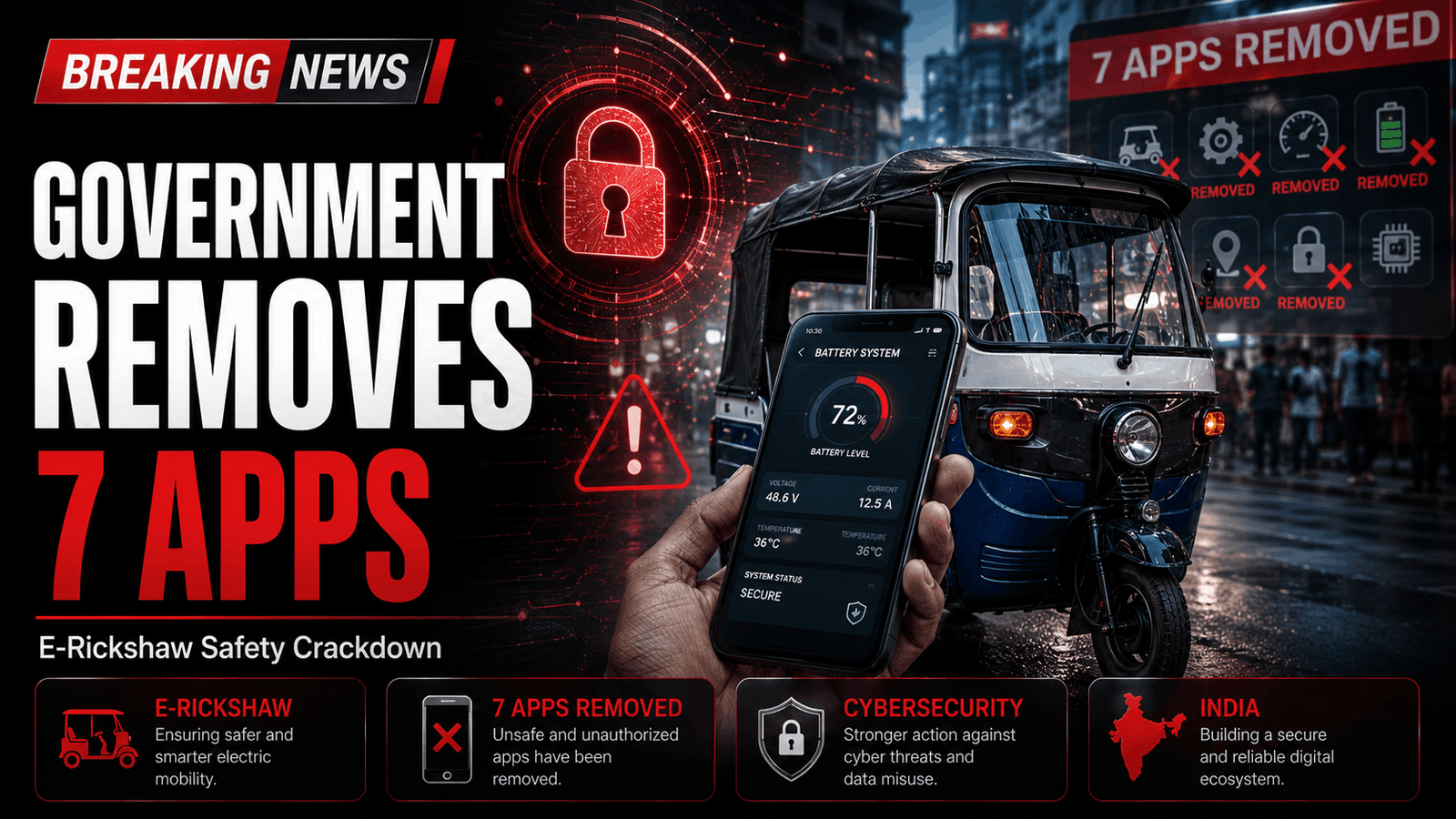
The Government of India has directed Google and Apple to remove several battery management applications from their app stores after reports emerged that they were being misused to remotely disable e-rickshaws and other battery-powered vehicles. The decision comes after viral videos showed individuals allegedly using these apps to switch off e-rickshaws while they were in motion, raising concerns about passenger safety and cybersecurity.
What Happened?
According to government officials, certain battery management system (BMS) apps—originally designed to monitor and manage lithium-ion batteries—were allegedly being misused by people to connect to nearby e-rickshaws via Bluetooth and remotely cut power to compatible vehicles. The incidents gained widespread attention after prank videos circulated on social media.
Why Did the Government Step In?
The Ministry of Electronics and Information Technology (MeitY) acted after concerns that these apps could:
- Endanger passengers and drivers by stopping vehicles unexpectedly.
- Disrupt the livelihoods of e-rickshaw drivers.
- Expose weaknesses in battery management systems used by some electric vehicles.
- Encourage misuse through viral social media trends.
Which Apps Were Targeted?
Reports indicate that apps associated with battery management systems, including BAT-BMS, Lossigy, and Epoch-i-ion, were among those identified for removal after allegations of misuse. Different reports mention different numbers of apps, but the government's focus is on applications that can be abused to interfere with compatible battery systems.
Is Every E-Rickshaw Affected?
No.
The issue mainly affects vehicles using certain Bluetooth-enabled battery management systems that were left unsecured. Many e-rickshaws and electric vehicles with password-protected or different battery systems are not vulnerable to this type of misuse.
Why This Matters
As India rapidly adopts electric vehicles, cybersecurity is becoming just as important as road safety. Connected technologies offer convenience but also introduce new risks if they are not properly secured.
This incident highlights the importance of:
- Secure battery management systems
- Better app store screening
- Stronger cybersecurity standards for EVs
- Public awareness about connected vehicle technology
Blog of Time Insight
India's EV market is growing at an incredible pace, but this incident shows that software security must evolve alongside hardware innovation. As vehicles become smarter and more connected, manufacturers, developers, and regulators will need to prioritize cybersecurity to protect drivers and passengers from misuse.
✅ Key Takeaways
- The government has asked Google and Apple to remove battery management apps allegedly misused to disable e-rickshaws.
- Viral prank videos raised concerns over passenger safety and EV cybersecurity.
- The issue affects certain Bluetooth-enabled battery management systems, not all e-rickshaws.
- The incident highlights the need for stronger cybersecurity in connected electric vehicles.
📌 Conclusion
The removal of these apps marks an important step toward improving cybersecurity in India's growing electric mobility ecosystem. While battery management apps have legitimate uses, this case demonstrates how connected technologies can be exploited if proper safeguards are not in place. As electric vehicles become more common, ensuring both digital and physical safety will be essential.
❓FAQs
1. Why were these apps removed?
They were allegedly being misused to remotely disable compatible e-rickshaws, creating safety concerns.
2. Were the apps originally malicious?
No. They were designed for battery management but were reportedly misused by some users.
3. Are all e-rickshaws affected?
No. Only certain vehicles with unsecured Bluetooth-enabled battery systems appear to be vulnerable.
4. What is a BMS?
A Battery Management System (BMS) monitors and manages the health, charging, and safety of lithium-ion batteries.
5. What can manufacturers do?
Use password protection, secure Bluetooth pairing, and regular firmware updates to reduce the risk of misuse.