Content options
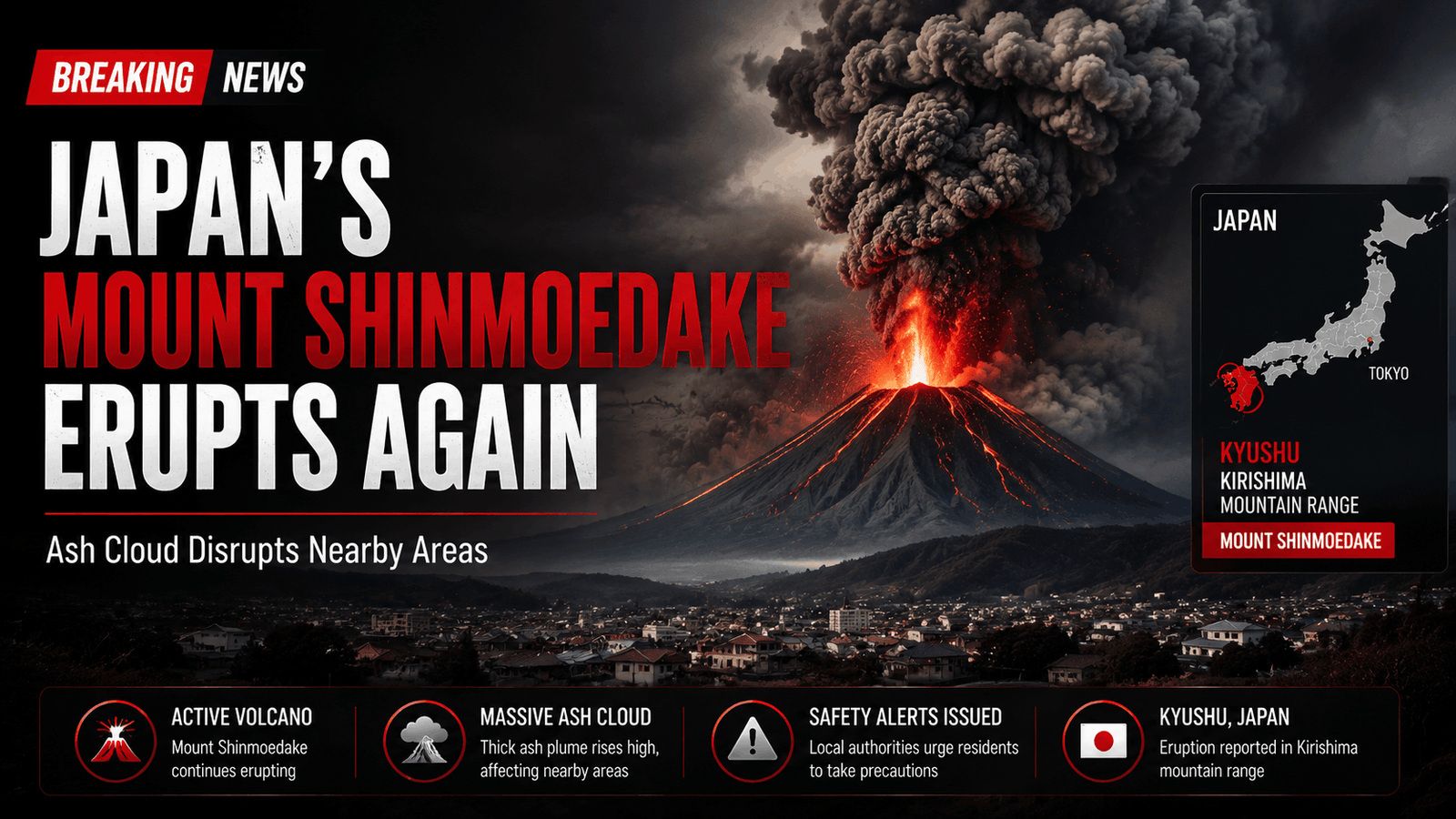
Japan's Mount Shinmoedake Erupts Again, Ash Cloud Disrupts Nearby Areas
Japan is once again dealing with increased volcanic activity after Mount Shinmoedake, located in the Kirishima mountain range on the island of Kyushu, erupted and sent a large ash plume high into the atmosphere. Authorities have issued warnings for nearby communities as ashfall and volcanic hazards continue to affect parts of the region.
The eruption generated a significant ash cloud that drifted across nearby areas, reducing visibility and raising concerns about air quality, transportation, and public safety. While no widespread evacuations were immediately reported, officials urged residents to remain alert and follow safety instructions.
What Happened?
According to reports, the eruption produced a towering column of volcanic ash rising several kilometers above the crater. Japan's meteorological authorities maintained an elevated volcanic alert level and warned that ashfall and small volcanic rocks could affect areas surrounding the volcano.
Emergency officials are closely monitoring the volcano for additional eruptions or changes in activity.
Areas Most Affected
The volcanic ash is expected to impact communities near the Kirishima mountain range, particularly in parts of Kagoshima and Miyazaki prefectures.
Possible impacts include:
- Reduced visibility on roads
- Ash accumulation on buildings and vehicles
- Flight disruptions depending on wind conditions
- Poor air quality in nearby areas
Residents have been advised to limit unnecessary travel if ashfall becomes heavy.
Safety Measures Issued
Authorities have advised people to:
- Stay away from restricted zones around the volcano.
- Wear masks outdoors if ashfall becomes significant.
- Keep windows and doors closed to reduce indoor ash exposure.
- Follow updates from local emergency management agencies.
Officials also warned about the possibility of volcanic rocks and pyroclastic hazards within the restricted area surrounding the crater.
Why Is Mount Shinmoedake Significant?
Mount Shinmoedake is one of the active volcanoes in Japan's Kirishima volcanic group. It has experienced several eruptions over the past decades and is continuously monitored by the Japan Meteorological Agency because of its history of explosive volcanic activity.
Japan sits on the Pacific "Ring of Fire," one of the world's most active seismic and volcanic regions, making volcanic monitoring a critical part of the country's disaster preparedness.
What Happens Next?
Scientists will continue to monitor volcanic tremors, gas emissions, and ash production to determine whether activity increases or begins to subside. Local authorities have urged residents and travelers to stay informed through official updates, as volcanic conditions can change rapidly.
Blog of Time Insight
Japan has one of the world's most advanced volcanic monitoring systems, allowing authorities to issue early warnings and safety advisories when volcanic activity increases. While eruptions like Shinmoedake's can disrupt daily life, preparedness and timely communication play a crucial role in reducing risks.
Key Takeaways
- 🌋 Mount Shinmoedake has erupted again in southern Japan.
- 🌫️ A large ash plume affected nearby regions.
- 🚨 Authorities have maintained an elevated volcanic alert.
- 🛣️ Ashfall may disrupt transportation and daily activities.
- 👨🚒 Residents are advised to follow official safety guidance.
Conclusion
The latest eruption of Mount Shinmoedake serves as another reminder of Japan's dynamic volcanic landscape. Although authorities are closely monitoring the situation and have issued precautionary advisories, residents and travelers should remain alert and rely on official updates as conditions evolve.
FAQs
1. Where is Mount Shinmoedake located?
It is part of the Kirishima volcanic range on Japan's Kyushu island.
2. Is the volcano still active?
Yes. Authorities continue to monitor the volcano following the latest eruption.
3. Were evacuations ordered?
At the time of reporting, authorities had issued safety warnings and restricted access around the crater, while monitoring the situation closely.
4. Why does Japan experience so many volcanic eruptions?
Japan is located on the Pacific Ring of Fire, where several tectonic plates meet, making earthquakes and volcanic activity relatively common.
5. Can volcanic ash affect flights?
Yes. Heavy ash clouds can reduce visibility and pose risks to aircraft, which may lead to flight delays or route changes depending on conditions.