Content options
What Is Inflation? Explained in Simple Words
Introduction
Have you ever noticed that the same grocery items cost more today than they did a few years ago? Maybe your favorite restaurant meal, a liter of fuel, or even a movie ticket has become more expensive. This gradual increase in the prices of goods and services is known as inflation.
Inflation is one of the most important economic concepts because it affects everyone—whether you're a student, employee, business owner, investor, or retiree. It influences how much your money can buy, how much you save, how businesses set prices, and even how governments make economic decisions.
Although inflation is often seen as something negative, a moderate level of inflation is considered normal and even healthy for a growing economy. Problems arise when inflation becomes too high or remains elevated for a long period.
In this guide, we'll explain inflation in simple language, explore why it happens, how it impacts your daily life, and what you can do to protect your finances.
What Is Inflation?
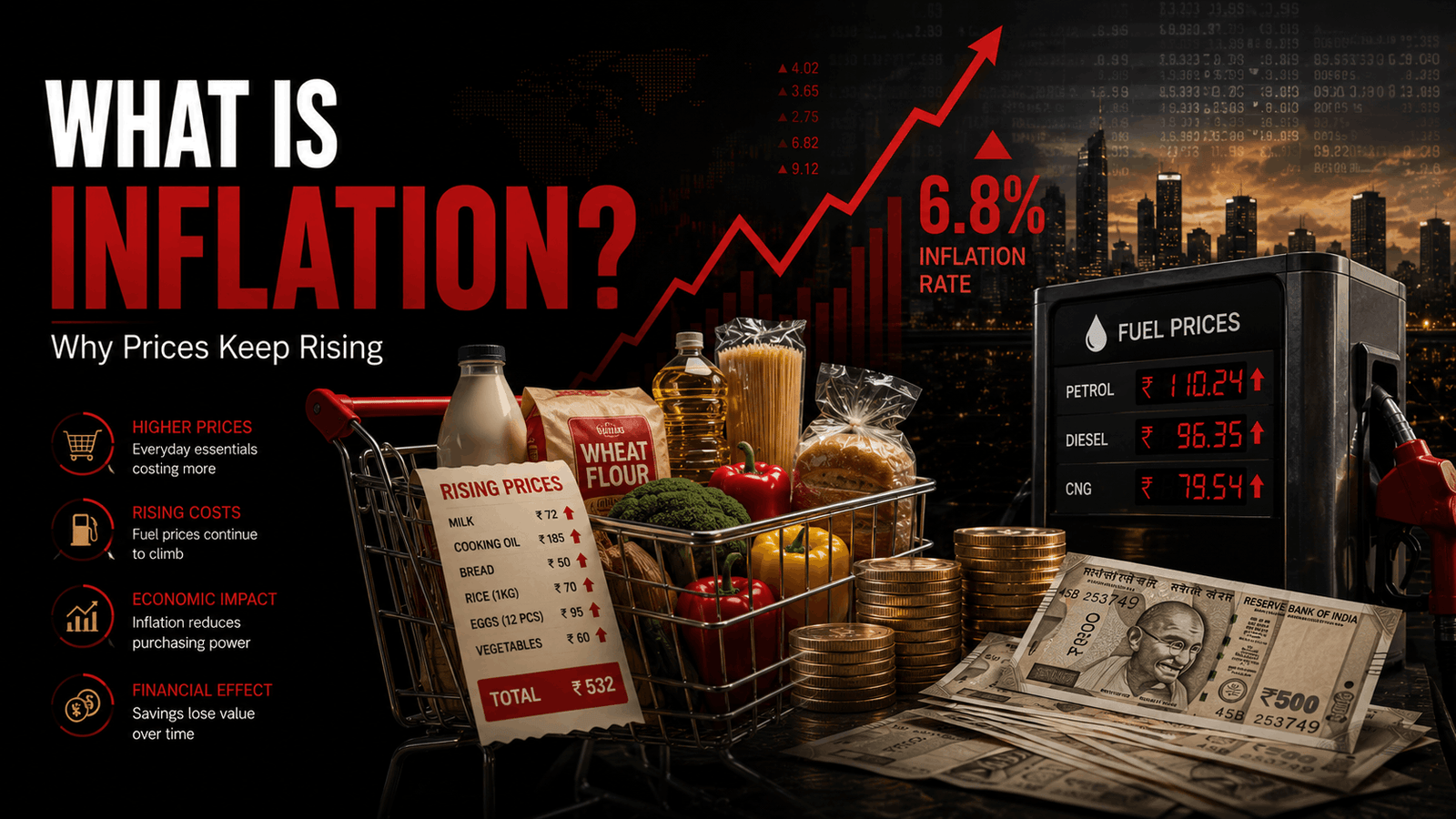
Inflation is the general increase in the prices of goods and services over time, which means the purchasing power of money decreases.
Simply put:
If ₹100 bought 10 items last year but buys only 9 items today, inflation has reduced your purchasing power.
Inflation doesn't mean that every product becomes more expensive at the same rate. Some prices may rise quickly, others slowly, and a few may even decrease. Economists focus on the overall trend across the economy.
Why Does Inflation Happen?
Inflation can occur for several reasons:
1. Demand-Pull Inflation
When consumer demand grows faster than the supply of goods and services, businesses may raise prices.
Example:
If many people want to buy the same smartphone but production is limited, the price often increases.
2. Cost-Push Inflation
When production costs increase—such as wages, fuel, or raw materials—businesses often pass those higher costs on to consumers.
Example:
Higher fuel prices can increase transportation costs, making groceries and other products more expensive.
3. Monetary Factors
If more money circulates in the economy while the supply of goods remains relatively unchanged, prices may rise over time.
How Is Inflation Measured?
Many countries use a measure such as the Consumer Price Index (CPI).
The CPI tracks the prices of a basket of commonly purchased goods and services, including:
- Food
- Housing
- Transportation
- Healthcare
- Education
- Clothing
By comparing prices over time, economists estimate the inflation rate.
How Inflation Affects Your Daily Life
Inflation has a direct impact on household budgets.
Grocery Bills
Food prices may increase, making everyday shopping more expensive.
Fuel Costs
Higher petrol and diesel prices can increase commuting and transportation expenses.
Housing
Rent and home maintenance costs may rise over time.
Savings
If your savings earn less than the inflation rate, your money loses purchasing power.
Investments
Some investments may outperform inflation, while others may not. Diversification and long-term planning are important.
Is Inflation Always Bad?
Not necessarily.
Moderate Inflation
A stable, moderate level of inflation often reflects a growing economy where businesses invest and consumers spend.
High Inflation
Rapid inflation can reduce purchasing power and create uncertainty for households and businesses.
Deflation
Falling prices across the economy (deflation) can also create economic challenges by discouraging spending and investment.
Inflation vs Cost of Living
These terms are related but different.
- Inflation measures how prices change over time across the economy.
- Cost of living refers to how expensive it is to maintain a certain standard of living in a specific location.
How Can You Protect Yourself from Inflation?
- Build an emergency fund.
- Review your budget regularly.
- Increase your skills and earning potential.
- Invest according to your financial goals and risk tolerance.
- Avoid unnecessary debt.
- Monitor major expenses such as housing, transportation, and food.
Common Myths About Inflation
Myth 1: Inflation affects only rich people.
Reality: Inflation affects everyone because everyday goods and services become more expensive.
Myth 2: Every price increases equally.
Reality: Different products and services change in price at different rates.
Myth 3: Inflation is always harmful.
Reality: Moderate inflation is a normal part of many healthy economies.
Blog of Time Insight
Inflation isn't just an economic statistic—it's something people experience every time they buy groceries, pay rent, or fill up their vehicle. Understanding inflation helps individuals make smarter financial decisions instead of simply reacting to rising prices.
Key Takeaways
✅ Inflation means the overall rise in prices over time.
✅ It reduces the purchasing power of money.
✅ Moderate inflation is generally considered normal.
✅ High inflation can strain household budgets.
✅ Smart financial planning can help reduce its impact.
Future Outlook
Inflation will continue to be influenced by global supply chains, energy prices, technological innovation, consumer demand, and government policies. While inflation rates may rise or fall over time, understanding how inflation works can help individuals and businesses make better financial decisions in an ever-changing economy.
Conclusion
Inflation is one of the most important concepts in personal finance and economics because it affects the value of money and the cost of everyday life. While rising prices can create challenges, understanding why inflation happens and how it influences spending, saving, and investing empowers you to make more informed financial decisions. Staying informed, planning ahead, and maintaining healthy financial habits can help you adapt regardless of economic conditions.
Frequently Asked Questions (FAQs)
1. What is inflation in simple words?
Inflation is the gradual increase in the prices of goods and services over time, which reduces the purchasing power of money.
2. What causes inflation?
Inflation can result from higher demand, rising production costs, supply disruptions, or broader economic conditions.
3. Is inflation always bad?
No. Moderate inflation is generally considered a normal part of economic growth, while very high inflation can create challenges.
4. How does inflation affect savings?
If your savings grow more slowly than inflation, your money may buy fewer goods and services in the future.
5. How can I reduce the impact of inflation?
Maintaining a budget, building emergency savings, improving your income potential, and making informed financial decisions can help manage inflation's effects.