Advertisement
Health April 23, 2026

Chennai Fitness Trainer Shares 1 Hack That Speeds Up Every Workout — Backed by 18 Years

According to a Chennai-based fitness trainer with 18 years of experience, the single most effective fitness hack that consistently accelerates client progress is tracking progressive overload — specifically, logging each session's weights, reps, and sets and deliberately increasing them by a small, consistent margin every week. This principle, supported by exercise science, forces the body to continually adapt, building strength and muscle more efficiently than any other training variable.

Chennai Fitness Trainer Shares 1 Hack That Speeds Up Every Workout — Backed by 18 Years

The one fitness hack a Chennai trainer swears by after 18 years

If you have been going to the gym for months without seeing the results you expected, the problem is almost certainly not your diet, your supplements, or your gym. It is progressive overload — or rather, the absence of it. A Chennai-based fitness trainer with 18 years of experience and thousands of client transformations under his belt says this one principle separates people who make consistent, visible progress from those who plateau permanently.

The hack: track and progressively overload — every single session

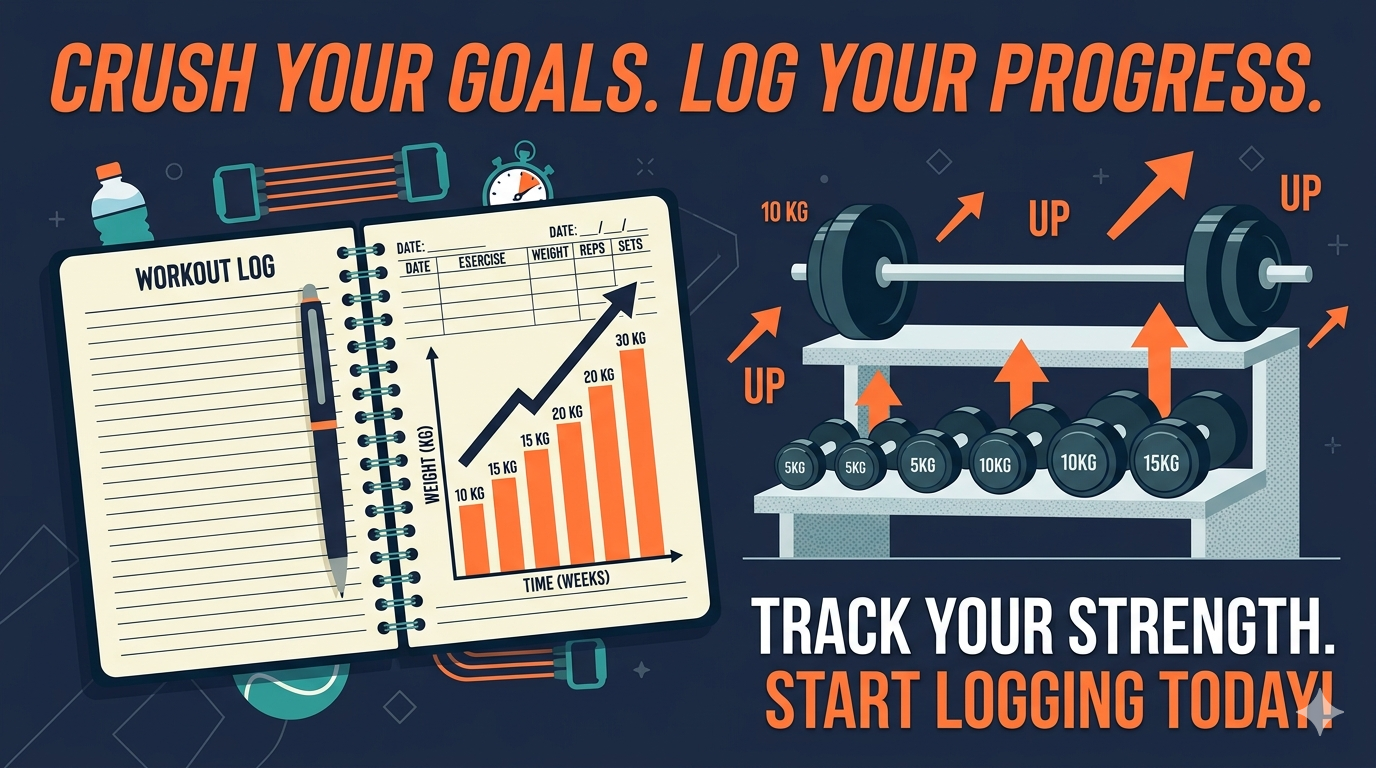
The hack sounds almost boring, but that is exactly why it works when everything flashier fails: write down every set, every rep, and every weight you lift in every session. Then, in your next session for that exercise, beat it — even by one rep or 0.5 kg. That is it. That is the hack.

Most people train by feel. They pick up roughly the same weight they used last time, do roughly the same number of reps, and go home. Their body, having already adapted to that stimulus, has no reason to change. Progressive overload — the deliberate, consistent increase of training stimulus — is the only signal the body responds to with muscle and strength growth over time.

18 yrs
Trainer's experience, Chennai
#1
Principle behind all muscle growth
2–5%
Weekly overload increase (safe range)
6 weeks
Avg time clients see visible change with tracking
Progressive overload is not optional — it is the mechanism of adaptation. Without it, you are exercising for maintenance. With it, you are training for transformation. The difference is a notebook and five minutes of attention per session.

How to apply progressive overload correctly

Overload Method How It Works Best For
Add weight Increase load by 1–2.5 kg when you complete target reps with good form Strength training
Add reps Increase rep count by 1–2 at same weight before moving up Beginners, hypertrophy
Add sets Go from 3 sets to 4 sets of an exercise Plateau-breakers
Reduce rest time Cut rest by 15–30 seconds between sets Conditioning, fat loss
Improve form/range Deeper squat, fuller extension — same weight, more stimulus Technique improvement

Why most people skip this

Tracking feels tedious. It requires a small notebook or an app and 2–3 minutes of attention per workout. In an era of viral workout videos, complicated splits, and supplement stacks, a simple logbook feels unglamorous. But every experienced trainer — regardless of their philosophy — agrees on this: the clients who track their progress, progress. The ones who train by feel, stagnate.

The Chennai trainer's approach with new clients is always the same in Week 1: throw away the complex programme, focus on 5–6 compound movements, write down every number, and beat it next time. Results follow within 4–6 weeks consistently, across all body types and fitness levels.

You do not need a complex programme. You need a simple programme executed with progressive overload and recorded diligently. Complexity is often a distraction from the basics that actually work.
 
The most effective fitness advice is often the simplest — and progressive overload is the proof. Track your sessions, beat your numbers, and let the science do the rest. For more fitness guides, workout tips, and health wisdom from experienced Indian trainers, visit BlogofTime.com.

Frequently Asked Auestions

What is progressive overload in fitness?

Progressive overload means gradually and consistently increasing the training stress placed on the body — through more weight, more reps, more sets, or reduced rest — to force ongoing adaptation. It is the foundational principle behind all strength and muscle gains.

How do I apply progressive overload as a beginner?

Start with a weight you can perform with good form for 8–10 reps. Each session, try to add 1 more rep or, when you can do 12 reps comfortably, increase the weight by 2.5 kg. Log every session. Repeat consistently.

Is tracking workouts really that important?

Yes. Without tracking, you cannot apply progressive overload systematically because you cannot reliably remember what you did last week. Tracking converts vague effort into precise, improvable data. It is the foundation of intentional progress.

How fast can I see results with progressive overload?

Most people notice strength improvements within 2–3 weeks. Visible body composition changes — more muscle definition or fat loss — typically become noticeable between 6 and 12 weeks of consistent tracked training with appropriate nutrition.

What app should I use to track workouts?

Strong, Hevy, and FitNotes are popular workout tracking apps used by serious lifters. Even a simple notes app or a physical notebook works perfectly. The tool matters less than the habit of recording every set, rep, and weight after each exercise.
Advertisement
37 views 0 shares
S

Written by

Super Admin

Staff writer at Blog of Time, covering the latest insights and trends.

View all posts

Comments

Be the first to share your thoughts on this article

Advertisement