Content options
India's haemophilia fight needs more firepower
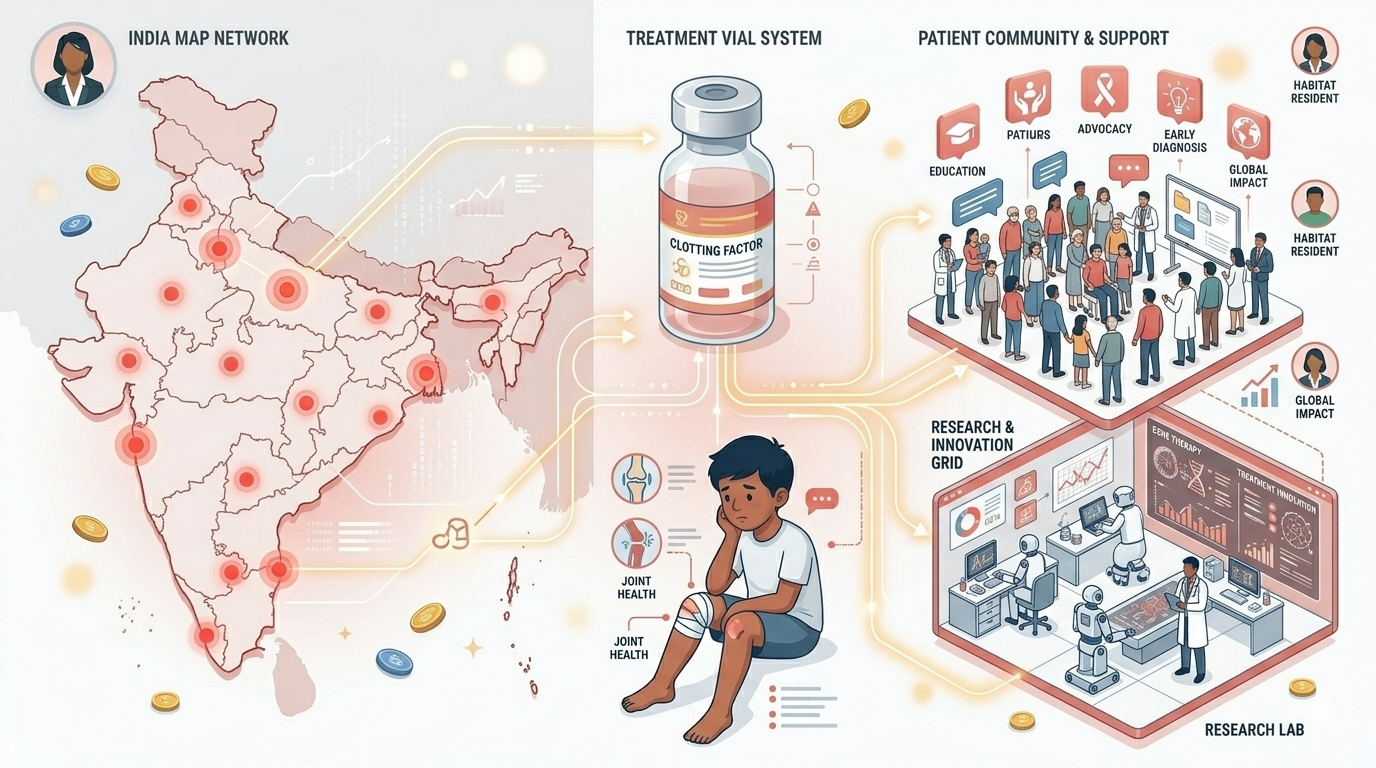
Haemophilia is a lifelong bleeding disorder where blood does not clot properly due to missing or deficient clotting factors. In India, an estimated 1.5 to 2 lakh people live with the condition — making India home to one of the world's largest haemophilia populations. Yet the gap between diagnosis, treatment, and care remains alarmingly wide.
The good news is that haemophilia is manageable with regular infusion of clotting factor concentrates. The hard truth is that in India, most patients cannot access those concentrates consistently, affordably, or at all.
The scale of the problem
Fewer than 30% of India's estimated haemophilia patients are formally diagnosed. The rest live with undiagnosed, untreated bleeding episodes that cause progressive joint damage, disability, and shortened lifespans. In rural areas, where laboratory infrastructure is sparse, diagnosis can take years — if it happens at all. By the time a child in a tier-3 district receives a haemophilia diagnosis, they may already have irreversible joint damage.
Where the system fails
| Gap Area | Current State | What's Needed |
|---|---|---|
| Diagnosis infrastructure | Concentrated in metros | Coagulation labs in district hospitals |
| Factor concentrate supply | Chronic shortages, irregular supply | National buffer stock, long-term procurement |
| Treatment affordability | ₹8L+ annually in private | Universal govt coverage, Jan Aushadhi inclusion |
| Specialist availability | Haematologists rare outside cities | Trained nurses for home infusion programmes |
| Newborn screening | Not part of national programme | Integration into national newborn screening policy |
What other countries are doing right
Countries like the UK, Canada, and Iran run national haemophilia programmes that provide free factor concentrates to all registered patients. Iran — despite economic sanctions — manufactures its own plasma-derived factor concentrates domestically, achieving near-universal coverage for its haemophilia population. India, with its pharmaceutical manufacturing strength, has the capacity to do the same but lacks the policy will.
The introduction of extended half-life (EHL) factor concentrates and gene therapy trials globally offer hope for transformative treatment in the coming decade. India needs to be part of these conversations — not just as a treatment recipient but as a manufacturer and innovator.