Content options
Polycystic Ovary Syndrome affects approximately 1 in 5 Indian women of reproductive age — making it the most common hormonal disorder in this population. For women who also work full-time, managing PCOS is not a simple matter of eating better and moving more. It is a daily negotiation between the demands of a professional schedule and a body that needs very specific conditions to maintain hormonal balance. The good news is that three evidence-backed nutritional strategies can make a genuine difference, even within the constraints of a demanding job.
Why a 9-to-5 Schedule Makes PCOS Harder to Manage
The standard office schedule creates several conditions that directly worsen PCOS symptoms. Skipping breakfast or eating very late in the morning disrupts the cortisol awakening response — the natural morning cortisol spike that the body uses to mobilize energy. When this cycle is disrupted, blood sugar regulation suffers throughout the day. Desk-bound work reduces muscle glucose uptake, making insulin resistance (the central metabolic problem in most PCOS cases) worse. Workplace stress elevates cortisol chronically, and elevated cortisol signals the ovaries and adrenal glands to produce more androgens — the male hormones that cause PCOS symptoms including irregular periods, acne, and hair thinning.
The result is a feedback loop: work demands worsen hormonal disruption, which reduces energy and cognitive clarity, which makes managing the workday even harder. Breaking this cycle requires intentional nutritional strategy, not just willpower.
Tip 1: Prioritize Protein at Every Single Meal
Protein is the most powerful nutritional lever for blood sugar stabilization in women with PCOS. When you eat protein at the start of a meal — before carbohydrates — you slow glucose absorption into the bloodstream, reducing the blood sugar spike that triggers excess insulin release. Chronic excess insulin is the metabolic root of most PCOS symptoms including weight gain around the midsection, increased androgen production, and irregular ovulation. For working women, this means starting every meal — including desk lunches and rushed breakfasts — with a protein anchor. Eggs, Greek yogurt, paneer, rajma, dal, or a protein shake consumed before your roti or rice fundamentally changes how your body processes that meal. Nutritionist recommendation: aim for 25 to 35 grams of protein per meal, three times daily. According to PubMed research on PCOS nutrition, high-protein diets reduce androgen levels and improve menstrual regularity in women with PCOS within 8 to 12 weeks. Read our full health section at BlogofTime.com.
Tip 2: Eat in Alignment With Your Cortisol Cycle
Cortisol — the stress hormone — follows a predictable daily curve: highest in the morning (7 to 9 AM), declining through the afternoon, lowest at night. Eating your largest, most complex meal when cortisol is highest (morning to midday) and progressively lighter meals as the day progresses aligns food intake with the body's natural energy management systems. For PCOS, this approach reduces evening blood sugar spikes, improves overnight insulin sensitivity, and supports better cortisol management overall. In practice: eat a substantial breakfast with protein and healthy fats, a moderate lunch with balanced macronutrients, and a lighter dinner at least 2 hours before sleep. This runs counter to the Indian cultural norm of eating the largest meal at dinner — but the hormonal evidence for reversing this pattern in women with PCOS is strong.
Tip 3: Make Anti-Inflammatory Eating Your Office Nutrition Default
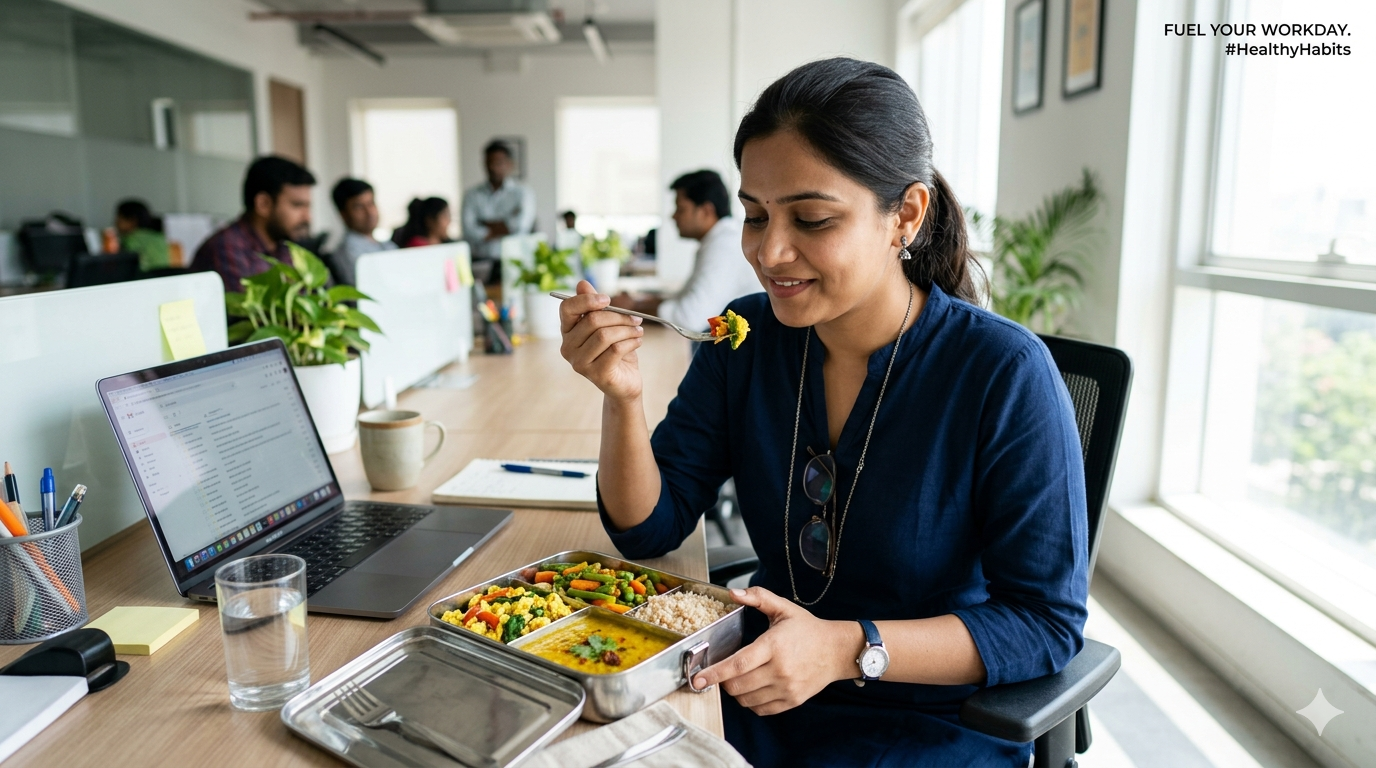
PCOS involves a state of chronic low-grade inflammation that amplifies all its symptoms. An anti-inflammatory eating approach reduces this baseline and directly improves insulin sensitivity, androgen levels, and ovarian function. The practical approach for office eating: pack meals featuring leafy greens, turmeric, ginger, flaxseeds, walnuts, and colorful vegetables. Avoid ordering ultra-processed office canteen meals or packaged snacks, which are loaded with refined oils, sugar, and additives that are directly pro-inflammatory. Carry anti-inflammatory snacks such as a small handful of walnuts, a piece of dark chocolate (70 percent plus cocoa), or a serving of flaxseed ladoo to replace vending machine choices.
| PCOS Nutrition Strategy | Foods to Include | Foods to Minimize | Expected Benefit |
|---|---|---|---|
| Protein Priority | Eggs, paneer, dal, rajma, Greek yogurt, soy | Carbohydrate-only meals, sweet snacks | Reduced insulin spikes, lower androgens |
| Cortisol Meal Timing | Larger breakfast and lunch, light dinner | Late-night large meals, skipping breakfast | Better cortisol rhythm, overnight insulin sensitivity |
| Anti-Inflammatory Eating | Turmeric, ginger, walnuts, flaxseeds, greens | Refined oils, packaged snacks, refined sugar | Reduced systemic inflammation, better ovulation |