Content options
The Bengaluru salary gap: why ₹70 LPA feels common but isn't
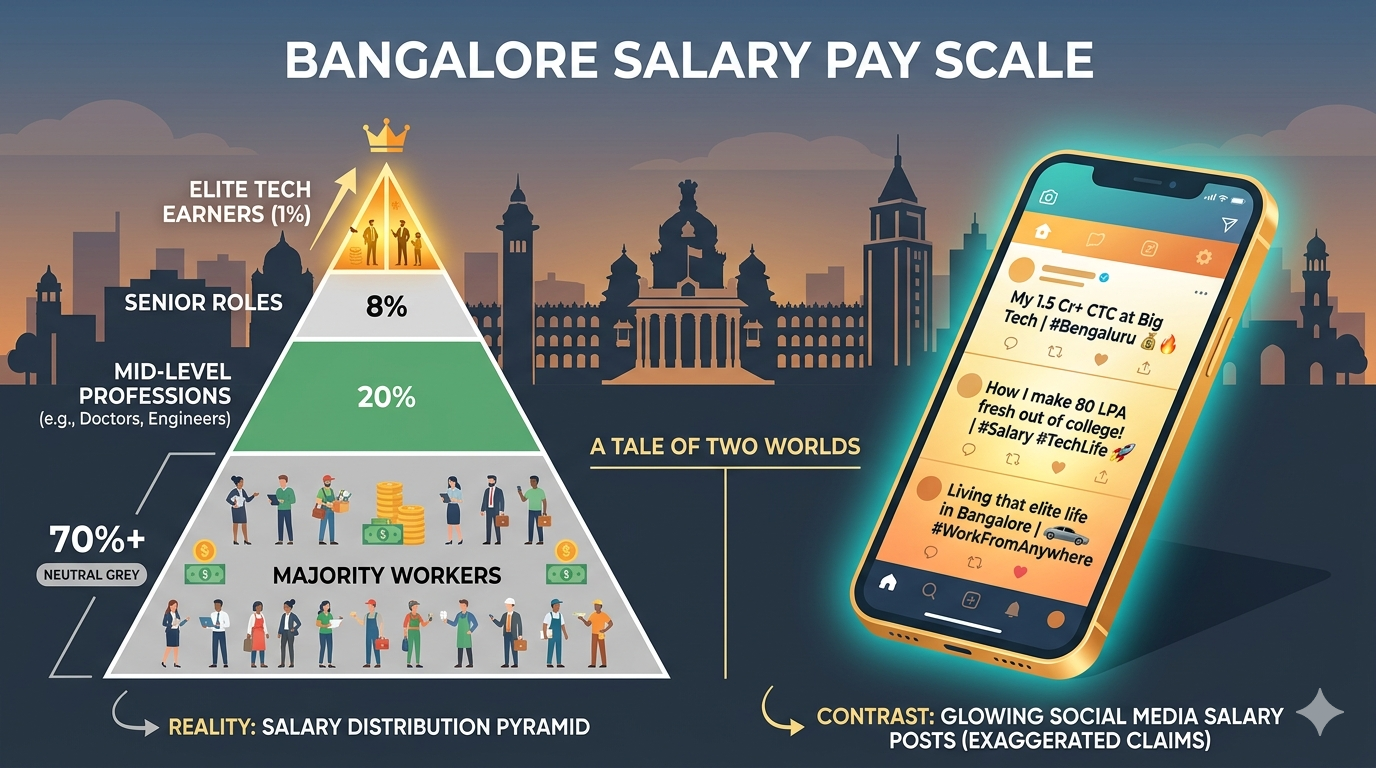
A post by a Bengaluru-based entrepreneur went viral recently with a simple, provocative observation: in the WhatsApp groups and LinkedIn feeds of the city's tech elite, ₹70 lakh per annum feels like a standard salary. Founders casually discuss ESOP windfalls. Engineers post about switching jobs for packages that cross ₹1 crore. And slowly, this becomes the perceived normal — even though the data tells a very different story.
What the data actually says
The median annual salary in Bengaluru — accounting for all formal sector workers, not just tech — sits between ₹6 and ₹8 lakh per year. Even within the IT sector, the average salary across all roles and experience levels is approximately ₹10–12 lakh annually. The ₹70 LPA bracket represents the top 1–2% of earners, concentrated almost entirely in senior engineering roles at FAANG, top-tier Indian unicorns, and MNC leadership positions.
The perception gap is created by who gets amplified. LinkedIn rewards posts about promotions, package switches, and ESOP milestones. Social media surfaces outlier success stories precisely because they generate the most engagement. Someone earning ₹8 lakh doing honest, steady work does not post about it. Someone landing a ₹1.2 crore offer does.
The real Bengaluru salary distribution
| Salary Range | % of Bengaluru workforce | Who Earns This |
|---|---|---|
| Below ₹3 LPA | ~35% | Gig, service, retail, construction |
| ₹3–8 LPA | ~30% | Junior IT, SME employees, support roles |
| ₹8–20 LPA | ~20% | Mid-level IT, team leads, managers |
| ₹20–50 LPA | ~12% | Senior IT, startup roles, directors |
| ₹50–100 LPA | ~2.5% | FAANG, unicorn senior engineers, VPs |
| ₹100 LPA+ | ~0.5% | CXOs, founders, ESOP millionaires |
Why does this matter?
The salary illusion has real consequences. Fresh graduates set unrealistic expectations and experience crushing disappointment. Mid-career professionals feel like failures earning ₹15 LPA. Startups struggle to hire because candidates anchored to inflated benchmarks reject reasonable offers. And the mental health cost of constant comparison in a social media environment designed to surface highlights, not averages, is significant.
The entrepreneur's post resonated because it named something people felt but had not articulated: that Bengaluru's online tech discourse is a bubble — vibrant, exciting, and useful — but systematically unrepresentative of how most of the city actually lives and earns.