The green energy revolution explained
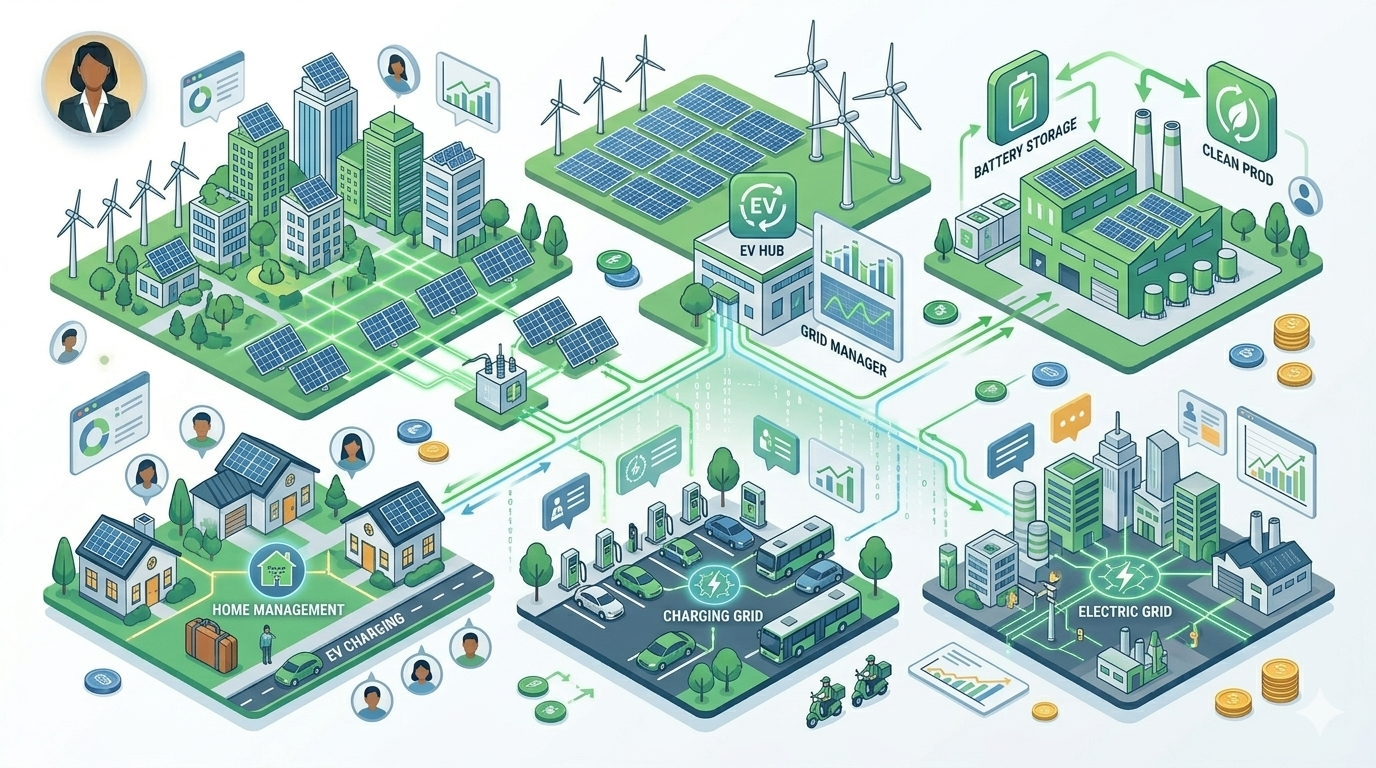
The world is shifting away from coal, oil, and gas faster than most people realize. The green energy revolution is not just an environmental movement — it is an economic and technological transformation that touches every industry, government, and household on earth.
Understanding it helps you make smarter choices about energy, investments, and careers in the decade ahead.
Why renewables are winning
Cost is the primary driver. Solar panel prices have fallen 89% since 2010, and wind energy costs have dropped by over 70%. In most countries, building new solar or wind farms is now cheaper than operating existing coal or gas plants. Economics — not ideology — is powering the transition.
Governments are accelerating the shift. The US Inflation Reduction Act committed $369 billion to clean energy. The EU's Green Deal targets climate neutrality by 2050. China leads global solar manufacturing, producing 80% of the world's panels.
89%
Drop in solar panel costs since 2010
30%+
Global electricity now from renewables
$369B
US Inflation Reduction Act clean energy spend
10M+
Green energy jobs globally by 2030 (est.)
Solar is now the cheapest source of electricity in history, according to the International Energy Agency — a milestone reached in 2023 that has only strengthened since.
Key green energy technologies compared
| Technology |
Maturity |
Cost Trend |
Best Use Case |
Limitation |
| Solar (PV) |
Mature |
Falling fast |
Residential, utility |
Intermittent |
| Wind (onshore) |
Mature |
Falling |
Rural, plains |
Noise, wildlife |
| Wind (offshore) |
Growing |
Falling |
Coastal grids |
High install cost |
| Green Hydrogen |
Emerging |
High, falling |
Industry, transport |
Costly storage |
| Battery Storage |
Rapidly scaling |
Falling fast |
Grid stabilization |
Material supply |
| Nuclear (SMR) |
Early stage |
TBD |
Baseload power |
Long build time |
What this means for you
If you own a home, solar panels and battery storage can cut your electricity bill by 60–90% in many regions. EVs now have lower lifetime costs than gas cars in most markets. Green energy careers — engineers, project managers, data analysts — are among the fastest-growing in 2026.
As an investor, clean energy ETFs, battery manufacturers, and grid infrastructure companies offer exposure to a multi-decade growth trend. The energy transition is not slowing down — it is accelerating.
The energy transition is creating the biggest industrial investment opportunity since the internet — with $4.5 trillion needed annually by 2030, according to the
IEA.
The green energy revolution is not a distant future — it is happening now, reshaping economies, industries, and everyday life. Whether you are investing, choosing appliances, or planning a career, understanding this shift puts you ahead. Explore more technology and sustainability insights at
BlogofTime.com.
Frequently Asked Questions
What is the green energy revolution?
It is the global shift from fossil fuel-based energy to
renewable sources like solar, wind, hydropower, and green hydrogen — driven by falling costs, climate policy, and technological breakthroughs.
Which country leads in renewable energy?
China leads in absolute renewable energy capacity, particularly solar. Iceland gets nearly 100% of its electricity from renewables. Denmark leads in wind energy as a share of total power.
Is green hydrogen the future of energy?
Green hydrogen is promising for heavy industry and long-haul transport that cannot easily electrify. Costs are still high in 2026 but falling. Most experts see it as a crucial piece of the puzzle by 2035.
How does the green energy transition affect jobs?
Clean energy is creating millions of jobs globally in solar installation, wind turbine manufacturing, battery production, and grid engineering — more than offsetting fossil fuel job losses in most economies.
Can renewables power the entire world?
Research shows it is technically feasible with a combination of solar, wind, battery storage, green hydrogen, and smart grids. The challenge is political will, grid infrastructure, and financing at scale.