JD Vance on H-1B visa fraud: what the Trump admin's curbs mean
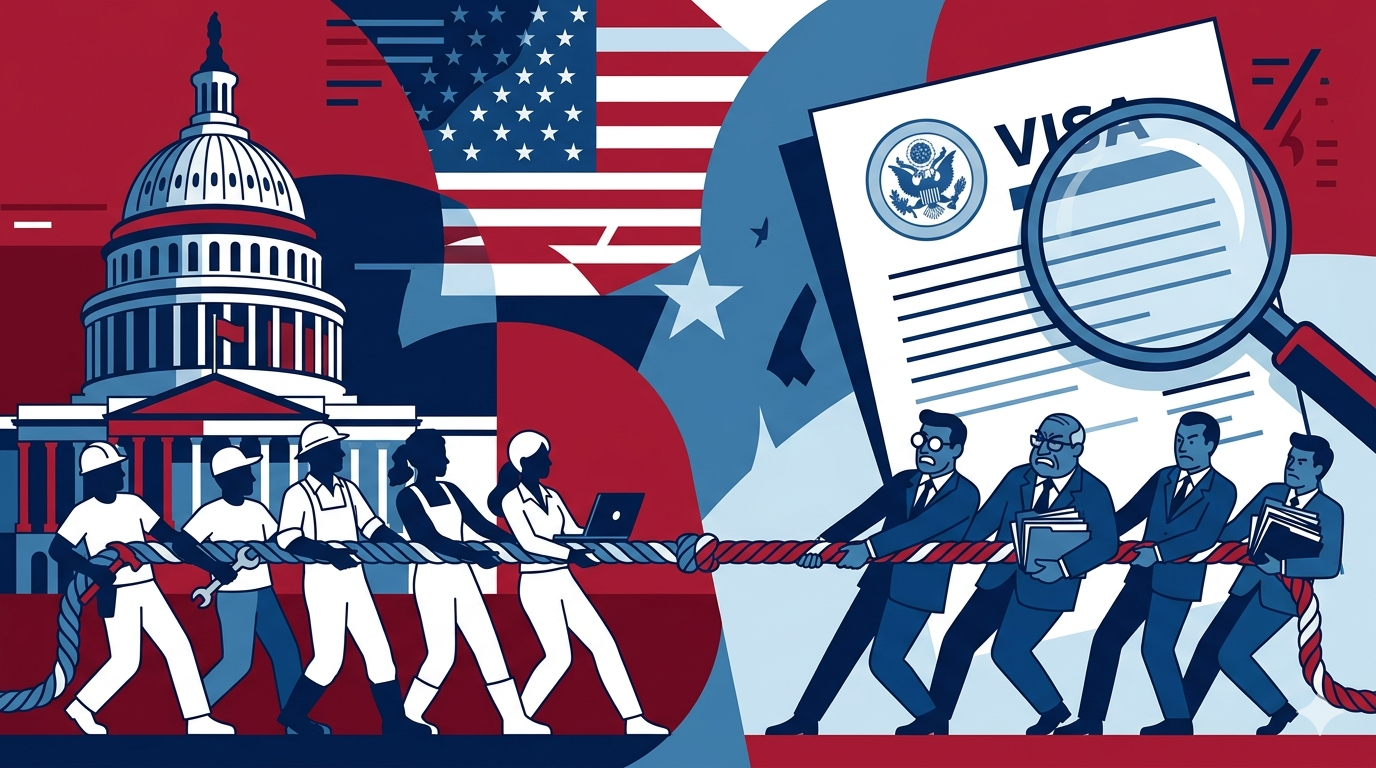
US Vice President JD Vance has publicly backed the Trump administration's push to tighten H-1B visa rules, telling audiences that "there is a lot of fraud in the H-1B visa Programme." The remarks reignited a contentious debate about America's most widely used high-skilled worker visa — one that directly affects hundreds of thousands of Indian tech professionals working in the United States.
What Vance actually said
Vance's comments focused on what he described as systemic abuse of the H-1B system — primarily by IT outsourcing firms that use the visa to bring in cheaper labour rather than genuinely scarce specialist talent. He specifically criticised companies that charge H-1B holders fees, subcontract them to US clients at margin, and replace American workers in the process. Vance was careful to distinguish this from skilled engineers in genuine specialist roles at technology companies.
What the Trump administration is proposing
The administration has signalled several H-1B reforms: significantly higher prevailing wage requirements (which would eliminate cost arbitrage), restrictions on third-party placement firms, stricter specialty occupation definitions, random auditing of all H-1B employers, and a push to lower the annual cap of 85,000 visas. Some proposals would require physical presence for renewal rather than allowing offshore renewals.
85,000
Annual H-1B visa cap (current)
70%+
H-1B holders from India (approx.)
$60K
Current minimum H-1B wage (proposed to raise)
600K+
Indians currently on H-1B status in US
| Proposed Change |
Impact |
Who's Affected |
| Higher wage floor |
Eliminates cheap labour arbitrage |
Outsourcing firms, staffing companies |
| Restrict third-party placement |
Reduces IT consulting firm H-1B use |
TCS, Wipro, Infosys US operations |
| Stricter specialty definitions |
Fewer roles qualify |
All H-1B applicants |
| Lower annual cap |
More competition, lower approval rate |
All future H-1B applicants |
| Mandatory US presence for renewal |
Forces holders back to US for stamping |
Holders renewing from abroad |
The fraud debate: what is real?
H-1B fraud does exist and is documented. The Department of Labor and USCIS have found wage fraud, fake employer letters, and shell company filings in audit sweeps. In 2024, USCIS denied approximately 4% of H-1B petitions and flagged many more for verification. However, critics of Vance's framing argue that fraud in the H-1B system represents a small fraction of total applications and that blanket restrictions harm legitimate skilled workers and the US companies that genuinely need them.
The H-1B restrictions debate has a sharp political edge in 2026: tech companies including Apple, Google, Microsoft, and NVIDIA strongly oppose new restrictions, arguing they harm US competitiveness in the AI race with China.
For Indian professionals in the US on H-1B status, the immediate advice from immigration lawyers is: maintain excellent employment records, avoid third-party placement arrangements where possible, and consult an immigration attorney before any visa renewal cycle.
The H-1B debate is high-stakes for hundreds of thousands of Indian professionals and for American companies competing in a global AI race. Staying informed about policy changes is not optional for anyone working or planning to work in the US. For
immigration policy updates, international career guides, and US-India relations news, visit
BlogofTime.com.
Frequently Asked Auestions
What is the H-1B visa?
The H-1B is a US non-immigrant work visa that allows companies to employ foreign workers in specialty occupations requiring at least a bachelor's degree. It is capped at 85,000 new visas annually and is heavily used in tech, engineering, and IT sectors.
What did JD Vance say about H-1B visas?
Vance stated that there is "a lot of fraud in the H-1B visa system," specifically targeting IT outsourcing firms that use the visa to bring in cheaper labour rather than genuinely specialised talent. He defended the Trump administration's push to tighten H-1B rules accordingly.
How will H-1B restrictions affect Indians in America?
Higher wage floors, stricter specialty definitions, and reduced outsourcing firm placements would most severely impact Indians employed through IT staffing companies. Engineers at major tech firms — Google, Microsoft, Amazon — face less immediate impact but are affected by any cap reductions.
Will the H-1B annual cap be reduced?
The Trump administration has discussed reducing the 85,000 annual cap but has not yet implemented legislative changes. Executive action could tighten rules, but changing the cap requires Congressional legislation, making a fast dramatic reduction unlikely in the near term.
Can US companies still hire H-1B workers under the proposed rules?
Yes, but with higher standards, stricter wage requirements, and more USCIS scrutiny. Legitimate specialty roles at tech companies are less affected. IT outsourcing and third-party placement arrangements face the most significant proposed restrictions.