Content options
Will BRICS Launch Its Own Currency? Everything You Need to Know
Introduction
The global financial system has relied on the US dollar for decades as the dominant currency for international trade, investments, and central bank reserves. Whether countries are buying oil, conducting cross-border trade, or investing in foreign markets, the US dollar has traditionally played a central role.
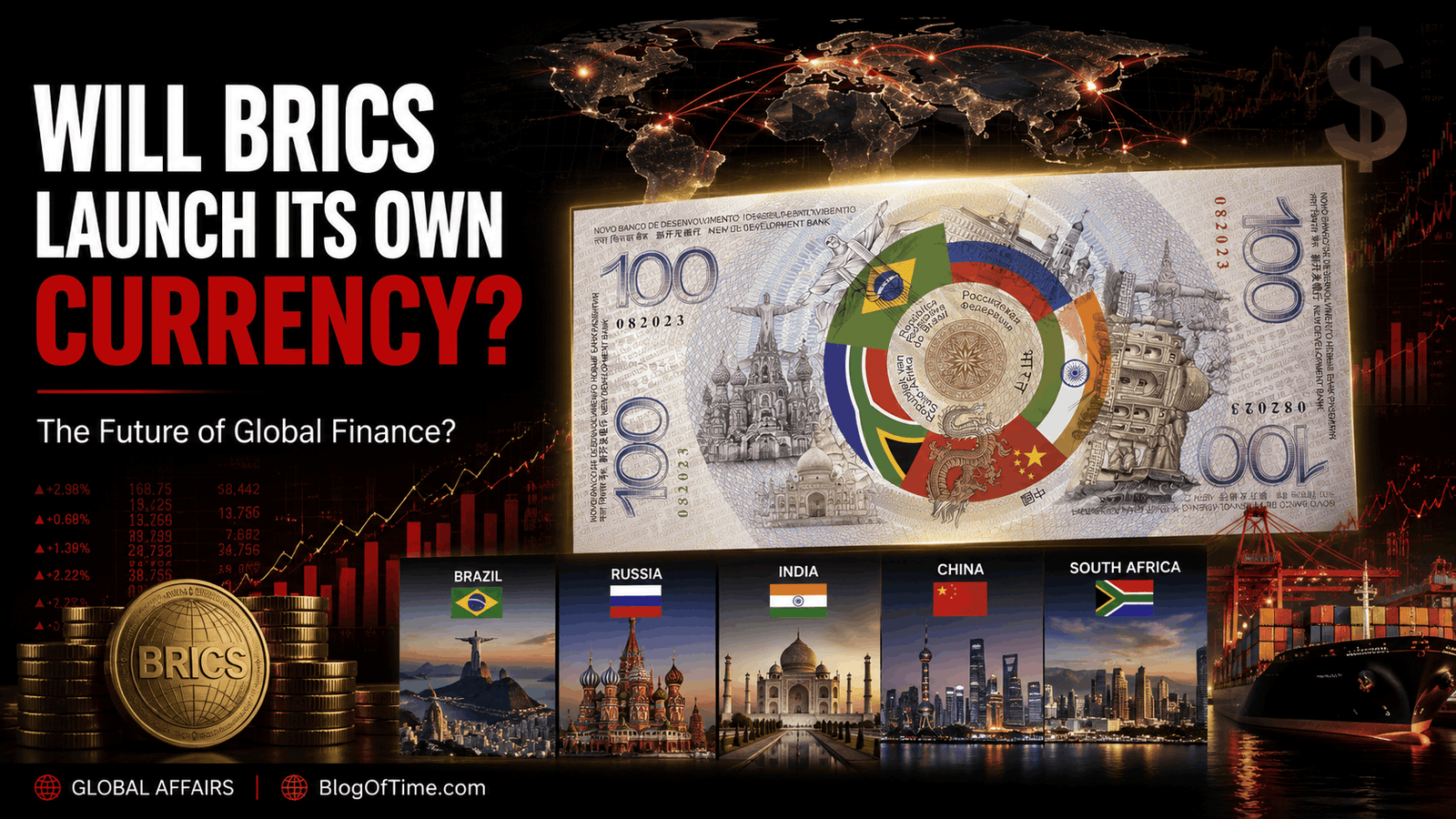
However, in recent years, discussions surrounding a potential BRICS currency have attracted global attention. As the BRICS alliance continues to expand and strengthen economic cooperation, many analysts are asking whether the group could eventually introduce a common currency to facilitate trade among its members.
The idea has sparked excitement, speculation, and debate. Supporters believe a shared currency could reduce dependence on the US dollar and strengthen economic cooperation, while critics argue that creating a common currency among diverse economies would be extremely difficult.
In this article, we'll explore what the BRICS currency proposal actually means, why it's being discussed, the challenges involved, and what it could mean for businesses, investors, and the global economy.
What Is BRICS?
BRICS is an international group of major emerging economies that was originally formed to encourage economic cooperation and give developing nations a stronger voice in global financial affairs.
The acronym originally represented:
- Brazil
- Russia
- India
- China
- South Africa
In recent years, BRICS has expanded by inviting additional countries to join, reflecting its growing influence in global trade and diplomacy.
Together, BRICS countries account for a significant share of the world's population, economic output, natural resources, and international trade.
Its objectives include:
- Promoting economic cooperation
- Increasing trade among members
- Supporting infrastructure development
- Encouraging investment
- Strengthening financial collaboration
Why Is a BRICS Currency Being Discussed?
The discussion is largely driven by the desire to make trade between member countries more efficient.
Today, many international transactions are settled using major global currencies, especially the US dollar. This often means businesses and governments must convert their local currencies before completing transactions, adding costs and exposure to exchange-rate fluctuations.
A common BRICS currency—or even broader use of local currencies—could potentially:
- Simplify trade
- Reduce currency conversion costs
- Lower exchange-rate risks
- Strengthen financial cooperation
It's important to note that there is currently no official BRICS common currency. The idea remains a topic of discussion rather than an implemented policy.
Why Do Some Countries Want Alternatives to the US Dollar?
The US dollar remains the world's leading reserve and trade currency, but some countries are exploring ways to diversify how they conduct international trade.
Reasons often discussed include:
Reducing Exchange Costs
Using local or alternative currencies can reduce multiple currency conversions during trade.
Financial Diversification
Some governments aim to diversify international payment methods rather than relying heavily on a single currency.
Stronger Regional Cooperation
Closer financial integration may encourage trade and investment among partner countries.
Would a BRICS Currency Replace the US Dollar?
Probably not in the near future.
The US dollar continues to play a major role because of:
- Deep global financial markets
- Widespread international acceptance
- Large and liquid bond markets
- Long-established payment systems
Even if BRICS countries increase the use of local currencies or eventually create a shared settlement mechanism, many experts believe the global financial system is more likely to become more diversified rather than completely replacing the dollar.
Potential Benefits of a BRICS Currency
Easier International Trade
Businesses could potentially conduct transactions more efficiently between member countries.
Lower Currency Conversion Costs
Reducing multiple currency exchanges may lower transaction expenses.
Stronger Economic Cooperation
A shared financial framework could encourage greater investment and long-term partnerships.
More Financial Flexibility
Countries may gain additional options for international settlements.
Major Challenges
Creating a shared currency is far more complicated than printing new banknotes.
Different Economic Conditions
Each BRICS country has different:
- Inflation rates
- Interest rates
- Economic growth
- Government policies
Managing one currency across diverse economies would be difficult.
Monetary Policy
A common currency generally requires coordinated monetary policy.
Each country's central bank currently makes independent decisions based on national economic conditions.
Political Coordination
A successful monetary union requires long-term political cooperation and strong institutional frameworks.
Public Confidence
Businesses, investors, and consumers would need confidence that the currency is stable and reliable.
Building that trust takes time.
What Could It Mean for India?
For India, greater financial cooperation within BRICS could create opportunities such as:
- Increased trade
- Export growth
- Infrastructure investment
- Stronger regional partnerships
At the same time, India would also need to balance these opportunities with its broader international trade relationships and domestic economic priorities.
What Could It Mean for Businesses?
Businesses involved in international trade should monitor developments because future financial cooperation could influence:
- Import costs
- Export payments
- Currency management
- Investment planning
However, companies should avoid making business decisions based solely on speculation until official policies are announced.
Common Myths About the BRICS Currency
Myth 1: BRICS has already launched its own currency.
Reality: No official common BRICS currency currently exists.
Myth 2: The US dollar will disappear overnight.
Reality: Financial systems evolve gradually. Most experts expect any major changes to occur over many years rather than suddenly.
Myth 3: Every BRICS country fully supports the same approach.
Reality: Member countries have different economic priorities and policy preferences, so discussions can be complex.
Key Takeaways
- BRICS is strengthening economic cooperation among emerging economies.
- A common BRICS currency has been discussed but has not been officially launched.
- The proposal aims to improve trade and financial cooperation rather than guarantee a replacement for existing global currencies.
- Creating a shared currency would involve significant economic, political, and institutional challenges.
- Businesses and investors should follow official announcements rather than relying on speculation.
Future Outlook
Discussions around international payments, local currency settlements, and financial cooperation are likely to continue as global trade evolves.
Whether BRICS eventually develops a common currency, expands local-currency trade, or adopts another financial framework will depend on future agreements among member countries.
Regardless of the outcome, BRICS is expected to remain an influential player in shaping discussions about the future of the global economy.
Conclusion
The idea of a BRICS currency reflects a broader conversation about how international trade and finance may evolve in the coming decades. While the proposal has attracted global attention, it is important to separate discussion from implementation. At present, there is no official BRICS common currency, and any major development would require extensive cooperation among member countries.
For businesses, investors, and individuals, the most practical approach is to stay informed through credible sources and understand the potential implications without assuming immediate changes. The future of global finance is likely to become more diverse, and BRICS will remain an important part of that conversation.
Frequently Asked Questions (FAQs)
1. Does BRICS currently have its own currency?
No. There is currently no officially launched common BRICS currency.
2. Why is a BRICS currency being discussed?
The idea is mainly discussed as a way to improve trade cooperation, reduce transaction costs, and explore alternative settlement methods among member countries.
3. Would a BRICS currency replace the US dollar?
Most experts believe any changes would be gradual. Even if a BRICS currency or broader local-currency settlement system emerged, it would not necessarily replace the US dollar.
4. Would India benefit from a BRICS currency?
Potential benefits could include smoother regional trade and investment, but the actual impact would depend on future agreements and implementation.
5. When could a BRICS currency be launched?
There is no officially announced timeline. Any decision would require agreement among member countries and significant institutional preparation.